
Speed vs Consistency: The Trade-Off Every Retail Rollout Faces
The Interplay of Speed and Consistency in the Retail Rollout Spaces Affects Growth

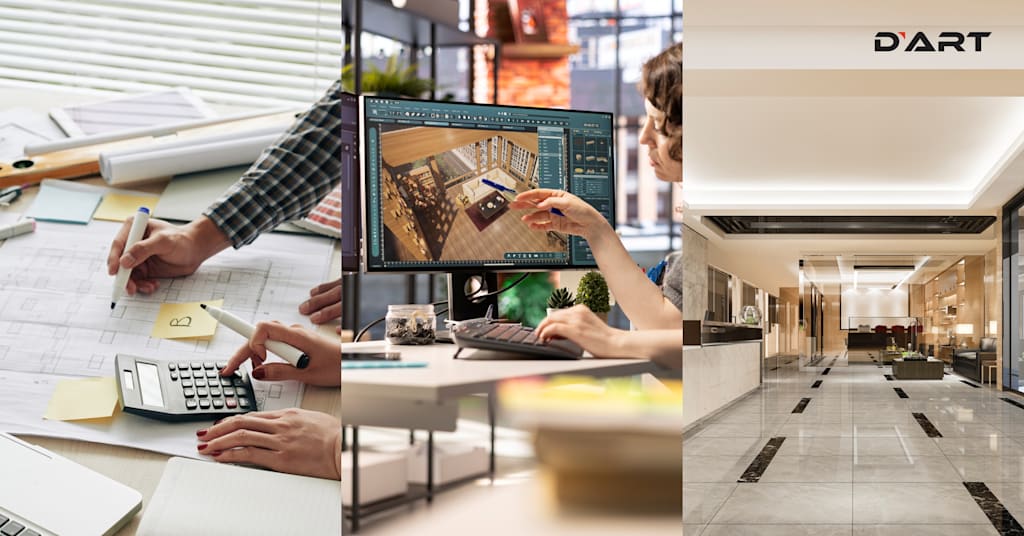
When there's a retail expansion plan, there's also a number associated to it-a number of stores, a number someone with an official title is on the hook for, usually a number that was too ambitious from the moment it was unveiled. This number matters, and someone is responsible for it. People are opening stores, new markets are opening up, and the company's investors need to see concrete evidence of growth, with the physical stores as one of the more accessible metrics. Speed has become the default mode for retail expansion; not just the aspiration, but the default mode.
The nature of scaling up and the speed of roll-out are such that lacking the systems to support the speed of execution creates not just operational bottlenecks, but something more costly and permanent, and that's the inconsistency that accrues over a network and slowly diminishes the value of the brand the expansion was meant to build.
Why is Speed the Metric of Success in Retail Expansion?
The business argument for speed in retail expansion is so inherent, nobody even asks about it. The first mover advantage in new markets is genuine, especially since consumers heavily rely on brand awareness to make purchase decisions. Investment only starts flowing when a store is actually open. Competitors don't let up pressure while a rollout team is at work. And the McKinsey's work on retail growth consistently finds that speed to market has been a critical element in capturing category market share, so this understanding has become deeply embedded in the way retail leaders measure and target expansion.
Essentially, slow expansion has come to feel just as risky as not expanding at all. Reservations about speed face scrutiny, and any extension beyond projections makes leaders uncomfortable. From a business standpoint, the drive for speed makes perfect sense, and it isn't inherently wrong. The problem is what gets abandoned in the pursuit of speed as the central guiding principle of a rollout.
The Real Cost of High Speed Expansion
The research from Deloitte into retail operations indicates that one consequence of accelerated rollout schedules is an increase in the level of inconsistency across the store network. There's no random correlation there; rapid rollout schedules inevitably lead to the compromise of work deemed "less urgent" such as customized site adjustments, a thorough review of installation practices, comprehensive staff training, and rigorous pre-opening quality inspections. While each adjustment can be seen as an acceptable trade-off, together they result in an experience that is rarely identical from one store to the next.
Store layouts that vary widely, visual merchandising inconsistencies, and customer experiences that are anything but localized-they don't just represent minor issues; they cumulatively chip away at brand value across a network of stores. The brand experience in a flagship store with a luxurious setup will be different from that of a store that was opened on a tight deadline, even if the same branding is visible in both locations.
Speed breeds pressure, and pressure tends to focus the team on opening the doors rather than on the nuances of execution. It's in this gap between opening the doors and perfect execution that brand consistency quietly starts to erode.
Why Consistency Matters Now More Than Ever?
Customers expect certain things from a brand-not just from the logo and branding, but also from their experience in a physical store. When customers have an idea of what a brand is supposed to provide, and that expectation isn't met because a store differs from another, it's perceived not as a minor local deviation, but as a fundamental failure of the brand to meet expectations. The brand's trustworthiness is now compromised by poor execution.
Consistency in operations is rapidly becoming a bigger challenge for retailers than expansion. Onedoor.com's retail operations research shows that more and more retailers see consistency across their store network as a more pressing concern than the launching of new stores. Building a retail business is fairly easy to announce and plan for, but perfecting consistent brand delivery is another matter.
More stores equals more visibility; more consistency equals more trust.
What the Rollout Team Actually Confronts?
A team carrying out a real expansion plan doesn't tackle the debate of speed versus consistency as an abstract concept; the compromise appears in their daily decisions: Should we accept a similar fixture instead of the specific one? Should the visual merchandising review be deferred to the installation team's judgment? Will we postpone the opening by five days to provide full training, or proceed and deal with the subsequent issues?
More rapid openings come with greater variability. More execution consistency tends to mean slower expansion. While brands want both, they often find it difficult to achieve them simultaneously with existing operational frameworks. The issue isn't a matter of intent but rather of lacking the right system capabilities.
How Scale Complicates Things?
While a rollout plan that balances speed and consistency at fifteen stores might succeed, the challenges increase exponentially with scale. Each new store means more vendors to coordinate, more overlapping deadlines, and more interdependent tasks. With increased complexity comes a loss of control. Inconsistent delivery in one region will affect others, and while small variations can be tolerated, large-scale inconsistency becomes a significant liability.
Scale does not lessen the problem of speed versus consistency; it amplifies it.
When Speed Outpaced and Its Toll?
Starbucks' aggressive expansion in the mid-2000s is a prime example of speed overwhelming operational capacity. Its growth outpaced training, quality control and operational integrity by an extreme margin. Ultimately, the customer experience was significantly tarnished, and the company was forced to reduce its growth and consolidate to improve operations.
However, Target's Canadian expansion serves as a stark example of the cost of excessive speed without sufficient operational infrastructure. It entered the market far too quickly for its supply chain, inventory management and execution systems to handle, leading to poorly performing stores and ultimately a $1 billion loss and exit from the market. Rapid growth is no substitute for solid infrastructure.
How are the Brands That Do it Right Doing it Differently?
Zara’s operating model is likely the strongest proof in existence that speed and consistency aren't inherently contradictory. By means of a tightly integrated supply chain, standardized processes that don't need reinvention in each new location, and the capacity for real-time, in-store feedback that enables the organization to respond to what is actually happening at locations rather than to forecasts that were made weeks earlier, the brand retains fast rollout and inventory cycle times. Speed isn't a trade-off with the system; it is the product of it.
McDonald's has proven the same principle at a global scale. The level of consistency observed at a McDonald's in Chennai and a McDonald's in Chicago are not due to direct supervision or any special care in each store. This is due to the level of process standardization applied so rigorously that output comes consistently simply as a consequence of following the system rather than as a result of how skillfully a particular team performed. This level of consistency must be engineered. It simply cannot be managed via direct supervision.
In other words, speed and consistency are not mutually exclusive by nature; they are mutually exclusive by the design of the rollout infrastructure.
Why do most Rollouts Fail to Do Both?
The difference between the knowledge that systems provide simultaneous speed and consistency and actually establishing those systems lies where most organizations currently stand. The manual coordination of disparate vendor ecosystems leads to delayed delivery times and incorrect communication and neither speed nor consistency could possibly withstand this. A lack of robust execution monitoring leaves most brands without the ability to catch errors until they become permanent. While many organizations have designs that will allow for a successful single-site rollout, those same designs do not translate well to multi-site deployments without loss of uniformity.
The trade-off between speed and consistency exists in most retail rollouts because the systems needed to allow for both simultaneously haven’t been built, not because it’s an inherent part of the process. Organizations like Zara, which have made a habit of performing extremely well during rollouts, have clearly put in the necessary infrastructure, and this investment is demonstrated by the results of their rollout performance and by the uniformity of their execution across locations.
What Should A Retail Rollout Company Be Doing?
The difference between managing a brand's rollout and orchestrating that rollout with consistency and speed is significant in practical terms. Standardized execution models should allow for new locations to be deployed quickly and efficiently, eliminating the repeated effort needed to solve the same problem across multiple sites. Real-time monitoring of rollouts should quickly identify execution deviations when those errors are still rectifiable. Supply chain management should be integrated with site readiness processes rather than considered a separate aspect of the operation. Modularized rollout processes should ensure a standardized quality across sites that must contend with fundamentally different spatial realities.
Brands that can move at a pace that aligns with market dynamics while continuing to minimize the erosion of their core business due to inconsistency in store execution are likely to dominate the future of brand expansion. Technologies that utilize artificial intelligence to monitor execution and predict outcomes should eventually remove the element of real-time visibility challenges associated with managing large store networks; management will move from the back-end to the front-end of the process, with the benefit accruing to the brands that make it happen.
About the Creator
D'Art Design
D’Art Design is a leading global retail design agency. We integrate tactic to provide outstanding experiences, through brand communication and activation, brand design, promotion, and interior design.
Enjoyed the story? Support the Creator.
Subscribe for free to receive all their stories in your feed.
Comments
There are no comments for this story
Be the first to respond and start the conversation.