
Social Interaction in a Post-Pandemic World
The hidden cost of convenience in modern communication
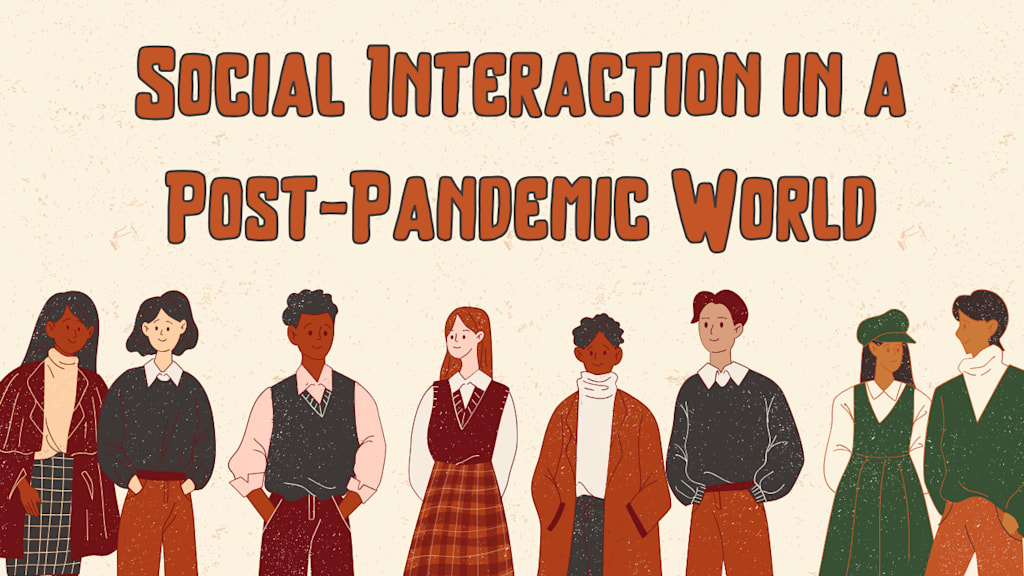
There’s a quiet shift happening in the way people connect — and it didn’t end when the pandemic did.
What began as a forced transition to digital communication has evolved into something more permanent. Even now, when in-person interaction is fully available again, many people are not returning to it in the same way. The question is no longer whether technology changed social behavior — it’s how deeply that change has settled into everyday life.
From Spontaneity to Selectivity
Before 2020, social interaction was largely shaped by proximity. You met people because you were physically in the same place — at work, at school, in a café. Conversations happened without much planning. There was friction, unpredictability, even awkwardness — but also a kind of authenticity that didn’t require effort to initiate.
The pandemic disrupted that model completely.
According to OECD research on social connections, face-to-face interactions declined significantly across many countries, particularly among younger people. What replaced them wasn’t just digital communication, but a different mindset. Socializing became more intentional — something to schedule, evaluate, and sometimes avoid.
At the same time, the World Health Organization report on loneliness highlights that 1 in 6 people globally experiences loneliness, despite unprecedented access to communication tools. This contradiction reveals something important: connection is no longer limited by access, but by engagement.
People can connect at any time — they just don’t always choose to.
The Illusion of Connection
Digital platforms solved a logistical problem, but they introduced a psychological one.
It has never been easier to start a conversation. It has also never been easier to leave one.
Online interaction removes friction — and friction, it turns out, plays a crucial role in forming meaningful relationships. Without it, conversations can feel lighter, faster, and more disposable. You are always one click away from a different person, a different topic, a different version of yourself.
Platforms like vLine Video Chat reflect this shift toward immediacy. They make interaction accessible, spontaneous, and low-commitment — which is precisely what many users are looking for. But this same flexibility can subtly change expectations. When connection becomes effortless, it can also become easier to replace.
Research from Our World in Data on social relationships suggests that while digital tools increase the volume of interactions, they don’t necessarily strengthen social bonds. In fact, strong relationships — the kind linked to long-term well-being — still depend on time, repetition, and emotional investment.
None of which scale particularly well in a swipe-based environment.
A More Efficient — and More Fragile — Social Life
What we’re seeing now is a shift toward efficiency in social behavior.
People are curating their interactions. They are choosing who to engage with, when, and for how long. This creates a sense of control that wasn’t always present before — but it also changes what social life feels like.
Casual encounters are becoming less common. Random conversations, which once played a significant role in expanding social circles, are being replaced by algorithmic discovery or intentional search. In other words, people are meeting others more efficiently — but also more predictably.
And predictability has a cost.
It reduces exposure to difference. It limits the unexpected. It makes social interaction feel safer, but also narrower.
There’s also an emotional consequence. When you are used to controlling your social environment, real-world interactions can start to feel more demanding. You can’t skip an awkward pause in a face-to-face conversation. You can’t instantly switch to someone else if the interaction feels uncomfortable.
Over time, this can lower tolerance for imperfection — making genuine human connection harder to sustain, not easier.
What Comes Next
The post-pandemic world isn’t less social — it’s differently social.
People are still connecting, still communicating, still forming relationships. But the structure of those interactions has changed. They are more flexible, more selective, and often more temporary.
This doesn’t mean something is broken. It means something is evolving.
The real challenge now is not choosing between online and offline interaction, but understanding what each one does best. Digital platforms can initiate connection, lower barriers, and expand access. But depth — the kind that builds trust and belonging — still tends to emerge in spaces where interaction is less controlled and less easily abandoned.
In that sense, the future of social interaction may depend on a simple but uncomfortable idea:
Not every meaningful connection should be easy.
And not every easy connection will be meaningful.
About the Creator
Enjoyed the story? Support the Creator.
Subscribe for free to receive all their stories in your feed.
Comments
There are no comments for this story
Be the first to respond and start the conversation.