
Smart Toilet Market: Digital Bathroom Shift
Analysis of global smart toilet market trends, adoption dynamics, and long-term valuation outlook
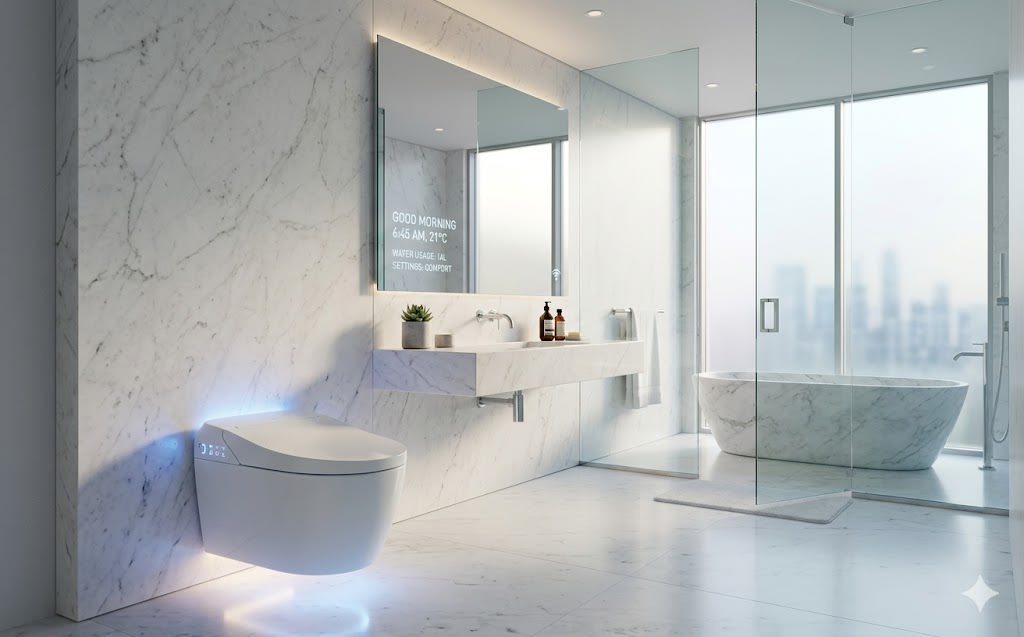
A quiet revolution is unfolding in the most unexpected place of modern life—the bathroom. What once was purely functional is now becoming intelligent, responsive, and deeply connected to digital ecosystems. In luxury apartments, smart hotels, and increasingly in mainstream households, automated sanitation systems are reshaping expectations of comfort and hygiene.
Behind this transformation lies a rapidly expanding commercial landscape documented in the smart toilet market, where valuation shifts reflect a broader narrative of technology merging with daily human rituals.
Digital adoption narrative
The modern bathroom is no longer a static utility space. It is evolving into a data-aware environment where automation, water efficiency, and user personalization converge. Within this evolving ecosystem, the smart toilet market share reflects accelerating adoption across residential and commercial infrastructure upgrades.
According to Mordor Intelligence, the smart toilet market size valued at USD 8.57 billion in 2025, expanding to USD 9.33 billion in 2026, and projected to reach USD 14.26 billion by 2031, at a CAGR of 8.85%. This expansion illustrates how lifestyle upgrades and sustainability demands are converging into one category of intelligent infrastructure.
Valuation and infrastructure shift
Urbanization and premium housing developments are redefining sanitation standards, especially in high-density cities where smart infrastructure is prioritized. The smart toilet market Size reflects this shift, driven by embedded sensors, automated flushing systems, heated seating, and self-cleaning mechanisms becoming standard in premium installations.
The market is no longer confined to luxury segments. It is gradually expanding into mid-tier residential developments, where water conservation and hygiene automation are key selling points. This structural change is reinforcing long-term demand stability and influencing procurement decisions across real estate and hospitality sectors.
Growth acceleration and behavioral change
The acceleration of digital sanitation adoption is strongly tied to behavioral evolution in post-pandemic hygiene awareness. The smart toilet market growth is not only driven by technological enhancement but also by shifting consumer psychology around cleanliness, automation, and contactless interaction.
This growth is further amplified by smart city initiatives, where integrated water systems and sustainable plumbing solutions are prioritized. Public infrastructure modernization projects increasingly include intelligent restroom systems as part of environmental efficiency goals, reinforcing long-term scalability across both public and private sectors.
Industry transformation and future ecosystem
The smart toilet industry is transitioning from isolated product innovation to ecosystem-level integration. Manufacturers are focusing on AI-enabled diagnostics, predictive maintenance, and water usage optimization systems that connect to broader building management platforms.
Search queries such as “smart sanitation ecosystem architecture,” “AI bathroom maintenance systems,” and “connected plumbing infrastructure evolution” reflect growing interest in system-wide integration rather than standalone devices.
As adoption spreads across hospitality, healthcare, and premium residential sectors, competitive differentiation is shifting toward software capabilities and sensor intelligence rather than hardware design alone. This marks a fundamental restructuring of value creation within the industry.
The transformation of sanitation into a data-driven experience signals a deeper shift in how humans interact with essential infrastructure. From luxury hotels to future smart cities, intelligent restroom systems are becoming a quiet but powerful indicator of technological progress and lifestyle evolution.
As digital ecosystems continue expanding into everyday environments, the trajectory of smart sanitation will remain closely tied to innovation, sustainability, and human-centric design.
What other everyday spaces do you think will become fully intelligent next?
About the Creator
Enjoyed the story? Support the Creator.
Subscribe for free to receive all their stories in your feed.
Comments
There are no comments for this story
Be the first to respond and start the conversation.