
Small Home Appliances Market Signals a Quiet Shift
Inside the evolving world of small home appliances and everyday living
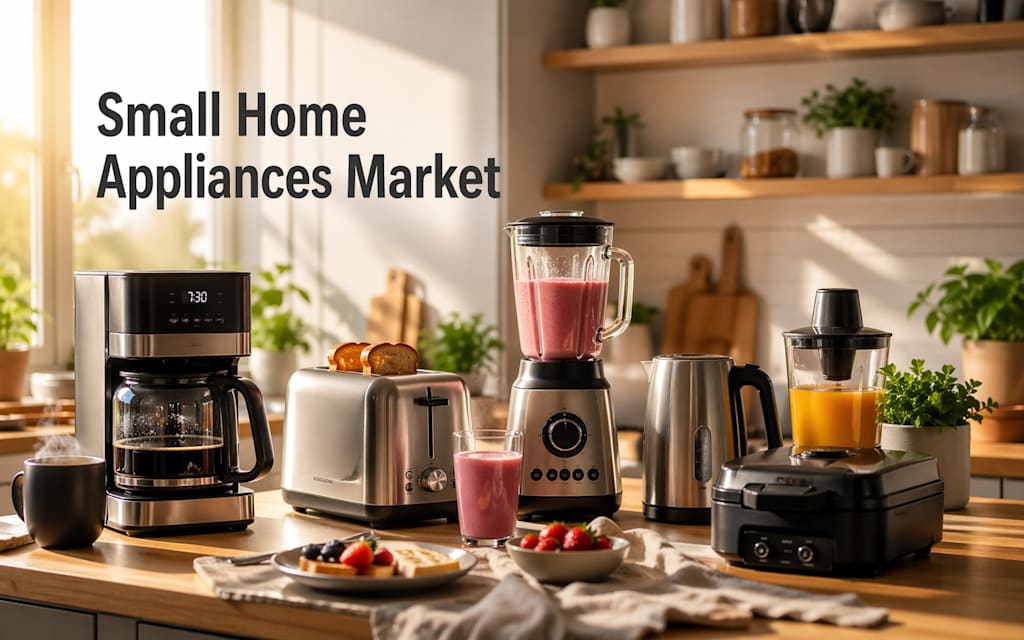
The hum of a coffee machine at dawn feels different these days—quieter, smarter, almost intentional. It’s no longer just about convenience; it’s about how these small, often overlooked machines are quietly reshaping the rhythm of daily life.
From compact kitchens in urban apartments to busy family homes, a subtle transformation is underway. Behind every toasted slice of bread or blended smoothie lies a growing global story, one powered not by spectacle, but by steady, undeniable change.
After years of steady evolution, the small home appliances market has become a reflection of modern living itself. The market is no longer just about function, it’s about lifestyle alignment, energy efficiency, and personalization.
According to Mordor Intelligence, the small home appliances market size is projected to expand from USD 146.16 billion in 2025 and USD 154.35 billion in 2026 to reach USD 206.38 billion by 2031, registering a CAGR of 5.98% between 2026 and 2031.
The Pulse Behind Everyday Convenience
In homes around the world, small appliances are becoming silent companions. Whether it’s an air fryer crisping dinner in minutes or a robotic vacuum gliding across floors, these tools are embedding themselves into daily rituals. This shift is reflected in the rising small home appliances market size, signaling that convenience is no longer optional, it’s expected.
Consumers are leaning into products that save time without compromising quality. The emotional connection is subtle but real: less time spent on chores means more time reclaimed for living. And that’s where the deeper value lies.
This growing dependence isn’t driven by luxury, it’s driven by necessity. Urbanization, smaller living spaces, and busier schedules are pushing households to adopt compact, multifunctional devices. In essence, these appliances are adapting to people, not the other way around.
A Changing Landscape of Consumer Priorities
Walk into any electronics store or browse online listings, and a pattern emerges. Sleek designs, energy efficiency labels, and smart integrations dominate the shelves. The small home appliances industry is no longer just about selling products, it’s about offering solutions tailored to evolving lifestyles.
Sustainability is also becoming a quiet force behind purchasing decisions. Consumers are increasingly drawn to appliances that consume less power and last longer. This shift is influencing product design, manufacturing, and even marketing narratives.
At the same time, digital influence is reshaping buying behavior. AI-driven recommendations, search queries like “best energy-efficient kitchen appliances” or “smart home gadgets for small apartments,” and voice-assisted shopping are guiding decisions in real time.
This transformation is not loud, but it’s persistent. It’s visible in the way brands communicate and how consumers respond, with curiosity, caution, and growing awareness.
The Momentum That Keeps Building
Beneath the surface, the numbers tell a compelling story of small home appliances market growth. But beyond the figures, it’s the consistency of this growth that stands out. It’s not driven by sudden spikes but by a steady, reliable demand across regions and demographics.
Emerging markets are playing a crucial role here. As disposable incomes rise and access to modern retail expands, more households are embracing appliances that were once considered non-essential. This democratization of convenience is widening the market’s reach.
Meanwhile, innovation continues to fuel momentum. From app-controlled devices to appliances that learn user habits, the integration of technology is redefining expectations. The line between necessity and luxury is becoming increasingly blurred.
This sustained expansion also reflects resilience. Even amid global uncertainties, the demand for practical, everyday solutions remains strong, anchoring the market’s long-term trajectory.
The Subtle Battle for Attention
Behind the scenes, brands are navigating a competitive environment shaped by shifting small home appliances market share. Differentiation is no longer just about price, it’s about experience, trust, and relevance.
Consumers are paying closer attention to reviews, durability, and after-sales service. A single negative experience can ripple across digital platforms, influencing countless potential buyers. In this landscape, reputation becomes currency.
At the same time, storytelling is emerging as a powerful tool. Brands that connect their products to real-life moments, morning routines, family dinners, quiet evenings, are resonating more deeply. It’s not just about selling an appliance; it’s about becoming part of someone’s day.
This competition is driving better products, smarter features, and more thoughtful design. And ultimately, it’s the consumer who benefits the most.
The next time a blender whirs or a kettle clicks off, it might feel like a small moment—but it’s part of something much larger. A quiet shift is unfolding, one appliance at a time, shaping how people live, cook, clean, and connect.
As this market continues to evolve, one question lingers: are these appliances simply tools, or are they becoming extensions of how we experience everyday life?
About the Creator
Enjoyed the story? Support the Creator.
Subscribe for free to receive all their stories in your feed.
Comments
There are no comments for this story
Be the first to respond and start the conversation.