
Silent Giants: Why Fans And Blowers Matter More Than Ever
From AI data centers to smart factories, the hidden machines behind airflow are driving industrial transformation.
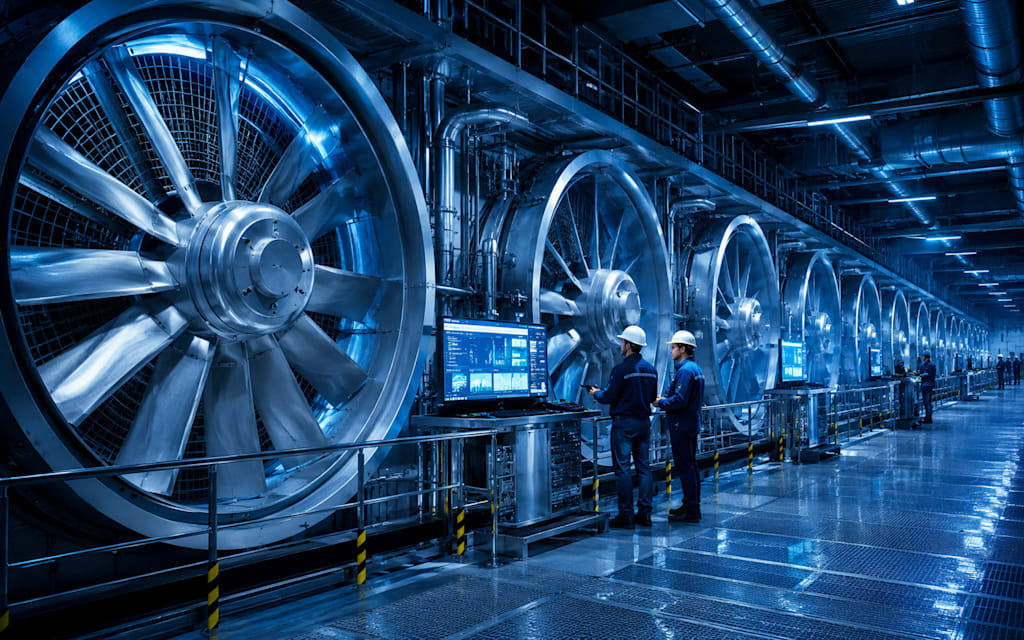
Nobody notices the airflow.
Inside a crowded shopping mall, cool air quietly moves through invisible ducts. In hospitals, precise ventilation protects patients from airborne contamination. Deep inside hyperscale AI data centers, industrial blowers prevent entire server farms from overheating every second of the day.
And yet, most people never think about the technology making all of this possible.
That silent dependency is exactly why the global Fans And Blowers market is becoming one of the most important industrial sectors supporting the modern economy.
According to Mordor Intelligence, fans and blowers market is expected to register a CAGR of 2.47% rising industrialization, increasing HVAC deployment, and expanding cooling requirements across commercial infrastructure continue to drive long-term growth in the fans and blowers industry. As industries pursue energy efficiency and automation, airflow systems are evolving from simple mechanical tools into intelligent infrastructure.
Most people only notice ventilation when it fails.
That’s when factories shut down, data centers overheat, warehouses become unbearable, or hospital systems face dangerous air-quality risks.
Until then, these machines remain invisible giants powering daily life from the background.
The Machines Quietly Supporting the AI Revolution
The AI boom has created an unexpected problem: heat.
Every AI-generated response, cloud upload, streaming video, and machine-learning operation requires enormous computing power. And computing power creates heat at a massive scale.
Modern data centers now operate like digital cities, running thousands of servers around the clock. Without advanced cooling systems, these facilities could fail within minutes.
That’s where industrial fans and blowers become critical.
High-performance airflow systems regulate temperature, maintain equipment reliability, and reduce energy consumption inside hyperscale computing environments. This growing demand is becoming a major driver for the Fans And Blowers market share globally.
Ironically, artificial intelligence itself is now helping optimize airflow management.
Many advanced facilities use AI-powered monitoring systems that automatically adjust fan speeds, detect airflow inefficiencies, and predict maintenance issues before equipment failure occurs.
The result is smarter cooling with lower energy usage.
And energy efficiency matters more than ever.
Electricity costs continue rising worldwide, pushing operators to invest in variable-speed fans, intelligent HVAC systems, and high-efficiency blower technologies capable of reducing operational expenses significantly.
For large-scale data centers, even small airflow improvements can save millions annually.
That economic reality is transforming what used to be a background industrial category into a strategic infrastructure industry.
Smart Factories Are Increasing the Need for Advanced Ventilation
Industrial facilities are changing rapidly.
Traditional factories built around manual labor are being replaced by highly automated production ecosystems filled with robotics, digital sensors, and high-speed manufacturing equipment.
But smarter factories generate new environmental challenges.
Heat buildup, airborne particles, chemical fumes, and dust management all require advanced ventilation systems to maintain productivity and worker safety.
This is another reason the Fans And Blowers market size continues expanding across manufacturing-heavy economies.
Industries increasing their dependence on industrial airflow systems include:
- Automotive manufacturing
- Semiconductor fabrication
- Food processing plants
- Pharmaceutical production
- Cement and steel facilities
- Warehousing and logistics centers
In semiconductor facilities especially, even microscopic airborne contamination can destroy production quality. Precision airflow management has therefore become essential infrastructure rather than optional equipment.
At the same time, climate change is creating additional pressure.
Rising global temperatures are forcing factories, warehouses, and commercial buildings to improve cooling efficiency to protect both equipment and employees.
The hotter the world becomes, the more critical airflow systems become.
That creates long-term momentum for the global Fans And Blowers market.
Suggested Visual Break:
A high-resolution infographic illustrating airflow circulation inside a smart factory with robotic production lines and industrial cooling systems highlighted.
Why Energy Efficiency Is Becoming the Biggest Competitive Advantage
The future of industrial ventilation is not just about power.
It’s about efficiency.
Governments worldwide are introducing stricter environmental regulations targeting industrial electricity consumption and carbon emissions. Since fans and blowers consume substantial energy across industrial facilities, improving their efficiency can create significant sustainability gains.
That’s driving major innovation across the sector.
- Manufacturers are increasingly developing:
- Variable frequency drive (VFD) systems
- Electronically commutated (EC) motors
- Smart airflow analytics platforms
- Low-noise aerodynamic fan blades
- Predictive maintenance technologies
These technologies allow businesses to reduce energy costs while improving operational performance.
According to the Fans And Blowers market report by Mordor Intelligence, industrial expansion and rising demand for HVAC systems remain central growth drivers shaping the future of the market.
What makes this trend fascinating is how invisible the transformation feels to everyday consumers.
People rarely think about airflow engineering when entering a cool office building or shopping mall. But behind those experiences are increasingly sophisticated systems balancing comfort, sustainability, and energy efficiency simultaneously.
The industry is evolving quietly — but rapidly.
The Rise of Silent Technology
Modern consumers now expect comfort without noise.
Luxury hotels advertise whisper-quiet ventilation systems. Premium electric vehicles emphasize cabin airflow acoustics. Smart homes increasingly prioritize silent HVAC operation as part of the user experience.
This shift is influencing product innovation across the entire Fans And Blowers market share landscape.
Manufacturers are investing heavily in aerodynamic optimization, vibration reduction systems, and advanced acoustic engineering to create quieter airflow solutions.
The paradox is interesting:
The better the technology becomes, the less people notice it exists.
And perhaps that’s exactly the point.
Industrial fans and blowers are not designed to attract attention. Their value comes from reliability, efficiency, and invisibility.
They succeed when nobody thinks about them at all.
Why This Industry Could Become Even More Important by 2030
Several powerful trends are continuing to accelerate demand globally:
- Expansion of AI infrastructure
- Growth of smart cities
- Rising urbanization
- Industrial automation
- Green building development
- Climate-control modernization
Renewable energy projects
Together, these forces are steadily increasing the global Fans And Blowers market size.
Future industries such as hydrogen production, EV battery manufacturing, semiconductor fabrication, and advanced logistics infrastructure all depend heavily on precision airflow systems.
Fans and blowers may never become glamorous consumer products.
But they are becoming essential infrastructure supporting the technologies shaping the future world.
And in many ways, the most important technologies are often the ones people barely notice.
Final Thoughts
The next time you walk into a perfectly cooled airport, work inside a modern office tower, or interact with AI-powered digital services, remember this:
Somewhere nearby, an industrial fan is probably working nonstop to make that experience possible.
Invisible technology often has the biggest impact on modern life.
What other overlooked industries do you think quietly keep the world running every day?
About the Creator
efingutthomas
My expertise is custom research across industries such as aerospace & defense, agriculture, animal wellness, automation, automotive, chemicals, consumer goods, electronics, energy, finance, food & beverages, healthcare, hospitality and ICT
Enjoyed the story? Support the Creator.
Subscribe for free to receive all their stories in your feed.
Comments
There are no comments for this story
Be the first to respond and start the conversation.