
Ship Leasing Market: Financing the Vessels That Power Global Trade
How flexible financing solutions are helping shipping companies expand fleets and navigate changing market conditions
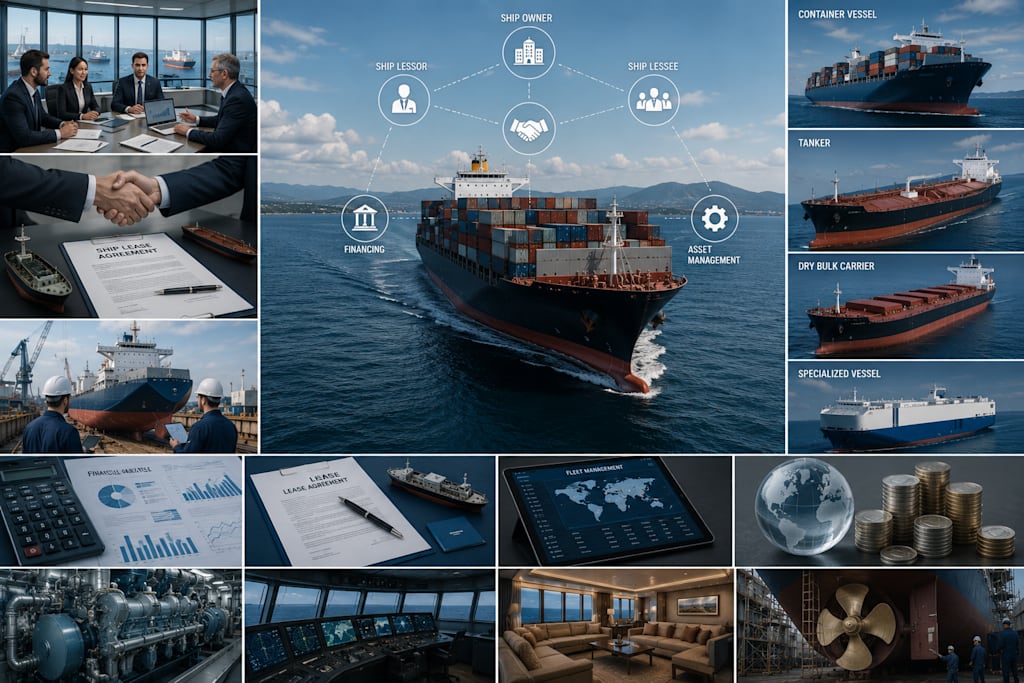
Hook Intro
Every day, thousands of ships move goods across oceans, connecting manufacturers, suppliers, and consumers around the world. Yet behind many of these vessels lies a business model that often goes unnoticed: leasing.
Rather than purchasing ships outright, many operators choose leasing arrangements that provide access to modern fleets without the significant upfront capital investment. As global trade continues to evolve, the Ship Leasing Market is becoming an increasingly important part of the maritime industry, helping shipping companies balance growth, operational flexibility, and financial efficiency.
In a sector where vessels can cost hundreds of millions of dollars, leasing offers a strategic pathway to fleet expansion and modernization.
Why Ship Leasing Matters Today
The shipping industry operates in a highly cyclical environment influenced by global trade volumes, freight rates, fuel costs, and economic conditions. Purchasing vessels outright can require substantial capital, creating financial challenges for operators seeking to expand or modernize fleets.
Ship leasing provides an alternative by allowing shipping companies to access vessels through long-term agreements while preserving capital for other business priorities. Leasing arrangements also offer flexibility in responding to changing market conditions and fluctuating transportation demand.
According to Mordor Intelligence, the Ship Leasing Market size is projected to grow from USD 19.08 billion in 2026 to USD 36.49 billion by 2031, registering a CAGR of 13.84% during the forecast period. Growth is being driven by increasing maritime trade, fleet expansion requirements, and rising demand for alternative vessel financing solutions.
Understanding Ship Leasing Market Size and Share
The Ship Leasing Market size is expanding as shipping companies seek cost-effective methods of acquiring vessels while maintaining financial flexibility. Leasing solutions are increasingly being used across container ships, bulk carriers, tankers, and specialized vessel segments.
Operating leases continue to gain popularity because they allow companies to access modern vessels without assuming full ownership risks. Leasing also enables operators to upgrade fleets more efficiently as environmental regulations and technological requirements evolve.
The Ship Leasing Market share is led by Asia-Pacific, supported by the region's strong maritime trade activity, shipbuilding capabilities, and growing demand for vessel financing. Countries such as China, Japan, and South Korea continue to play a significant role in the global ship leasing ecosystem.
Ship Leasing Market Trends Driving the Industry
Several Ship Leasing Market trends are reshaping maritime finance.
Growing demand for flexible fleet financing solutions is increasing leasing activity.
Expansion of global trade routes is supporting vessel acquisition requirements.
Sustainability regulations are encouraging investment in newer and more efficient vessels.
Digital technologies are improving fleet management and lease monitoring capabilities.
Alternative financing models are becoming more attractive amid economic uncertainty.
These developments are helping shipping companies optimize fleet operations while reducing financial risk.
Why Shipping Companies Are Choosing Leasing Models
Leasing offers several advantages compared to traditional vessel ownership. Companies can expand capacity without committing significant capital, improving liquidity and financial flexibility.
Leasing also allows operators to adapt more quickly to market changes. As shipping demand fluctuates, companies can align fleet size with operational requirements while reducing exposure to long-term ownership risks.
This trend continues to strengthen the broader Ship Leasing Market analysis, where financial flexibility is becoming increasingly important in a competitive and rapidly evolving maritime environment.
Additionally, leasing supports fleet modernization efforts as operators seek vessels that comply with emerging environmental and fuel-efficiency regulations.
Challenges Facing the Industry
Despite strong growth opportunities, the industry faces several challenges. Economic volatility, fluctuations in freight rates, and changes in global trade patterns can impact leasing demand and vessel utilization.
Interest rate movements may also affect leasing costs and financing structures. In addition, evolving environmental regulations require ongoing investment in cleaner and more efficient vessels, creating challenges for both lessors and operators.
Geopolitical tensions and supply chain disruptions can further influence shipping activity and vessel demand across key trade routes.
Ship Leasing Market Forecast and the Road Ahead
The Ship Leasing Market forecast remains positive as maritime trade continues to expand and shipping companies seek greater financial flexibility.
Future growth is expected to be supported by increasing demand for container vessels, bulk carriers, and environmentally compliant ships. Sustainable shipping initiatives and fleet modernization programs are likely to create additional opportunities for leasing providers.
As global commerce continues to depend on efficient maritime transportation, ship leasing will remain an essential tool for helping operators access modern fleets while managing financial risk.
Final Thought
Ships may carry the world's cargo, but leasing helps make many of those journeys possible.
By providing financial flexibility and supporting fleet modernization, ship leasing is becoming an increasingly important pillar of the global maritime industry.
About the Creator
Enjoyed the story? Support the Creator.
Subscribe for free to receive all their stories in your feed.
Comments
There are no comments for this story
Be the first to respond and start the conversation.