
She Walked Away With $38 Billion in Amazon Stock. Wendi Deng Got a House She Can’t Sell.
Two billionaire divorces. Two asset structures. One gave ownership. The other gave permission.
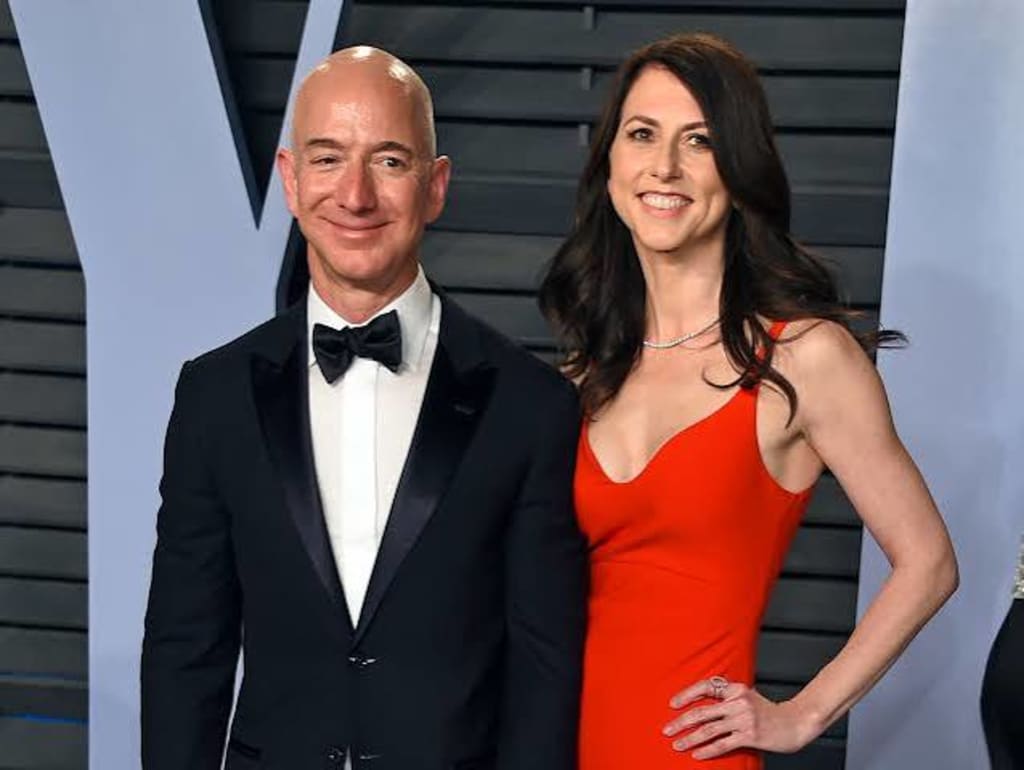
In 2019, MacKenzie Bezos signed the divorce agreement. She kept about 4% of Amazon. She gave Bezos the voting rights. She gave up her interests in The Washington Post and Blue Origin. The stake was worth about $38 billion at the time, nearly a quarter of his wealth.
Amazon started in 1994, during the marriage. When they married, there was no prenuptial agreement. No family trust separated their assets. Washington State is a community-property state. MacKenzie was an early employee. She kept the books, joined decisions, helped move boxes. She could have fought for more.
She didn’t.
A fifty-fifty fight would have run for years. Amazon’s stock would have swung. Both sides’ equity would have shrunk together. Their four children would have faced the media. She traded most of the shares and the voting rights for a clean settlement. What she kept was stock she owned outright. She could sell it. She could hold it. She could give it away. The voting rights went to Bezos. The right to dispose of the shares stayed with her.
That stock made her one of the richest people in the world. She later changed her name to Scott and gave away billions. That was her choice. The choice existed because the shares were in her name.
Wendi Deng had a different set of papers.
In 1999, before Murdoch married Deng, he had already set up a family trust. News Corp’s core equity went into it. The beneficiaries were Murdoch’s children. Deng was not on the list. She signed a prenuptial agreement. She knew the structure.
The reported settlement gave her a Manhattan penthouse, a siheyuan near the Forbidden City, $14 million in cash, jewelry, and art. News coverage described restrictive terms on the two properties: lifetime use, eventual ownership by her two daughters, no right to sell. She held no voting shares in News Corp. She was not a trust beneficiary.
Her daughters were. After Disney bought 21st Century Fox’s assets in 2019, the Murdoch Family Trust beneficiaries received a huge distribution. Reports put each of Deng’s daughters at around $2 billion. They had no voting rights. The beneficial interest was still enormous.
The daughters’ money belongs to the daughters. Deng managed distributions as their guardian. When they became adults, she had no claim on that trust wealth.
Anna Murdoch was the reason the trust existed.
Murdoch’s marriage to Anna lasted 32 years. Before the marriage, there was no asset isolation. Under local law, a 30-year marriage allowed a fifty-fifty split. Anna gave up an equal division and took about $1.7 billion. In the negotiations, she demanded a trust to protect the inheritance rights of her children with Murdoch. She wanted to stop a future spouse from diluting their share.
Murdoch agreed. That trust later kept Deng out.
After Bezos divorced MacKenzie and before he married Sánchez, he signed a prenuptial agreement and used a trust to isolate assets. Sánchez entered a structure that was already built. She could enter the top circles. She could enjoy the resources, exposure, and lifestyle. Amazon’s core equity, Blue Origin, and the family principal were not hers to touch.
Timing decides who sits at the table.
Assets put into a trust before marriage have their legal title transferred to the trust. The settlor names the beneficiaries. If a spouse is not on the list, they cannot divide the principal. They cannot dispose of the underlying equity. They cannot interfere with distributions. Only wealth created during the marriage and left unisolated can be divided. MacKenzie got Amazon shares because Amazon was built during the marriage. Deng could not touch News Corp’s core equity because Murdoch put it into a trust before the wedding.
A trust is not self-executing.
Whether a trust can isolate marital property depends on when it was created, where the money came from, whether it can be revoked, how much control the settlor kept, whether marital property was put into it, whether fraudulent transfer is involved, and local law. The United States has community-property states and equitable-distribution states. China’s Civil Code distinguishes premarital property, marital community property, and contractual property regimes. A spouse may also claim alimony, economic compensation, or a forced share. Rules differ by jurisdiction.
Rights come in four forms.
Ownership. You can sell, mortgage, donate, reinvest. MacKenzie’s Amazon shares are ownership. She holds a slice of the company. She gets dividends and appreciation. She can sell when she wants.
Use rights. You can live there. You cannot sell. Ultimate ownership belongs to someone else. Deng’s siheyuan is use rights. She has a place to stay. She cannot cash out.
Beneficial interest. You can receive distributions. You have no voting rights and no disposal rights. Deng’s daughters hold non-voting trust interests. A beneficial interest can be worth billions. It is not control.
Control. You decide how assets are distributed, how the company is run, where trust principal goes. In the Murdoch Family Trust, control sits with the trust structure and the trustees. Deng is not at that table.
A child can be a beneficiary. That does not make the spouse an owner.
A trust protects the bloodline and the estate. By default, it does not protect the spouse. Deng’s two daughters are secondary beneficiaries of the trust Murdoch created before the marriage. After the divorce, they receive distributions. The ownership belongs to the children. Deng is not a beneficiary. She managed distributions as a guardian. When the children became adults, that link ended.
MacKenzie’s four children are beneficiaries of a trust Bezos created after the divorce. The divorce split was not limited by that trust. The children receive income from their father’s trust. Those assets belong to the children and are separate from MacKenzie’s personal assets. MacKenzie holds Amazon shares. She does not depend on the marriage or on her children for security. She controls her own assets.
Deng chose divorce. She had a calculation.
A trust can lock down assets. It cannot lock down exhaustion or dignity. If she stayed, she could not touch the core wealth. She would remain dependent on a man. She would endure life as an appendage to his circle. She would carry the marriage’s daily cost. The marriage had no emotional support left. It had coldness and the pressure of Murdoch’s circle. Staying longer would not win her more assets. Divorce gave her no core equity. It gave her freedom. It gave her an independent identity. It gave her lifetime residential rights. She paid a low price to regain control of her life.
That calculation is hard for outsiders to read. At the level of billionaire asset planning, she received lifetime residential rights and movable wealth. She did not receive an underlying asset she could cash out. If custody changed, the conveniences tied to her children could shift. She never controlled an asset base of her own.
Sánchez repeated the pattern. When she entered the relationship, control of the assets was already out of her hands. She traded intimacy for class access. She accepted the barriers set up before she arrived. She gave up the bargaining chip of an independent asset base.
Billionaire families do not share marital wealth. They plan before the wedding. They isolate the core. They lock rights in layers. The trust is the line high-net-worth men draw before remarriage.
That line can be crossed. You have to see it before you enter. You have to be part of the rule-making. You have to own something before the structure is built.
MacKenzie’s 4% Amazon stake sits in an account. The price moves. She can sell, donate, or hold. Deng’s siheyuan sits near the Forbidden City. She can live in it. She cannot sell it. When her daughters became adults, the trust documents named them, not her. The documents did not change. The people did.
About the Creator
Jin
Writer of reamstories
https://reamstories.com/jin
Enjoyed the story? Support the Creator.
Subscribe for free to receive all their stories in your feed. You could also become a paid subscriber, letting them know you appreciate their work.
Comments
There are no comments for this story
Be the first to respond and start the conversation.