
She Married Into a Media Dynasty. Thirty-Three Years Later, She Was Gone.
Lee Mi-ran had the family name, the education, and four children. Her story shows how wealth, information control, and inheritance can turn a marriage into a locked room.
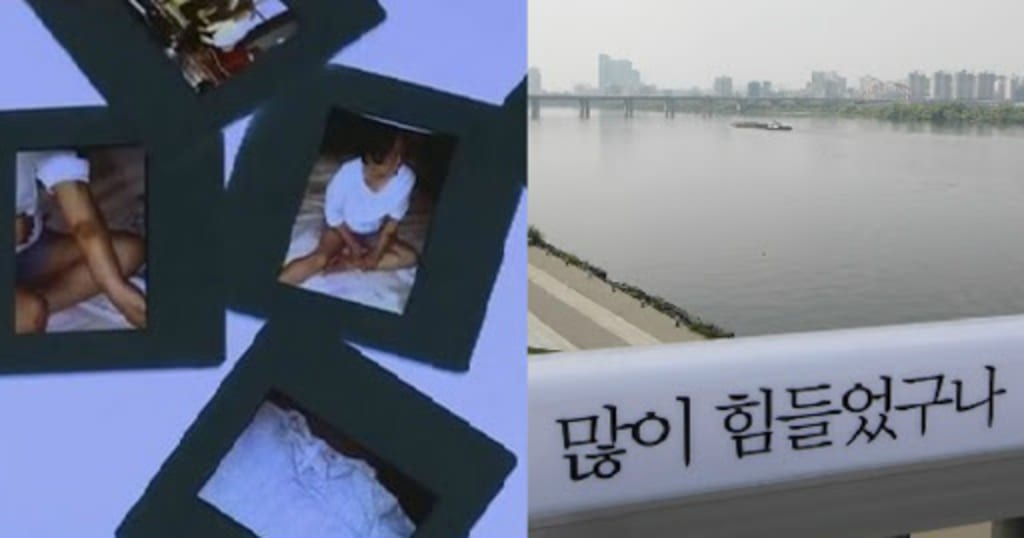
Lee Mi-ran came from a family of doctors and had studied at Korea University. She had an education, good manners, and a family name that commanded respect in Korean society. Later, she married Bang Yong-hoon, the man in control of the Chosun Ilbo. To outsiders, this was a well-qualified girl marrying into a wealthy, powerful family.
In the wedding photos, she stands beside Bang Yong-hoon, smiling appropriately. The Bang family needed that smile. The newspaper group needed a clean, presentable, educated facade. It needed the reputation of a medical family to add another layer of endorsement to the family name. It also needed her to bear children, attend social occasions, and stand in front of the cameras.
She put in her family background, her upbringing, and her fertility, and received the status of a chaebol wife in return. On the day the exchange was made, protection was not written into the contract.
This article draws on MBC’s PD Notebook public investigation. It is an extreme case; not all marriages into wealthy families are like this. But the process of power bargaining inside the marriage is worth using as risk-assessment material for women who seek to marry upward.
I. The facade
In the early years of the marriage, the surface propriety remained. Bang Yong-hoon took her to events. The Bang family introduced this daughter-in-law’s education and family background to others. She wore custom-made clothes, stood where she was supposed to stand, and said what she was supposed to say.
The changes began with very small actions.
Her friends were filtered. Which people she could see and which people she should see less of, the household had its own set of judgments. The number of times she went back to her parents’ home decreased. Each time the reason was different: the family had something going on, the children needed someone, the social schedule was full. As time went on, the contacts in her phone grew fewer, the people she could invite out for tea grew fewer, and the people she could call when something happened grew fewer.
The money was also being tightened. She carried the title of a chaebol wife, but she had no money she could freely dispose of. Everything she bought had to be reported. Large expenses had to be approved; small expenses had to have their purpose explained. Expensive clothes hung in her wardrobe, but there was no cash in her account that she could use at any time. When she went out, she had a car, a driver, and a schedule, but she did not have a ticket that would let her decide for herself where to go.
Family conflicts began to be attributed to her. If the children were noisy, it was because she had not taught them well. If something went wrong at a social occasion, it was because she was not presentable enough. If Bang Yong-hoon was in a bad mood, it was because she did not know how to read his face. The same set of explanations was repeated for years, repeated until the other people in the household repeated them too.
Four children were born one after another. Her ties grew heavier. Breastfeeding, school, illness, studying abroad. Each thing bound her more tightly to this family. The roads she could take narrowed one by one.
II. The children
For years, Bang Yong-hoon spoke badly about the mother in front of the children. The servants, the tutors, and the social circle heard the same narrative. From childhood onward, the children received the father’s version. When the mother appeared before them, she often brought quarrels, tears, and exhaustion. When the father appeared, he brought resources, schools, inheritance rights, and the future.
That year, Bang Yong-hoon set aside 5 billion won and gave it to Lee Mi-ran for all the expenses of the four children’s overseas study. Following her husband’s arrangement, Lee Mi-ran gave the money to her older sister, who lived overseas, to settle the children in school and deal with the various troubles they got into abroad. The money was spent on the children, consumed bit by bit.
Years later, Bang Yong-hoon turned on her and changed the story. He told outsiders that this huge sum had been secretly diverted by Lee Mi-ran to subsidize her own family. He called the four adult children before him and laid out the terms of a trade: I have no spare assets on hand right now. If you want the family inheritance, go make your mother return this money. Whoever gets it done will have the qualification to inherit.
The children knew where that money had gone. They had lived through the overseas housing, the tuition, the expenses of cleaning up trouble. But on the other side of the scale were the family resources, inheritance rights, and entry tickets to their social circle. The father’s narrative was repeated in the house every day, the servants repeated it, the environment repeated it. It was repeated until one day the mother became “the sinner of the family,” and they became “the people who solve the family’s problems.”
In 2016, the conflict erupted. The Bang family decided to have Lee Mi-ran declared mentally unstable and sent to a psychiatric hospital, stripping her of her personal autonomy. The four children cooperated with their father and got all the servants and security out of the way. They used force on their own mother. Lee Mi-ran clung desperately to the sofa and refused to be dragged away. The seam of the sofa arm split open, and the stuffing showed. The children she had raised stood nearby, and someone shouted: “Just cut off her hand.”
That sentence remained in the investigation report. The stuffing on the sofa also remained in that room.
Children did not become the fallback insurance in her marriage. With inheritance rights on the table, blood ties were repriced.
III. Seeking help
She raised the idea of divorce. She was willing to leave with nothing, give up all the property, and ask only for personal freedom. She went to look for lawyers.
Bang Yong-hoon was backed by the Chosun Ilbo media group. This group could sway the direction of public opinion in South Korea. After Lee Mi-ran began looking for lawyers, Bang Yong-hoon sent a warning across the profession: any firm that dares take her case is an enemy of the Bang family, and I will make it impossible for that firm to stand in South Korea.
More than a dozen law firms declined. Some lawyers listened to the situation over the phone and said they could not help. Some lawyers privately advised her: Give up. You cannot beat them.
She called the police. The police categorized the matter as an internal family dispute and closed it perfunctorily.
She fled back to her parents’ home. The Bang family still would not let her go. They sent people to smash the doors and windows and continued to intimidate the entire Lee family, pressuring them to hand Lee Mi-ran over. The doors and windows were smashed and left with gaps. The Lee family stood inside the house, with no comparable force to counter them. Her family could take her in, but they had no ability to block retaliation over the long term.
Her escape routes were sealed one by one. Her social circle was cut off, her cash flow was subject to approval, law firms did not dare take the case, the police report went nowhere, and her family’s doors were smashed. The only identity left in her hands was the Bang family’s daughter-in-law. That identity could not protect her; it could only mark whom she belonged to.
IV. The basement
From May to August 2016, she was confined in the basement of the villa for four full months.
The basement was dark and closed off. The windows were nailed shut with wooden boards. Each day the food was only sweet potatoes and eggs, often spoiled leftovers. Sweet potato peels piled beside a plastic basin. She had once stood at social occasions holding a wine glass; now she waited in the basement for a meal.
She wrote a will. One sentence in it said: Compared with death, I am more afraid of having to endure the cruel treatment my husband imposes on me again.
The basement, the children’s use of force, the law firms’ refusals, the smashed doors of her family’s home. These things stacked on top of one another. In the early hours of September 1, 2016, she left a recording and a will, drove alone to the Han River bridge, and jumped into the water. She was 56.
In the recording, she repeatedly said, “I am sorry to my parents.” She did not talk in the recording about the Bang family’s newspaper, about inheritance rights, or about the 5 billion won. She spoke of her parents.
V. Eight hours
After she died, before her family had arrived and before relatives had confirmed the body, the Bang family took the body away and completed cremation in just a few hours. Eight hours. The bruises and injuries left by long-term beatings and confinement disappeared with the fire. Key physical evidence was lost.
At the subsequent trial, Bang Yong-hoon pushed all the blame onto his son and daughter. The eldest son and eldest daughter received eight months in prison, suspended for two years, and barely served any real time. Bang Yong-hoon, relying on media influence to interfere with evidence collection and public opinion, was found to have insufficient evidence, walked away completely, and continued to hold the family wealth and businesses.
The time remained on the crematorium receipt. The eight-hour figure appeared repeatedly in investigation reports and public questioning. The detail the Bang family wanted to suppress became a suspicion that could not be suppressed.
VI. The survivor’s resource structure
Lim Se-ryung’s escape from Samsung is often used for comparison. She was able to walk out not because she said, “I want to be independent.” Her family had industrial capital that could be connected, an independent legal team that could be activated, and cash flow that did not require approval from her husband’s family to support the litigation cycle.
Lee Mi-ran’s family had reputation. Reputation needs social consensus to be cashed in, and social consensus can be reshaped by media controlled by capital. She herself had education and upbringing, but after marriage these were stripped of the settings in which they could be used. What she lacked was cash flow independent of the marriage, social connections independent of her husband’s family’s information network, and a legal and financial contingency plan that could be activated in the early stage of the relationship’s deterioration.
They are bargaining chips. When you hold something the other side cannot take away, the other side calculates the cost of squeezing you.
Bang Yong-hoon held Lee Mi-ran in place by pinning down two positions: she feared that a divorce scandal would backfire on the reputation of a medical family, and that her parents and brothers would suffer career blows because of her marriage; she was a mother, and her children were her greatest concern, so cutting off contact between mother and children could restrain her. He also released goodwill intermittently, creating the expectation that “if she endured a little longer, things would improve.” She stayed in the mire again and again.
Time did not automatically give her respect. Time reinforced the existing power structure. Her forbearance was read as a signal that the boundary could be pushed further down.
VII. The river’s surface
Cars passed over the Han River bridge in the early morning. Her car stopped by the bridge. In the recording, “I am sorry to my parents” appeared again and again. Eight hours later, the body was cremated. The wooden boards on the basement windows were taken down, the sofa arm was replaced, and the newspaper group continued to publish.
After daybreak, a cleaning boat passed over the river. On the bridge railing, a corner of caution tape was lifted by the wind.
About the Creator
Jin
Writer of reamstories
https://reamstories.com/jin
Enjoyed the story? Support the Creator.
Subscribe for free to receive all their stories in your feed. You could also become a paid subscriber, letting them know you appreciate their work.
Comments
There are no comments for this story
Be the first to respond and start the conversation.