
She Had Every Advantage. She Still Couldn’t Buy Herself Out.
Ivanka Trump’s marriage is less a fairy tale than a lesson in how family strategy can quietly limit even the most privileged woman’s choices.
1. Mistaking “Being Rich” for “Being Free” Is the Biggest Illusion of Onlookers
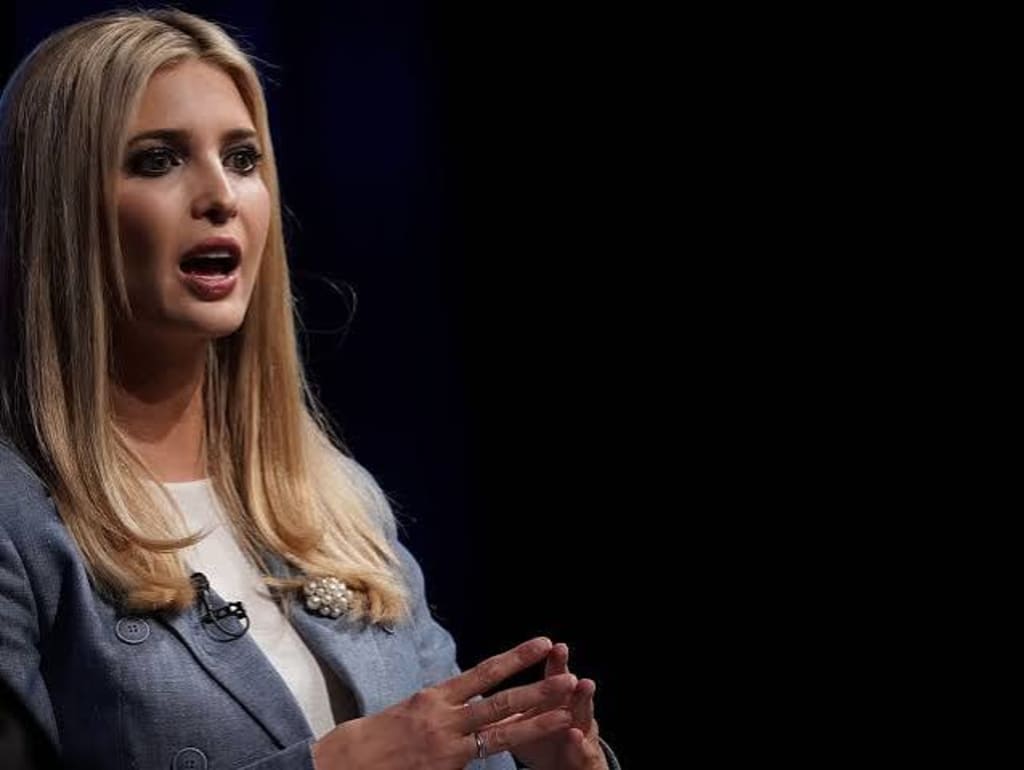
Ivanka’s public résumé is there for all to see: Wharton graduate, former model, founder of a fashion brand, development and acquisitions work at the Trump Organization, senior advisor at the White House, wife of a Kushner family real-estate heir, three children, and always composed in front of the cameras.
So onlookers naturally conclude: a woman like this can marry whomever she wants, stay single if she wants, build a career if she wants, and return to family life if she wants.
That conclusion misses a key distinction. The resources a person possesses in society and the life sovereignty she possesses within a clan system are two different things.
At the Trump Organization she could sign off on projects. At her fashion brand she could decide design direction. At the White House she could push specific issues. Within all those identities, she was always a representative of the Trump family. Once she entered a cross-family marriage, her marriage choices, faith, reproductive rhythm, and career advances and retreats were no longer decided by her alone. She had to face both the Trump family’s business and political layout and the Kushner family’s religious and bloodline rules.
She had choices. The price of those choices had already been marked in advance by two sets of family logic.
2. Marriage as Family Strategy: Emotion Is the Underpainting, Interest Is the Frame
The Kushner family has long operated in New York real estate and the Jewish community, connected to capital, media, religious networks, and political lobbying resources. The Trump family survives on business, public opinion, and elections. It needs Jewish-community votes and access to New York elites.
The public narrative of the marriage is a powerful alliance. Jared Kushner and Ivanka do coordinate smoothly in public. The underlying logic of the marriage is not the love story of two young people. It is the restructuring of two family balance sheets.
For the Trump family: access to the Kushner family’s New York real-estate network, Jewish community relations, media channels, and political fundraising pipelines.
For the Kushner family: access to the Trump family’s national exposure, real-estate base, political prospects, and public face. The Kushner family had previously been mired in legal troubles. After the marriage, family members became deeply involved in Washington power channels and Middle East geopolitical projects, and the family business expanded by leaps and bounds.
Each side got what it needed. The price of the exchange fell first on the person called the daughter-in-law.
3. Conversion: The First Threshold for Entering the Clan System
The Kushner family is an Orthodox Jewish family. In this family, religion is not a weekend church ritual. It is the core mechanism of clan boundaries. For an outsider daughter-in-law to enter, the religious threshold is the first sieve.
Public reporting shows that Ivanka underwent systematic Jewish study, religious examination, and a conversion process. After marriage she observed kosher rules, abstained from electronic devices on the Sabbath, and participated in Jewish holiday gatherings. These details have been written about repeatedly by the media and need no retelling.
What matters is the nature of the process. Ivanka converted as an adult, and there was certainly an element of personal identification. When religion becomes a hard threshold for marriage, the word “choice” has already been structurally compressed. She could accept it, or she could not marry. She could not both enter this family and completely bypass its rules.
Conversion is the first layer of assimilation. First rewrite the identity of faith, then incorporate you into the family’s order of life. You can keep your business mind and public charisma, but within the clan, you must first be a daughter-in-law who meets the rules.
4. Childbirth: An Invisible Obligation Dressed Up as Blessing
Ivanka had three children after marriage. What the outside world sees is family photos.
In the context of Orthodox Jewish clans and elite marriage, childbirth serves multiple functions. For the husband’s family, it strengthens the clan. For the natal family, it stabilizes the alliance. For the outside world, it displays elite respectability. For the woman herself, it means surrendering part of her body, time, and career opportunities.
Saying she was completely forced would be inaccurate. She may love a large family. Personal willingness and structural expectation are two different things. When the husband’s clan encourages many children, when the social circle treats multiple children as a daughter-in-law’s diligence, and when having few or no children would be read as unwillingness to bear clan responsibility, a woman’s choice is already surrounded by layer upon layer of external expectation.
Elite marriage excels at packaging obligations as honors. Many children are a blessing. Returning to the family is wisdom. Retreating behind the scenes is dignity. It all sounds pleasant. Behind it remains the discipline of a woman’s life rhythm.
5. Career: From Heir Apparent to Connector
Before marriage, Ivanka had her own fashion brand and was once seen as a key political heir being groomed by the Trump family. She was smart, ambitious, and skilled at managing her public image.
After entering marriage and the White House, the boundaries of her career were redrawn. The role of senior White House advisor looked glamorous. On major issues she had to balance the Kushner family’s position, her father’s political agenda, and her own public image. After the end of Trump’s first term, she publicly announced her withdrawal from politics and shifted her focus to family and private life.
The outside world often reads this step as actively choosing family. A more accurate description is that her withdrawal was the combined result of personal choice, the toll of childbirth, political risk, the Kushner family’s interests, and the larger picture of her natal family.
If she had continued on an independent political path, what would have happened? She might have torn apart the alliance the two families had painstakingly built. She might have triggered a conflict between the Jewish community and Trump supporters. She might have made the couple’s alliance awkward. Politics was not a road she could walk to the end simply because she wanted to. However strong her natal family was, it could not eliminate all that friction for her.
The Ivanka once seen as Trump’s successor gradually contracted her battlefield and became the connector between two great families. She remained dignified, influential, and able to access top-tier resources. The direction of her career no longer belonged entirely to herself.
6. Courtesy Is Not Acceptance: The In-Laws’ Respect Has Boundaries
Many people compare Ivanka with other women who married into elite families and conclude that if the natal family is strong, the treatment is different. Ivanka can sit at the main table, attend core occasions, and receive surface-level respect.
That comparison is only half right.
A strong natal family does raise the floor. The Kushner family needs the Trump family’s resources, so it will not give Ivanka naked humiliation. She does not have to endure the public shame of an outsider marrying above herself. That is what the natal family’s cards do.
Courtesy is not core acceptance. Surface respect is the result of interest bargaining, not the unconditional recognition of clan bloodline. In matters involving core family trusts, major investment decisions, and private clan deliberations, the places where power and assets are actually at stake, an outsider daughter-in-law is usually still placed outside the boundary of “our own people.” Media narratives about attending without voting rights or core deliberations distinguishing bloodline may not each be accurate. The structural logic they reflect is real. You can be respected without being treated as direct lineage.
She is Kushner’s wife, the mother of his children, the bond between two great families. Within the core circle of the clan, she is first the daughter-in-law who came from Trump.
7. What the Natal Family’s Cards Can and Cannot Do
The Ivanka case breaks two illusions.
First illusion: as long as the natal family is strong enough, marrying into an elite family allows you to fully preserve yourself.
No. A strong natal family can keep you from public humiliation, give you bargaining chips, and raise your bottom line in marriage. It cannot eliminate the structural compromises of cross-clan marriage. You still face religious rules, reproductive expectations, career trade-offs, and boundaries on public speech. The cards can improve your situation. They cannot abolish the rules of the game.
Second illusion: as long as the two sides are evenly matched, there will be no consumption.
Also no. Evenly matched power can reduce one-sided crushing. It cannot eliminate two-way exchange. You gain access to elite circles, and you give up part of your personal choice. You gain family resources, and you take on family obligations. Exchange is always two-way. The price is sometimes invisible.
Ivanka is not the kind of outsider with no natal capital at all, forced to endure comprehensive exclusion from the circle. She has a complete elite base, public recognition, White House experience, and social capital that remains monetizable after withdrawal. Her situation is far better than that of many outsider daughters-in-law. Structurally there is still something in common. When marriage is a family strategy, a woman’s faith, childbearing, career, and public stance can hardly remain entirely loyal to herself.
8. Ivanka Is Not a Puppet, but Her Agency Has Boundaries
It is easy to write Ivanka as a pure victim. She is treated as an asset by her natal family, as an outsider by her in-laws, as an ally by her husband, converted by religion, consumed by childbirth, and withdrawn from politics.
That narrative has impact. It is not entirely accurate.
Ivanka is not someone without choices. She has an extremely strong educational background, financial resources, media capacity, and the ability to exit. She chose to enter this marriage, chose to convert, chose to serve in the White House, and chose to withdraw from politics at the appropriate time. There must have been her own judgment, interest calculations, and emotional investment in all of it. She is a rational actor making optimal choices within a structure. She is not a puppet pushed along passively.
A more accurate formulation is that she has agency, but her agency operates within the boundaries drawn by two sets of family rules. She can fight for dignity, manage the couple’s alliance, hold on to her natal family’s backing, cut boundaries around her career, and maintain silence and elegance in public. She lives better than the vast majority of people. She still has to pay the price for her position.
This is the hidden nature of structural shackles. They do not stop you from succeeding. They prescribe the path and boundaries of your success.
9. A Reminder for Ordinary Women: Do Not Treat the Natal Family’s Cards as a Universal Exemption
This article is not saying “do not marry into an elite family.” It is saying do not imagine marriage as a purely personal choice, and do not imagine the natal family’s strength as a universal exemption.
Many girls from comfortable backgrounds have an illusion. As long as my natal family is rich and powerful, when I marry into another elite family I will be free from the rules. I can live by my own faith, have children at my own pace, build my career according to my own plan, and speak publicly as I wish. The other family will respect me unconditionally because my natal family is strong.
Reality is often more complicated. A strong natal family can buy courtesy. It can buy freedom from public humiliation. It can buy a seat at the negotiating table. It cannot buy unconditional acceptance into the other clan’s core circle, nor can it buy a personal will completely free from compression. You still have to balance two great families. You still have to trade off career and family. You still have to put away “myself” on certain occasions and first play “someone’s wife” or “someone’s daughter-in-law.”
None of this means all elite marriages are unhappy. None of it means all cross-family marriages are necessarily repressive. It means that as long as marriage is essentially an exchange of family interests, there is no one-hundred-percent personal freedom to do exactly as one pleases. You can be happy. Happiness is not structural exemption.
10. The Measure of Freedom: Having the Option Not to Treat Yourself as a Bargaining Chip
What matters in Ivanka’s story is not how well she married, nor how harsh her in-laws are. It is that the story punctures an illusion about top-tier women. Being rich, famous, and backed by a powerful natal family does not equal possessing full sovereignty over one’s life.
She holds top-tier cards and still has to compromise on faith, childbearing, career, and public stance. Her dignity is built on self-restraint and interest balancing. She can live very well. She may not live entirely as herself.
Freedom is not holding stronger cards to negotiate better treatment in an elite marriage. That is still placing oneself inside a family game, only with more chips.
The measure of freedom is whether you have the option. I can choose an alliance marriage, or I can choose not to marry. I can choose an elite family, or I can choose an ordinary partner. I can compromise for the family’s interests, or I can refuse to treat myself as a strategic asset. When the major marriage choices of your life are first loyal to your own heart rather than the family’s larger agenda, that is complete freedom.
The structural shackles Ivanka cannot escape remind us not that elite families are terrifying, but of a more universal problem. When marriage is written as an interest contract, part of a woman’s life sovereignty is quietly moved away. The natal family’s cards can help you suffer less humiliation. They cannot win that part back for you.
About the Creator
Jin
Writer of reamstories
https://reamstories.com/jin
Enjoyed the story? Support the Creator.
Subscribe for free to receive all their stories in your feed. You could also become a paid subscriber, letting them know you appreciate their work.
Comments
There are no comments for this story
Be the first to respond and start the conversation.