
Selecting the Right Runway System for Heavy-Duty Overhead Crane Operations
Engineering Stability, Load Accuracy, and Long-Term Performance in Industrial Crane Infrastructure
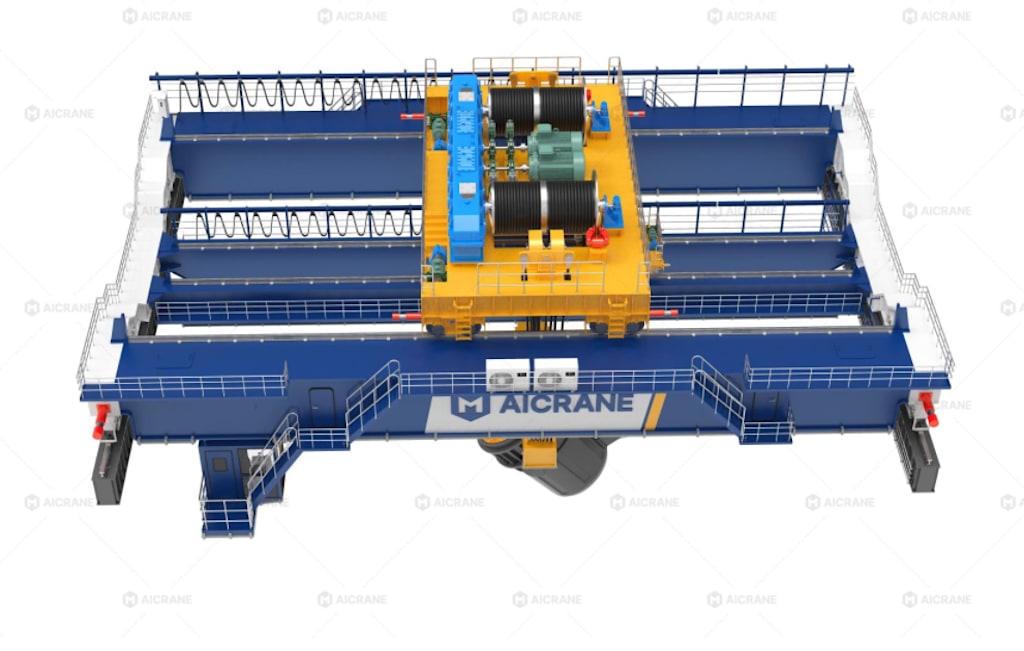
In heavy-duty overhead crane systems, the runway is not just a supporting structure—it is the foundation that defines crane performance, operational safety, and long-term reliability. A poorly selected runway system leads to excessive deflection, rail misalignment, wheel wear, vibration issues, and even structural fatigue failures over time.
Selecting the right runway system is therefore a structural engineering decision that directly impacts heavy duty overhead crane capacity utilization, maintenance cost, and production continuity. The selection must consider load intensity, duty classification, building structure, installation method, and long-term operating conditions.
1. Understand the role of the runway system in heavy-duty cranes
The runway system is the fixed track structure that supports and guides crane movement. It typically consists of:
Runway beams
Crane rails
Supporting columns or building frames
Connection and anchoring systems
Its function is to transfer all crane-related forces into the building structure or independent supports while maintaining precise alignment for smooth crane travel.
In heavy-duty applications, runway systems must resist:
High vertical wheel loads
Dynamic impact forces during lifting
Longitudinal forces from acceleration and braking
Lateral forces caused by skewing or misalignment
As load capacity increases, the importance of runway stiffness and fatigue resistance becomes significantly more critical.
2. Choose between supported and freestanding runway systems
The first major decision is the structural configuration of the runway system.
2.1 Building-supported runway system
This system connects runway beams directly to building columns or structural frames.
Advantages:
Lower structural cost if building is designed for crane loads
Efficient use of existing structural system
Suitable for integrated industrial buildings
Limitations:
Building must be designed for crane loads from the beginning
Limited flexibility for future capacity upgrades
Retrofit complexity in existing structures
This is commonly used in factories, steel plants, and manufacturing halls.
2.2 Freestanding (independent) runway system
This system uses independent columns and foundations to support crane loads.
Advantages:
Does not rely on building structure
Suitable for very heavy-duty cranes
Easier to upgrade crane capacity in future
Better control of alignment and stability
Limitations:
Higher civil engineering cost
Requires dedicated foundation design
Freestanding systems are preferred in heavy-duty environments such as steel fabrication yards, power plants, and large assembly facilities.
3. Runway beam selection: stiffness is more important than strength alone
Runway beam selection is often misunderstood as a pure strength problem. In reality, deflection control and fatigue resistance are more critical than ultimate strength.
Common beam types:
Rolled wide flange beams (light to medium duty)
Welded plate girders (heavy duty)
Box girders (extreme heavy duty applications)
For heavy-duty crane operations, welded plate girders are commonly preferred due to:
Higher stiffness-to-weight ratio
Better fatigue resistance
Ability to optimize geometry for deflection control
Excessive deflection causes rail misalignment and increases crane wheel wear, which directly reduces system life.
4. Crane rail system selection is critical for load distribution
The crane rail is the direct interface between crane wheels and runway beams. Its selection determines load distribution quality and wear behavior.
Common rail types include:
ASCE rail profiles (heavy-duty applications)
Square bar rails (light-duty systems only)
Special hardened rails for high cycle operations
For heavy-duty double girder cranes, ASCE-type rails are widely used because they:
Provide consistent wheel contact surface
Reduce localized stress concentration
Improve fatigue performance under repetitive loading
Rail attachment methods also matter:
Bolted rail clips (preferred for maintenance flexibility)
Welded systems (less flexible, higher fatigue risk)
Hybrid systems (for extreme duty applications)
Poor rail alignment or improper fastening leads to skewing, vibration, and premature wheel wear.
5. Control deflection limits to protect crane performance
Deflection is one of the most important design parameters in runway system selection.
Even if a beam has sufficient strength, excessive deflection leads to:
Rail misalignment
Crane skewing
Increased structural fatigue
Higher maintenance frequency
Typical design practice limits deflection based on span length and crane duty class, often within strict ratios such as L/600 or more conservative values for heavy-duty systems.
In heavy-duty operations, tighter deflection control is preferred because:
Loads are heavier
Cycle frequency is higher
Tolerance for misalignment is lower
6. Consider dynamic loads, not just static wheel loads
A common mistake in runway system selection is focusing only on static crane wheel loads.
Heavy-duty crane operations involve significant dynamic effects:
Impact during load pickup
Acceleration and braking forces
Trolley movement forces
Skewing effects during travel
These forces increase stress beyond static calculations and must be included in runway beam design.
In practice, dynamic loads can significantly increase effective wheel forces, especially in high-speed or high-cycle operations.
Ignoring dynamic loading leads to premature fatigue cracking in runway beams and connections.
7. Structural connection design determines system reliability
Runway systems fail not only due to beam sizing but often due to connection weakness.
Key connection areas include:
Beam-to-column connections
Rail fastening systems
Expansion joints
End stops and buffers
In heavy-duty systems, connections must allow:
Controlled load transfer
Thermal expansion movement
Fatigue resistance under cyclic loading
Poor connection design leads to stress concentration, which becomes a primary failure point over long-term operation.
8. Fatigue resistance is critical for long-term operation
Heavy-duty cranes operate under repeated loading cycles, making fatigue design more important than ultimate strength.
Fatigue issues occur due to:
Repetitive wheel loading
Stress concentration at welds
Misalignment-induced lateral forces
Variable load cycles
Plate girders and properly designed welded structures perform better in fatigue-sensitive environments compared to standard rolled sections.
Regular inspection access should also be considered during runway system selection.
9. Alignment accuracy directly affects crane performance
Even small runway misalignment leads to major operational issues:
Crane skewing
Increased wheel flange wear
Higher rolling resistance
Structural vibration
Proper installation tolerances must be planned from the design stage, including:
Beam straightness
Rail alignment precision
Leveling accuracy across spans
Heavy-duty cranes are especially sensitive to alignment errors due to higher wheel loads.
10. Future expansion capability should not be ignored
Runway systems should not be designed only for current crane capacity.
Key considerations for future-proofing:
Possible crane capacity upgrades
Additional crane installation on same runway
Production expansion
Increased duty cycle requirements
Freestanding runway systems often provide better long-term scalability compared to building-integrated systems.
Conclusion
Selecting the right runway system for heavy-duty overhead crane operations requires a multi-parameter engineering approach rather than simple beam sizing.
The correct system must balance:
Structural capacity and stiffness
Deflection control
Dynamic load resistance
Rail system performance
Connection reliability
Fatigue resistance
Future scalability
In heavy-duty environments, the runway system is not just a support structure—it is a long-term performance backbone of the entire crane system. Proper selection ensures stable operation, reduced maintenance cost, and extended service life under continuous industrial loading conditions.
About the Creator
Aicrane01
Welcome to the Aicrane Blog, your practical guide to lifting solutions. Discover articles covering overhead cranes, gantry cranes, winches, steel structures, boat lifts, and more.
Website: https://steelmillcranes.com/
Enjoyed the story? Support the Creator.
Subscribe for free to receive all their stories in your feed.
Comments
There are no comments for this story
Be the first to respond and start the conversation.