
Securing the Switch: Singapore Launches Historic LNG Procurement as GasCo Takes Center Stage
As the city-state prepares to expand its power generation capacity by 26%, the newly formed state buyer initiates its first term supply tender, signaling a strategic pivot from spot market reliance to long-term energy security amid regional supply tightening.

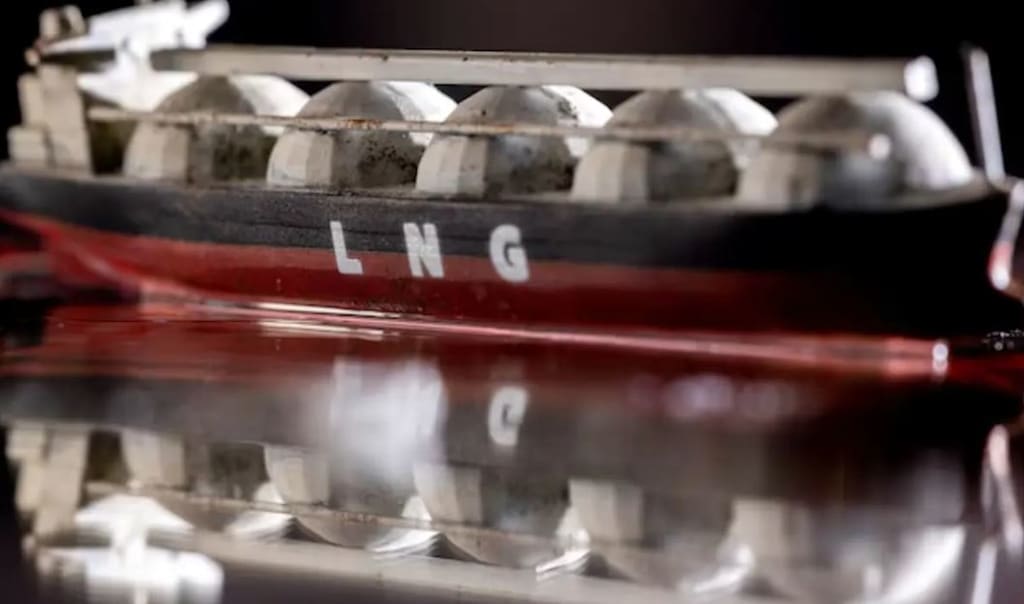
Singapore has taken a decisive step toward fortifying its energy future, launching its first major procurement exercise to secure long-term liquefied natural gas (LNG) supplies. The move, announced by Gan Siow Huang, Minister of State for Energy, Trade and Industry, marks a critical milestone for GasCo, the state-owned entity established in 2025 to centralize the nation’s gas procurement. With natural gas fueling approximately 95% of Singapore’s electricity generation, the stability of these supply chains is not merely an economic concern but a matter of national security.
The timing of this procurement is driven by an urgent need to match supply with a rapidly expanding demand profile. The Singapore government recently announced plans to add five new gas-fired power plants, a move that will boost the country’s electricity generation capacity by roughly 26% early in the next decade, rising from the current baseline of around 12 gigawatts. This expansion is essential to support the nation’s growing digital economy, particularly its burgeoning data center sector, and to ensure grid reliability as it transitions away from older infrastructure.
From Spot Markets to Strategic Contracts
For years, Singapore’s LNG strategy relied heavily on a mix of pipeline imports from neighboring Malaysia and Indonesia, supplemented by flexible spot purchases on the global market. However, the volatility of spot prices and the increasing competition for LNG globally have necessitated a more robust approach. GasCo’s new mandate is to secure long-term contracts that provide price stability and guaranteed volume, reducing exposure to the whims of the international spot market.
According to Tan See Leng, Minister for Energy, Trade and Industry, GasCo is on track to award its first contracts by 2027, with deliveries scheduled to begin in 2028. This timeline aligns perfectly with projected supply gaps. Analysts estimate that Singapore will face a shortfall of approximately three million metric tons of LNG in 2028 and 2029, a deficit expected to widen to six million tons by 2035.
Alan Heng, Chief Executive of GasCo, emphasized that while long-term contracts will form the backbone of Singapore’s supply strategy, flexibility remains paramount. "There will be long-term contracts to underpin what we have to do. And then you have to pay for flexibility... We will rely on spot (purchases) to build that," Heng explained. The procurement exercise specifically seeks clauses that allow for volume flexibility and cargo diversion, enabling Singapore to adjust deliveries based on real-time demand or emergency needs.
Infrastructure Expansion: Terminals and Feasibility Studies
To handle the increased influx of LNG, Singapore is simultaneously upgrading its physical infrastructure. Construction is already underway on the country’s second LNG import terminal, which boasts a regasification capacity of five million tons per annum (mtpa). Scheduled to become operational by 2030, this facility will raise Singapore’s total regasification capacity to 15 mtpa, providing a crucial buffer against supply disruptions.
Looking further ahead, Minister Gan revealed that the government is studying the feasibility of a third LNG import terminal on the northeastern island of Pulau Tekong. While no specific details regarding the size or cost of this potential project were provided, its consideration underscores the government’s long-term commitment to maintaining an oversupply capability, ensuring that energy security is never compromised by single points of failure.
Regional Vulnerabilities and ASEAN Cooperation
The urgency of Singapore’s moves is highlighted by recent shifts in regional energy dynamics. Earlier this year, Indonesia’s upstream oil and gas regulator cut pipeline gas exports to Singapore by 31 million standard cubic feet per day, diverting the supply to meet its own domestic power needs. This reduction serves as a stark reminder of the risks associated with relying on cross-border pipelines, where supplier priorities can shift abruptly due to domestic pressures.
In response, GasCo is exploring a more collaborative regional approach. Alan Heng suggested that Southeast Asia should view itself as a unified destination for LNG rather than a collection of competing national markets. "Is there an opportunity for us to work together... so that as an ASEAN region, we might look after each other's interests?" Heng asked. By pooling demand and negotiating collectively, smaller importers in the region could potentially limit costs and gain greater leverage against major global suppliers. This concept of "energy solidarity" could become a defining feature of ASEAN’s energy policy in the coming decade.
Diversifying the Green Mix
While LNG remains the transitional fuel of choice, Singapore is also laying the groundwork for a lower-carbon future. Minister Gan announced that Keppel Energy, Sembcorp Utilities, and Tuas Power have been appointed to test the commercial viability of importing and using biomethane. This initiative aims to explore how renewable gases can be integrated into the existing grid for power generation and industrial decarbonization, offering a pathway to reduce the carbon footprint of gas-fired plants without compromising reliability.
As GasCo navigates its first major procurement cycle, the eyes of the global energy market are watching. Singapore’s ability to secure favorable long-term terms while building redundant infrastructure will set a benchmark for other import-dependent nations. In an era of geopolitical uncertainty and energy transition, Singapore is betting that centralization, strategic foresight, and regional cooperation are the keys to keeping the lights on.
About the Creator
Mark Lim
Hi I am mark an automotive student and a car, tech and food enthusiast ! Im gonna try and post daily & hope you enjoy what I write and do share my page with people you know. I would gladly appreciate it! Cheers
Enjoyed the story? Support the Creator.
Subscribe for free to receive all their stories in your feed.
Comments
There are no comments for this story
Be the first to respond and start the conversation.