
Securing the Future: Exploring the Automotive Cybersecurity Market
Securing the Future: Exploring the Automotive Cybersecurity Market
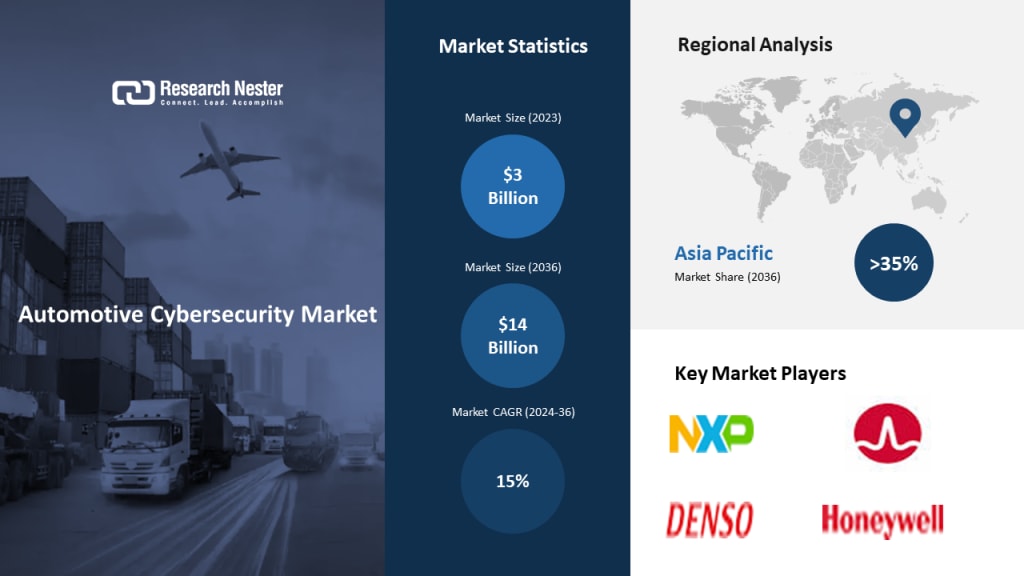
The Automotive industry is undergoing a revolutionary transformation. Modern vehicles are no longer just mechanical machines, they are complex networks of interconnected systems, often referred to as “computers on wheels”. With the rising number of connected and autonomous vehicles, the need for robust cybersecurity measures is also becoming critical than ever. Here we explore the rapidly evolving automotive cybersecurity industry, highlighting key trends, challenges, and the future outlook.
Understanding the Automotive Cybersecurity Background
Automotive Cybersecurity encompasses the protection of vehicle systems and networks from cyber threats. It involves safeguarding critical components such as infotainment systems, telematics, advanced driver-assistance systems (ADAS), and vehicle-to-everything (V2X)communication. The goal is to ensure the safety, privacy, and reliability of vehicles in an increasingly digital, landscape.
Market Overview
According to recent study by Research Nester, the automotive cybersecurity market is rapidly growing, estimated to be valued around USD 3 billion in 2023 and expected to exceed USD 14 billion by 2036. Further, the market is projected to reach USD 4.5 billion by 2024. The rise in electric vehicle sales is driving this growth. In 2023, around 1 in 4 new cars sold globally will have an electric motor. This share is more than 90% in Norway and nearly 40% in China. As EVs become more vulnerable to cybersecurity attacks due to their increased autonomy and connectivity, the need for cybersecurity is rising along with the surged sale of EVs.
Factors driving up the industry:
- Rise in data breach frequency in the automotive sector. According to a recent analysis, there were 1,468 automotive and smart mobility cybersecurity incidents between 2010 and 2023.
- Growing adoption of ADAS and autonomous vehicles. Global revenue from advanced driving assistance systems (ADAS) is estimated to be around USD 59 billion by end of 2024.
- Increasing number of vehicles equipped with internet access and advanced connectivity features. In the United States, approximately 1.3 million new connected cars were purchased in 2020.
Regional Aspects :
The automotive cybersecurity sector shows significant growth across regions: North America leads with advanced technology adoption and stringent regulations; Asia Pacific experiences rapid expansion due to increasing vehicle connectivity; Europe prioritizes cybersecurity with string regulatory frameworks and innovative security solutions.
Emerging Trends & Innovations
- Machine Learning and AI in Threat Detection – AI and ML are being used for real-time threat detection and predictive analytics, helping to identify vulnerabilities before they are exploited.
- Over-the-air (OTA) updates – OTA updates allow manufacturers to deliver security and integrity of data transactions and software updates, providing a secure framework for vehicle communications. For instance, Qualcomm and Bosch, with CES 2024, introduced a central vehicle computer running infotainment and ADAS on one SoC.
Industry Collaboration
- BlackBerry Limited in June 2023 partnered with Upstream Security to enhance vehicle security. The partnership allows automakers to process data at the vehicle's edge, providing real-time insights, maintaining cybersecurity compliance, and reducing cloud connectivity costs by integrating Upstream's V-XDR platform with BlackBerry IVY.
- In September 2021, LG Electronics acquired Cybellum to strengthen its cybersecurity. Its Cyber Digital Twins platform detects vehicle software vulnerabilities and proposes fixes.
The Role of Regulations and Standards
Global regulations and standards play a crucial role in shaping the automotive cybersecurity domain:
- UNECE WP.29: This regulation mandates cybersecurity management systems for vehicles, aiming to mitigate cyber threats.
- ISO/SAE 21434: This standard provides guidelines for cybersecurity engineering throughout the vehicle lifecycle.
- Government and Industry Bodies: Organizations such as the National Highway Traffic Safety Administration (NHTSA) and the European Union Agency for Cybersecurity (ENISA) are instrumental in enforcing cybersecurity practices.
Future Outlook
In the next decade, we can expect significant advances in automotive cybersecurity, such as AI-driven security measures and increased collaboration between automotive and cybersecurity firms. This will be critical in ensuring the safety and reliability of connected and autonomous vehicles.
Conclusion: The Road Ahead
The automotive cybersecurity industry is crucial as vehicles become increasingly digitized, requiring robust security measures, innovation, and collaboration to address evolving threats and ensure a safe future for all.
About the Creator
Pradip Varpe
Digital Marketing Specialist with a thorough understanding of SEO, SEM & Social Media Marketing, Customer engagement & Lead Generating strategies.
Enjoyed the story? Support the Creator.
Subscribe for free to receive all their stories in your feed.
Comments
There are no comments for this story
Be the first to respond and start the conversation.