
Russian Anti-War Politician Lev Shlosberg Sentenced to 11 Years as Kremlin Crushes Remaining Opposition
The Yabloko party deputy head was found guilty of "discrediting" the armed forces, while Russia's Supreme Court simultaneously rejected the party's appeal against a ban from September's parliamentary elections.

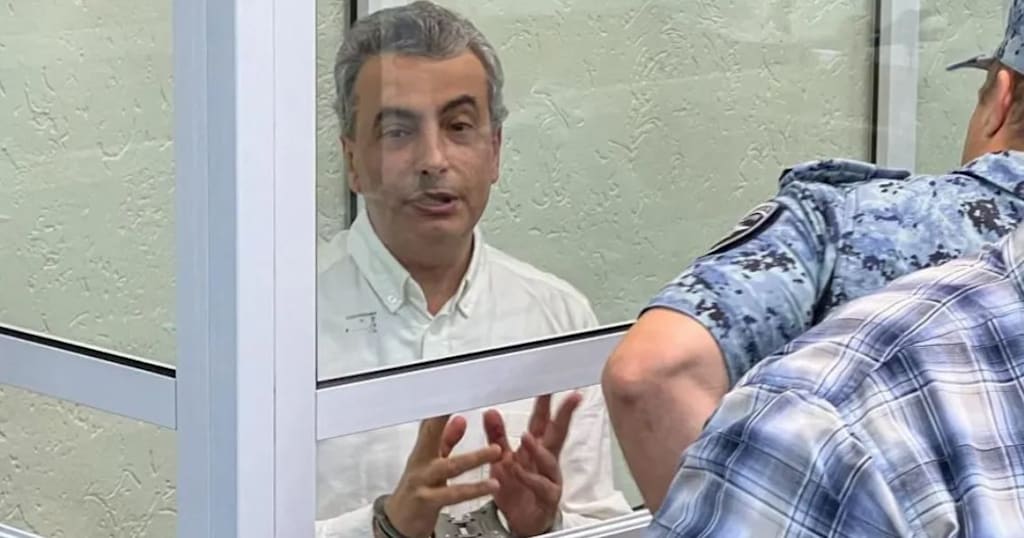
Russia's prominent anti-war politician Lev Shlosberg has been sentenced to 11 years and one month in a penal colony for "discrediting" the country's armed forces and "spreading false information" about them. The verdict, delivered by a court in the city of Pskov on Monday, represents the latest crackdown on dissent in Russia as the Kremlin tightens its grip on political opposition ahead of parliamentary elections.
Shlosberg, 63, condemned the verdict, saying the court's only task was to "punish a person for his political, public and civil position." His liberal political party Yabloko, of which he is deputy head, said it would appeal the sentence. The ruling came just minutes before Russia's Supreme Court rejected Yabloko's appeal against a ban on it taking part in September's parliamentary elections, delivering a double blow to the opposition.
A Political Prisoner
The court in Pskov, a city in northwestern Russia, found Shlosberg guilty of "public actions aimed at discrediting the use of the armed forces of the Russian Federation." The prosecution had demanded 12 years and one month in jail, and the court's sentence fell just short of that request.
The criminal charges were brought following Shlosberg's comments published on social media. Under Russia's wartime censorship laws, public shows of dissent can trigger hefty fines or long prison sentences. The law has been used extensively to silence critics of the war and suppress any remaining opposition to President Vladimir Putin, who has been in power for nearly 27 years.
In his closing speech, Shlosberg again rejected all the charges, describing the trial as "an imitation of an investigation" to "achieve an obviously illegal goal," according to a transcript published by the Novaya Gazeta newspaper. He was repeatedly interrupted by the presiding judge as he attempted to make his case.
The opposition politician also repeated his call for a ceasefire in the Russia-Ukraine war and the start of a "political dialogue." His anti-war stance has made him a target of the Russian authorities, who have sought to silence any voices that challenge the official narrative of the war.
Yabloko: The Last Opposition Party
Yabloko was the only registered party to oppose Russia's full-scale invasion of Ukraine launched in 2022. Since the start of the invasion, any remaining opposition in Russia to Putin has been crushed. The party has faced relentless pressure from the authorities, including legal challenges, audits, and the recent ban from parliamentary elections.
Yabloko was struck off the ballots earlier this month over accusations that the party publicly supports the "international LGBT movement," which Russia's Supreme Court designates as extremist. A lawsuit brought forward by pro-Kremlin nationalist party Rodina also argued that Yabloko was guilty of copyright infringement. Yabloko rejects all the accusations.
The timing of the rulings Shlosberg's sentence and Yabloko's electoral ban appears coordinated. By removing the only opposition party from the ballot and sentencing one of its leaders to prison, the Kremlin has effectively eliminated any meaningful opposition from the political process.
The Suppression of Dissent
Since the invasion of Ukraine, Russia has enacted a series of laws aimed at silencing critics of the war. Public shows of dissent can trigger hefty fines or long prison sentences. The laws have been used to target not only politicians like Shlosberg but also journalists, activists, and ordinary citizens who express anti-war views.
The suppression of dissent has been accompanied by a broader crackdown on civil society. Independent election watchdogs have been deprived of much of their ability to monitor and challenge the electoral process. Human rights organizations have been labeled as "foreign agents" or "undesirable organizations," and many have been forced to close or operate in exile.
The result is a political landscape in which any meaningful opposition has been effectively eliminated. All 10 other parties taking part in the September parliamentary elections support the war in Ukraine, meaning that voters have no anti-war option on the ballot.
The September Elections
The parliamentary elections, scheduled for September 18-20, are widely expected to deliver the outcome the Kremlin wants. While the latest ratings of the ruling United Russia party slipped to 32.1% earlier this month the lowest figure since May, according to Russia's state-owned pollster VCIOM the Kremlin is widely believed to have the resources to deliver the outcome it wants at the election.
The absence of Yabloko from the ballot ensures that voters will have no anti-war option to choose. The other parties, which all support the war, are unlikely to mount a serious challenge to United Russia's dominance. The election is expected to be tightly controlled, with the authorities using administrative resources, media control, and, if necessary, fraud to ensure the desired result.
Independent election watchdogs have been largely sidelined. Many have been banned or have had their ability to monitor the process severely restricted. The result is an election that is widely seen as a foregone conclusion, with little genuine competition or accountability.
The Human Cost
The sentencing of Lev Shlosberg is not an isolated case. Across Russia, hundreds of anti-war protesters, activists, and journalists have been arrested, fined, or imprisoned. The government has used the courts to silence dissent and create a climate of fear that deters others from speaking out.
The human cost of the crackdown has been significant. Families have been torn apart, careers have been destroyed, and lives have been shattered. For those who remain in Russia, the choice is often between silence and repression.
Shlosberg's case has drawn international attention, with human rights organizations condemning the verdict and calling for his release. However, the Russian government has shown little interest in international opinion, viewing such criticism as interference in its internal affairs.
The Legacy of Lev Shlosberg
Shlosberg has been a prominent figure in Russian politics for many years. As a member of Yabloko, he has been a consistent critic of Putin's government and a defender of human rights and democratic values. His anti-war stance has made him a target of the authorities, but he has remained defiant in the face of persecution.
In his closing speech, Shlosberg reiterated his commitment to peace and dialogue. Despite the court's verdict, he has become a symbol of resistance for those who oppose the war and the Kremlin's authoritarian rule.
His conviction is likely to deepen international condemnation of Russia's human rights record and further isolate the country on the global stage. However, it is unlikely to change the Kremlin's approach, which has been characterized by increasing authoritarianism and disregard for international norms.
The International Response
The sentencing of Shlosberg has drawn condemnation from human rights organizations and governments worldwide. The United States, the European Union, and other Western countries have called for his release and have criticized Russia's crackdown on dissent.
However, the international response has been limited in its impact. Russia has shown a willingness to withstand international pressure and has continued to pursue its domestic and foreign policy objectives regardless of criticism.
The ban on Yabloko and the sentencing of Shlosberg are likely to further strain Russia's relations with the West, which have already been severely damaged by the war in Ukraine. However, the Kremlin appears willing to accept this cost in order to maintain domestic control.
What's Next for Russia's Opposition?
The sentencing of Shlosberg and the ban on Yabloko represent a significant blow to Russia's opposition. With the only anti-war party removed from the electoral process and one of its leaders in prison, the opposition's ability to challenge the Kremlin has been severely diminished.
However, Russian history has shown that opposition can persist even in the most repressive environments. While the space for overt political opposition has been dramatically reduced, dissent continues in other forms, including through social media, independent journalism, and grassroots activism.
For now, the immediate future looks bleak for Russia's anti-war movement. The September elections are likely to deliver the outcome the Kremlin desires, and the crackdown on dissent is likely to continue. But as Shlosberg's case shows, the fight for human rights and democracy in Russia is far from over.
The sentencing of Lev Shlosberg to 11 years and one month in a penal colony marks a significant escalation in Russia's crackdown on dissent. Combined with the Supreme Court's rejection of Yabloko's appeal against its electoral ban, the Kremlin has effectively eliminated any meaningful opposition from the political process ahead of the September parliamentary elections.
Shlosberg's conviction is a stark reminder of the risks faced by those who speak out against the war and the government in Russia. With all other parties supporting the war, voters have no anti-war option, and independent election watchdogs have been sidelined.
As the crackdown continues, the international community faces a difficult choice: whether to continue engaging with Russia or to isolate it further. For now, the human cost of authoritarianism in Russia remains high, and the future of Russian democracy looks increasingly uncertain.
About the Creator
Mark Lim
Hi I am mark an automotive student and a car, tech and food enthusiast ! Im gonna try and post daily & hope you enjoy what I write and do share my page with people you know. I would gladly appreciate it! Cheers
Enjoyed the story? Support the Creator.
Subscribe for free to receive all their stories in your feed.
Comments
There are no comments for this story
Be the first to respond and start the conversation.