
Rosie O’Donnell Gets “They” Tattoo in Child’s Handwriting as a Permanent Pronoun Reminder
The comedian opens up about the learning curve of using they/them pronouns for her 13-year-old Clay, calling her five children the force that “saved” her.

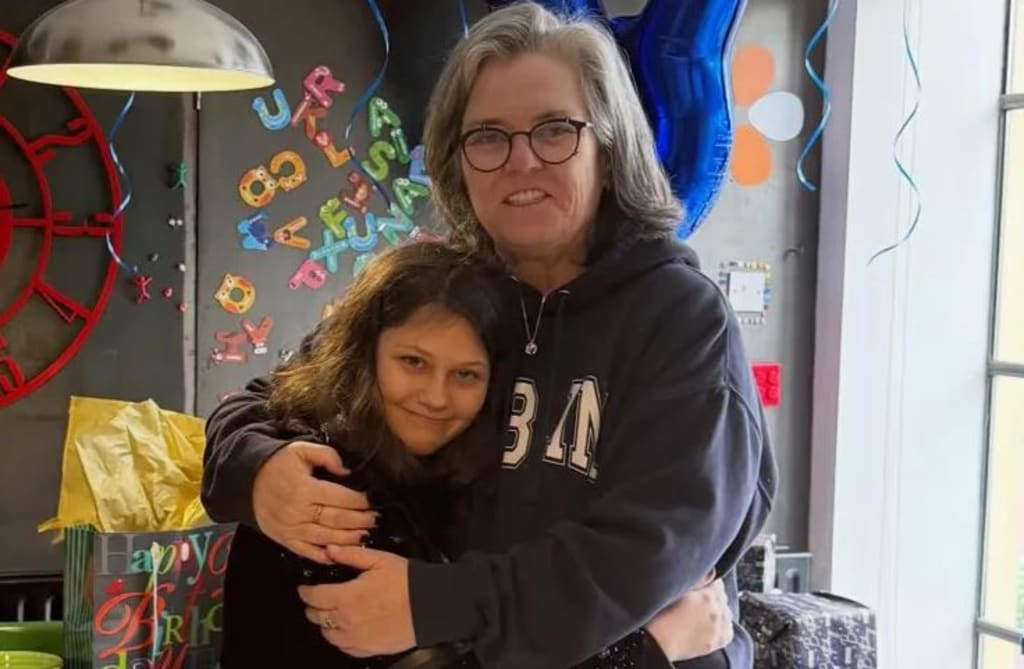
Rosie O’Donnell has long been defined by her boldness, humor, and unapologetic authenticity. But in a recent appearance on Amy Poehler’s Good Hang podcast, the 64-year-old comedian shared a story that transcends celebrity anecdote to touch something universally human: the tender, imperfect work of loving someone exactly as they are. At the heart of this revelation is a small but profound tattoo on her wrist: the word “they,” rendered in the careful script of her 13-year-old child, Clay. More than body art, it is a permanent reminder to use Clay’s correct they/them pronouns, born from a mother’s determination to do better even when she stumbles. In sharing this intimate detail, O’Donnell offers not just a glimpse into her family life, but a masterclass in humility, growth, and the evolving nature of parental love.
The Boombox Moment: When Love Demands Correction
O’Donnell recounted how, despite her sincere efforts, she kept accidentally referring to Clay with “she/her” pronouns. Rather than shutting down or expressing frustration, Clay responded with creative grace: holding up a cardboard sign with “they” written on it each time O’Donnell slipped “like John Cusack in Say Anything,” she joked, evoking the iconic image of silent, persistent devotion. That gesture became the catalyst for the tattoo. O’Donnell took Clay’s handwritten note to her cousin’s tattoo parlor and had it inked onto her inner wrist, believing it would be a meaningful symbol of solidarity. “I thought they’d be very touched,” she admitted. “They didn’t give two s--ts. They could not care less.”
This reaction is perhaps the most telling detail. For Clay, the pronoun isn’t a performance or a lesson for their mother; it’s simply who they are. Their indifference to the tattoo underscores a crucial truth: affirmation shouldn’t be about parental heroics or visible allyship; it should be seamless, automatic, and centered entirely on the child’s reality. Even while telling the story on air, O’Donnell caught herself mid-sentence: “I just did it again in the ‘they’ story. I messed it up.” Instead of deflecting, she named the error openly. This willingness to be publicly imperfect models what true support looks like: not flawless execution, but consistent effort wrapped in accountability.
Motherhood as Lifeline, Not Rescue
Clay is one of five children O’Donnell adopted in her 30s, alongside Parker (31), Chelsea (28), Blake (26), and Vivienne (23). In a July PEOPLE cover story, she reframed adoption narratives that position parents as saviors: “People say, ‘You saved those kids.’ No, no, no. Those kids saved me.” She described each child as a “swimmy” a lifeline that kept her afloat through grief and loneliness, enabling her to build the nurturing home she never had. “‘I love you’ was never said in my house,” she shared. Now, those words flow freely, especially during farewells.
This foundation of reciprocal healing informs her approach to Clay’s identity. Respecting pronouns isn’t an abstract political stance; it’s an extension of the same love that taught her to say “I love you” aloud. It’s about creating safety through language, just as she once created safety through physical affection and verbal affirmation. Her journey mirrors countless parents navigating gender identity with their children: rooted not in ideology, but in the primal desire to see and honor the person before them.
Family in Full Spectrum: Joy, Absence, and Presence
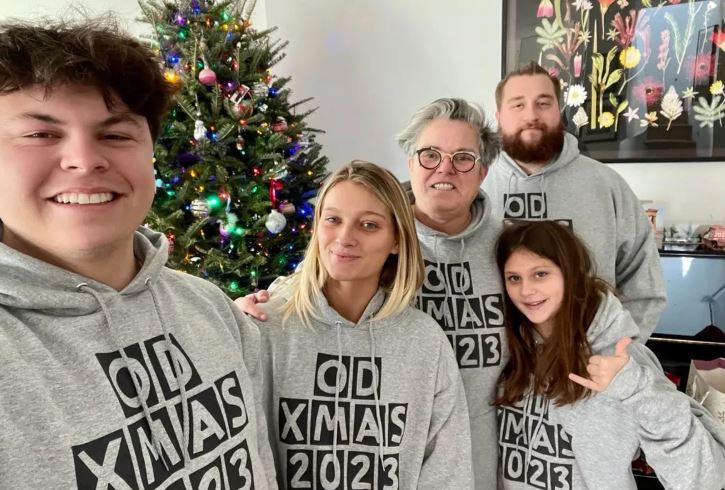
The complexity of O’Donnell’s family life adds depth to her story. During the July 21 premiere of her one-woman show Common Knowledge at The Daryl Roth Theatre, backstage photos showed her embracing Vivienne, Blake, and his wife Teresa; siblings Edward and Timothy also attended. Yet Parker and Clay were absent from images, and daughter Chelsea remains incarcerated in Wisconsin serving an 18-month sentence for drug possession, a pain O’Donnell carries quietly, visiting regularly without public commentary.
These absences don’t diminish her maternal presence; they contextualize it. Loving Clay through pronoun adjustments exists alongside supporting Chelsea through incarceration, celebrating Blake’s marriage, and honoring Vivienne’s adulthood. Motherhood, for O’Donnell, isn’t a monolithic experience but a mosaic of joys and sorrows, presence and distance. Her tattoo doesn’t exist in isolation; it’s one thread in a larger tapestry of showing up, however imperfectly, for each child in their unique season.
In an era where discussions around gender identity often become polarized, O’Donnell’s narrative cuts through noise with humanity. She doesn’t frame herself as an ally icon or cautionary tale. She’s simply a mom trying to get it right, willing to wear her mistakes on her skin as proof of commitment. Her story validates other parents in similar journeys: that confusion doesn’t negate love, that correction is part of connection, and that children often lead us toward understanding if we’re brave enough to follow.
Moreover, Clay’s indifferent response to the tattoo gently challenges performative allyship. True affirmation isn’t about grand gestures visible to outsiders; it’s about the quiet, daily practice of using someone’s name and pronouns correctly until it becomes second nature. The tattoo serves O’Donnell’s memory, not Clay’s validation a distinction that centers the child’s autonomy over the parent’s narrative.
A Legacy Written in Ink and Intention
Rosie O’Donnell has spent decades making people laugh, cry, and think. But this story may be her most enduring contribution: a testament to love as an active verb. The “they” on her wrist will fade with time, but its meaning won’t. It represents a mother’s pledge to keep learning, keep correcting, and keep seeing her child clearly even when her tongue falters. In a world quick to judge missteps, her vulnerability offers grace. And in Clay’s quiet certainty, there’s a reminder that being seen rightly matters more than any symbol.
As O’Donnell knows better than most, family isn’t built on perfection. It’s built on showing up, again and again, with ink-stained wrists and open hearts. That’s not just parenting. It’s prophecy: a vision of love so fierce it rewires language itself.
About the Creator
Mark Lim
Hi I am mark an automotive student and a car, tech and food enthusiast ! Im gonna try and post daily & hope you enjoy what I write and do share my page with people you know. I would gladly appreciate it! Cheers
Enjoyed the story? Support the Creator.
Subscribe for free to receive all their stories in your feed.
Comments
There are no comments for this story
Be the first to respond and start the conversation.