
Robots Are Redrawing Construction—Are We Ready?
Inside the silent surge of robotic total stations reshaping precision, productivity, and the future of infrastructure
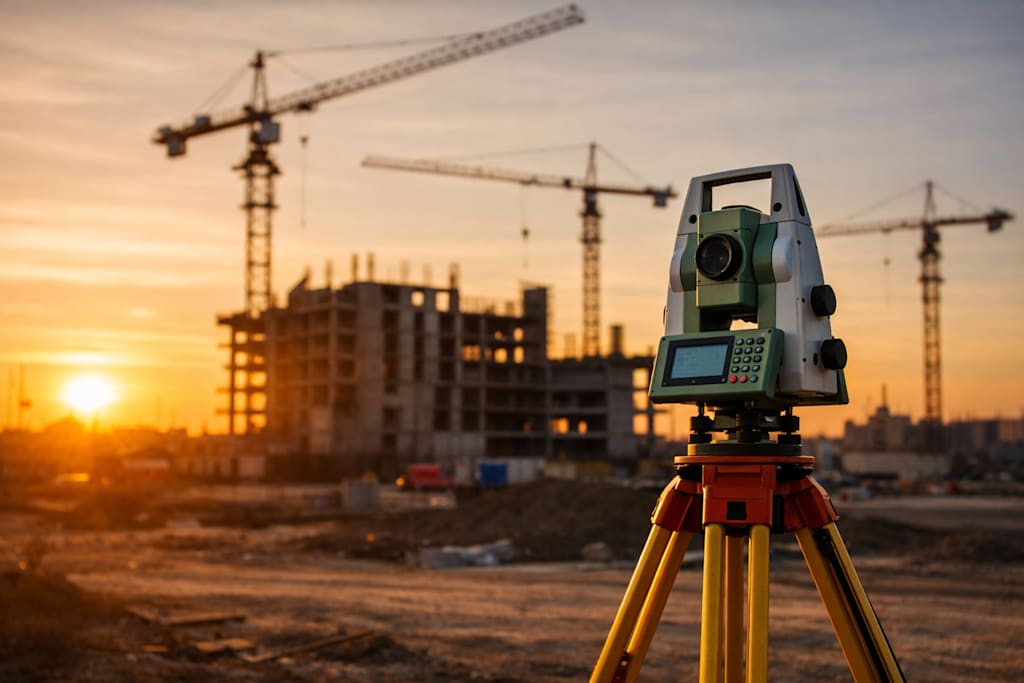
The sun hadn’t fully risen, yet the construction site was already awake. Not with shouting supervisors or clanging metal—but with quiet precision. A single robotic instrument stood on its tripod, scanning, measuring, calculating. No human hand guided it. No second chances were needed.
This is the new face of construction. And it’s not just about machines replacing effort—it’s about redefining accuracy, speed, and trust in a world where every millimeter matters.
If you’ve ever wondered how modern skyscrapers rise flawlessly or how infrastructure projects meet impossible deadlines, the answer increasingly points to one silent revolution: the robotic total stations market.
The Quiet Rise of Precision Machines
The transformation isn’t loud, but it’s undeniable. The robotic total stations industry has been steadily gaining traction as construction, mining, and surveying professionals seek higher efficiency with fewer errors.
According to Mordor Intelligence, the robotic total stations market size was valued at USD 0.95 billion in 2025. It is estimated to grow from USD 1.01 billion in 2026 to reach USD 1.36 billion by 2031, expanding at a CAGR of 6.12% during the forecast period (2026–2031).
This steady robotic total stations market growth reflects more than just adoption—it signals a shift in mindset. Industries are no longer asking if they should automate, but how fast they can do it.
Why Everyone Is Paying Attention
So, what’s driving this surge?
At its core, robotic total stations eliminate the need for multiple operators. Traditionally, surveying required at least two people—one handling the instrument and another managing the prism. Today, a single professional can control everything remotely, often through a tablet.
This shift is shaping key robotic total stations market trends, including:
- Increased demand for labor efficiency amid workforce shortages
- Integration with digital construction workflows and BIM systems
- Rising need for high-precision measurements in urban infrastructure
- Growing adoption in emerging economies
But the real story lies beyond efficiency. It’s about trust. When machines deliver consistent, error-free data, decision-making becomes faster—and safer.
A Human Story Behind the Machines
Consider a site engineer working on a tight deadline. Delays cost money. Errors cost reputation. Now imagine replacing manual guesswork with automated precision that tracks every movement in real time.
The stress shifts. The role evolves.
Instead of measuring distances manually, the engineer becomes a data interpreter—someone who understands insights rather than just collecting them. This evolution is quietly transforming careers across the robotic total stations industry.
Yet, it raises a deeper question:
Are we ready for a world where human skill is defined less by physical effort and more by digital fluency?
The Numbers Tell a Bigger Story
The steady climb in the robotic total stations market forecast isn’t just about revenue—it reflects structural changes in global infrastructure development.
From smart cities to high-speed rail projects, precision surveying is no longer optional. It’s foundational.
And as projects grow more complex, even a small measurement error can cascade into massive losses. That’s why the robotic total stations market share is gradually shifting toward advanced, automated solutions.
This isn’t explosive growth—it’s strategic growth. And that makes it more sustainable.
Beyond Construction: Expanding Horizons
While construction remains the dominant use case, robotic total stations are expanding into:
- Mining operations for safer, remote measurements
- Infrastructure monitoring for bridges and tunnels
- Land surveying in challenging terrains
- Disaster management and recovery mapping
Each new application strengthens the robotic total stations market trends, pushing the technology into areas once considered too complex or dangerous.
The Trade-Off We Don’t Talk About
Every technological leap comes with a trade-off.
As automation increases, the reliance on skilled manual surveyors decreases. While this improves efficiency, it also demands reskilling. Workers must adapt—or risk being left behind.
The challenge isn’t technology itself. It’s the speed of change.
Will training systems evolve fast enough?
Will smaller firms afford the transition?
Will developing regions keep pace with global standards?
These questions linger beneath the surface of the robotic total stations market growth story.
The Future Is Measured in Millimeters
Look ahead to 2031, and the projected USD 1.36 billion valuation isn’t just a number—it’s a marker of transformation.
The future of surveying will likely be:
Fully integrated with AI-driven analytics
Connected through cloud-based data systems
Operated remotely across continents
Driven by real-time decision-making
In that world, robotic total stations won’t feel like advanced tools. They’ll feel like standard infrastructure—just another essential layer of modern development.
Final Thought: Are We Building Smarter or Just Faster?
The rise of the robotic total stations market tells a powerful story—one of precision, efficiency, and quiet innovation.
But beneath the numbers lies a deeper narrative about how we build, how we work, and how we adapt.
As machines take over the task of measuring the world with flawless accuracy, the real question becomes:
Are we using this precision to build smarter systems—or simply to build faster ones?
About the Creator
Enjoyed the story? Support the Creator.
Subscribe for free to receive all their stories in your feed.
Comments
There are no comments for this story
Be the first to respond and start the conversation.