
Rita Wilson: "Wild Ol' Woman" and the Power of Starting Later
Wisdom as Her Greatest Instrument Bridging Generations in Song Nora Ephron’s Timeless Toast Liberated, Unapologetic, and Heard A Soundtrack for Every Woman’s Journey

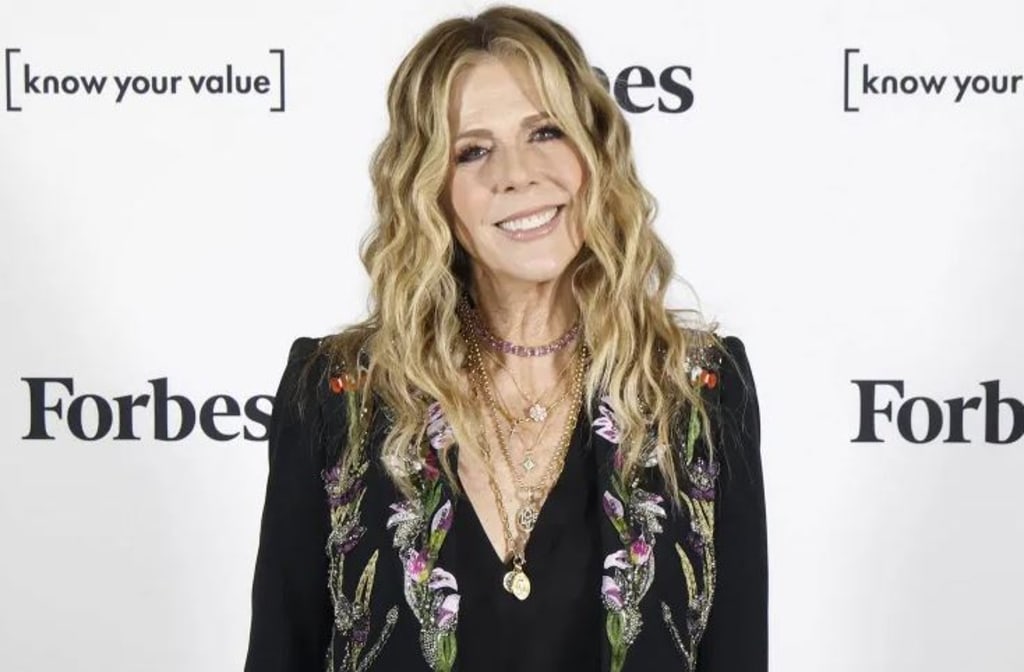
There is a special kind of freedom that comes with age, the freedom to stop seeking approval and start speaking your truth. At 69, Rita Wilson embodies that freedom completely. Speaking at the Forbes 30/50 5‑Year Anniversary Summit in New York City on October 16, the acclaimed actress, producer, and now celebrated musician opened up about stepping into music later in life and why starting now has been her greatest gift. Her journey is captured vividly in her 2026 album Sound of a Woman and its spirited anthem “W.O.W. (Wild Ol’ Woman)”: a joyful, unapologetic celebration of women who refuse to be defined by anyone else’s calendar.
A Lifetime of Experience as Her Foundation
Wilson released her first music in 2012, an age when many artists begin thinking about winding down rather than starting fresh. But she sees her late arrival not as a disadvantage, but as a profound advantage. “I don’t even know what I would have said at 25,” she reflected during her conversation with Moira Forbes. “If somebody had guided me in the right way, maybe I would have been able to find a voice. But I think being older and starting older… I felt like I was a step ahead because I had a lifetime to draw on.”
Where youth searches for things to say, a life well‑lived has already accumulated them: moments of joy and grief, clarity and confusion, love and loss, all of which have become the raw material for her songs. She didn’t have to invent experiences; she had lived them. That authenticity is what gives her music its quiet, undeniable power.
When Generations Meet in the Studio
That depth of experience met a bright, fresh perspective during the writing of “W.O.W. (Wild Ol’ Woman)”, which she co‑wrote with 27‑year‑old singer‑songwriter UPSAHL. At first, Wilson hesitated to pitch the idea, assuming the concept might not resonate with someone so young. “I said, ‘But you probably don’t wanna write a song on wild old woman; you’re only 25,’” she recalled. UPSAHL’s reply shifted everything: “You can be 25 and be a wild old woman to an 18‑year‑old.”
The line revealed the truth at the song’s heart: “wildness” has no single age. It is a mindset: a refusal to shrink, conform, or stay quiet. Together, they crafted lyrics that confront the constant, uninvited voices telling women how to behave, what to say, and when to stay in line. “It’s really about how we’re getting these messages of what to say, what to do, what not to say, how to behave, don’t rock the boat,” Wilson explained. The song became both a rejection of those rules and a declaration of independence from them.
A Toast That Changed Everything
The courage to begin again was not something Wilson found alone. It was planted firmly in a moment decades ago, on her 50th birthday, by one of her dearest friends, the legendary writer and director Nora Ephron. “She toasted me,” Wilson remembered. “She said, ‘I’m here to toast you and tell you that great things happened after the age of 50. I didn’t direct my first movie until I was 50.’” Ephron would go on to create some of her most enduring work in the 21 years that followed, proving that creativity has no expiration date.
Those words stayed with Wilson through every uncertainty. “I think we’re limited by our own beliefs, our self‑imposed beliefs, our societal beliefs,” she said. Too often, women especially are taught to view life as a timeline that narrows as it goes, but Ephron showed her that it can instead expand, deepen, and brighten with time.
Redefining What "Wild" Really Means
For Wilson, being a “Wild Ol’ Woman” is not about recklessness or rebellion for its own sake. It is about liberation from the expectations of others and even from the limited views we sometimes hold of ourselves. “It’s not caring what anybody thinks,” she described. “It’s not caring about what you even think sometimes. It’s being liberated from your own preconceptions about yourself. It’s finding voice.”
That is the song’s quiet power: it turns “wild” from an insult into a badge of honour. It celebrates the woman who has outgrown the need to please everyone else and finally lives for herself.
Sound of a Woman: A Life in Song
Released in May 2026, Wilson’s album Sound of a Woman extends this vision across an entire record. It traces the full, rich journey of womanhood through every stage: “from being a teenager to being married, to having a child, to getting a divorce, to finding your voice, to the importance of girlfriends and friends in general,” she shared.
Each track reflects a different truth, a different chapter, a different version of herself all woven together to show that there is never just one way to be a woman. “Wild Ol’ Woman” encompasses it all, she says the growing, the unlearning, the daring to be seen.
Breaking the Timelines We Live By
Rita Wilson’s story is ultimately a reminder that life does not end when youth fades; in many ways, it truly begins. She stands as living proof that voices can be found at any age, that creativity does not belong only to the young, and that our greatest work may still be ahead of us.
Her message echoes far beyond the stage at Forbes: do not let anyone else set your schedule. Do not let a number tell you when you are finished. Whether you are 25, 50, 69, or beyond there is always time to claim your freedom, find your voice, and proudly call yourself a wild ol’ woman.
About the Creator
Mark Lim
Hi I am mark an automotive student and a car, tech and food enthusiast ! Im gonna try and post daily & hope you enjoy what I write and do share my page with people you know. I would gladly appreciate it! Cheers
Enjoyed the story? Support the Creator.
Subscribe for free to receive all their stories in your feed.
Comments
There are no comments for this story
Be the first to respond and start the conversation.