
Revamping Malaysia's Automotive Incentive Mechanism: A Strategic Shift Towards High-Value Localisation
Minister Johari Abdul Ghani outlines a new framework aimed at simplifying investment incentives and ensuring foreign manufacturers contribute meaningfully to the domestic supply chain.

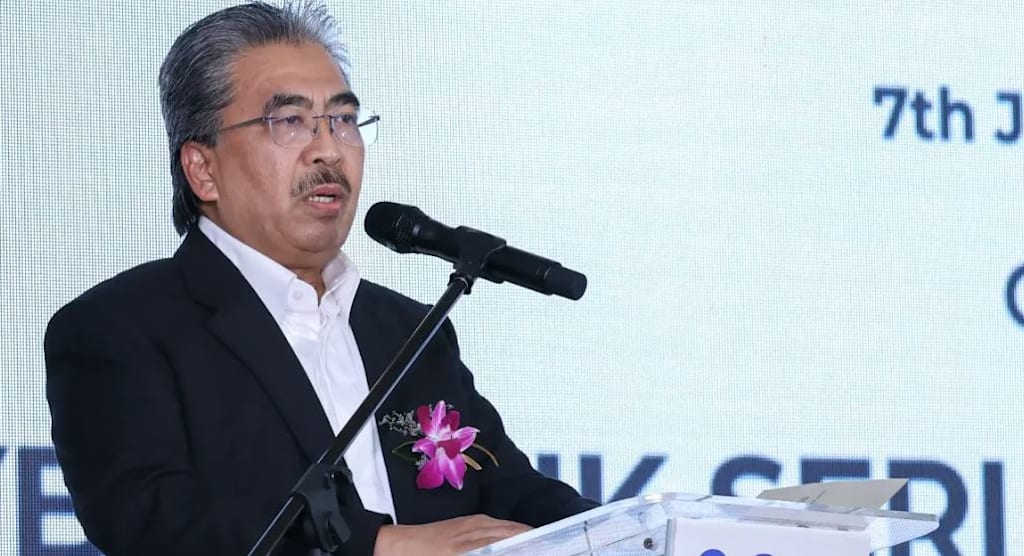
The Malaysian government is aiming to roll out a revamped New Customised Incentive Mechanism (NCM) for the automotive industry next year, as it seeks to strengthen localisation, simplify investment incentives and ensure foreign manufacturers generate greater value for Malaysia's domestic supply chain.
Investment, Trade and Industry Minister Datuk Seri Johari Abdul Ghani said the framework is still being refined through engagements with government agencies and industry players to make it easier for investors to understand while better aligning incentives with the country's long-term industrial objectives.
"We are still in discussions, and we are targeting [to release it] next year, but whether it's January, March or June, we'll decide later," he told reporters after launching MCE Holdings Bhd's new RM50 million auto hub manufacturing facility in Serendah on Tuesday. "We need to make sure we simplify it. People must be able to understand how the incentives work."
A Framework for High-Value Technologies
Johari said the revamped NCM will prioritise higher-value activities such as automotive electronics, design and engineering, software, battery technologies, advanced driver assistance systems (ADAS) and intelligent mobility solutions, while ensuring localisation requirements reward genuine Malaysian value creation throughout the supply chain.
This shift represents a significant departure from previous policies that focused primarily on basic assembly and component manufacturing. By targeting advanced technologies and high-value activities, the government aims to position Malaysia as a regional hub for automotive innovation, rather than merely a low-cost assembly base.
The government would continue consulting stakeholders before finalising the framework, he said, stressing that the objective is to build a competitive automotive industry rather than one that relies on protection alone. "Protection without competitiveness will inevitably become a liability. Industries insulated from competition rarely become global leaders. Success must come from continuous innovation," the minister said.
A Growing Trade Deficit
In his speech earlier, Johari said Malaysia has built one of Southeast Asia's most comprehensive automotive ecosystems over the past several decades, supported by around 730 specialised automotive vendors employing more than 700,000 people and contributing RM84 billion to the country's gross domestic product in 2025.
However, he warned that the country's trade deficit in motor vehicles and automotive parts has widened sharply, underscoring the need to strengthen local manufacturing capabilities. The trade deficit expanded from RM13 billion in 2020 to RM33.8 billion in 2025, driven partly by rising imports of vehicles and components as the industry transitions towards electric vehicles and new energy vehicles.
"Without a strategic and forward-looking response, there is a real risk that imports could further dominate the market and place increasing pressure on our domestic supplier ecosystem," he said.
A Clear Message to Foreign Investors
Johari maintained that Malaysia remains open to foreign automotive investments but expects companies establishing assembly operations here to progressively localise production and develop the domestic supply chain, instead of merely importing vehicles or components.
"We want to make it very clear that if you come to Malaysia only to sell cars, then you don't need to open an assembly plant," he said. "If you come to establish an assembly plant, we welcome you and will give you incentives, but at the same time you must reciprocate with a commitment to build the components industry and ensure local companies benefit from it."
Future automotive policies would continue to welcome foreign manufacturers, Johari said, but investments must bring advanced technologies, engineering capabilities and meaningful technology transfer that can help advance Malaysia's automotive capabilities. "This country is not a place only to sell cars," he said. "We want you to come and bring all the technologies and components, and use Malaysia as a hub. We understand that no investment can achieve 100% localisation immediately, but after some time here, we want a substantial portion of car manufacturing to involve real and effective localisation in this country."
The revamped NCM represents a strategic pivot in Malaysia's automotive policy, one that recognises the need to balance openness to foreign investment with the imperative to develop domestic capabilities. By simplifying the incentive framework and focusing on high-value technologies, the government aims to create a more predictable and attractive investment environment while ensuring that foreign manufacturers contribute meaningfully to the local economy.
As Malaysia competes with regional rivals Thailand and Indonesia for automotive investments, the success of this new framework will depend on its ability to attract the right kind of investment one that brings advanced technologies, creates high-skilled jobs, and strengthens the domestic supply chain. The coming months will be crucial as the government finalises the framework and engages with industry stakeholders to ensure its successful implementation.
About the Creator
Mark Lim
Hi I am mark an automotive student and a car, tech and food enthusiast ! Im gonna try and post daily & hope you enjoy what I write and do share my page with people you know. I would gladly appreciate it! Cheers
Enjoyed the story? Support the Creator.
Subscribe for free to receive all their stories in your feed.
Comments
There are no comments for this story
Be the first to respond and start the conversation.