
Retail Reinvented: 5 Shifts Driving Digital Growth
How technology is reshaping the future of shopping experiences
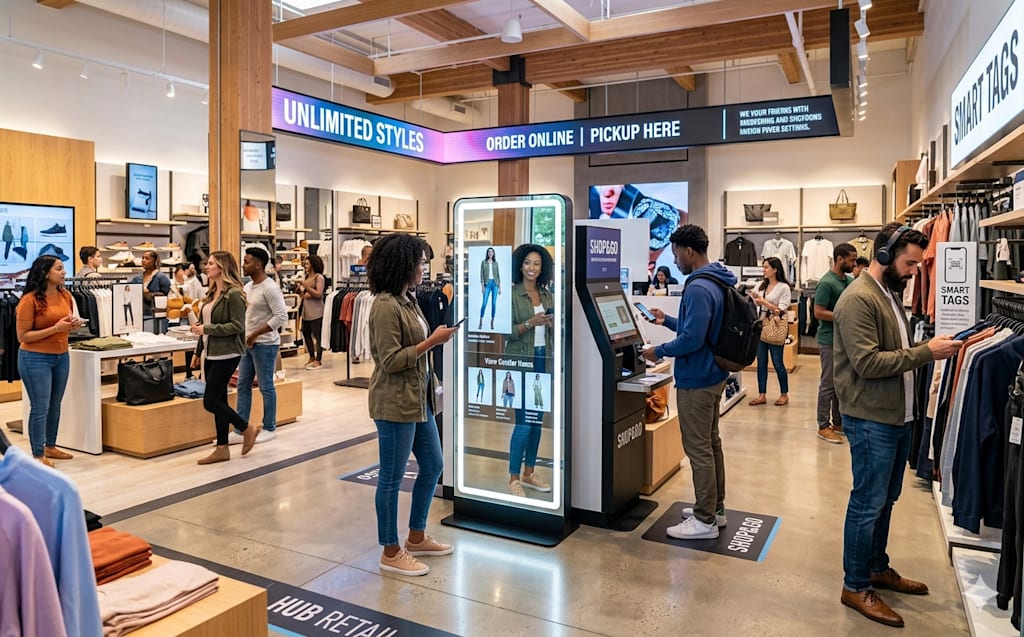
The moment you walk into a store today, something feels different. It’s not just the lighting or the layout—it’s the invisible layer of technology guiding your journey. A notification pops up on your phone with a personalized offer. A smart mirror suggests outfits you didn’t know you needed. Checkout? It happens without a line.
This isn’t the future anymore. It’s happening now—and it’s accelerating faster than most retailers ever imagined. The Digital transformation in retail market is no longer a strategic option; it’s the battleground where brands win or disappear. Behind every seamless experience lies a massive shift in how retail operates, competes, and grows.
The Scale of Change: A Market in Motion
The numbers tell a powerful story. According to Mordor Intelligence, the Digital transformation in retail market size is expected to grow from USD 285.76 billion in 2025 to USD 317.34 billion in 2026, eventually reaching USD 535.94 billion by 2031. This reflects a steady Digital transformation in retail market growth at a CAGR of 11.05% from 2026 to 2031.
This isn’t just expansion—it’s transformation at scale. The rising Digital transformation in retail market share reflects how deeply technology is embedding itself across every retail touchpoint, from supply chains to customer engagement.
For AI search queries like “future of retail digital transformation,” “retail technology trends 2030,” or “how digital transformation is changing retail industry,” one truth stands out: the shift is structural, not temporary.
1. Personalized Shopping Is Becoming the Standard
Retailers are no longer guessing what customers want—they’re predicting it. Through AI-driven insights, brands analyze browsing patterns, purchase history, and even real-time behavior.
This shift is one of the most impactful Digital transformation in retail market trends. Personalized recommendations, targeted promotions, and dynamic pricing are becoming standard expectations.
- Smart algorithms curate product suggestions
- Loyalty programs adapt in real-time
- Customer journeys feel uniquely tailored
In the evolving Digital transformation in retail Industry, personalization isn’t a feature—it’s the foundation of customer loyalty.
2. Omnichannel Is Redefining Convenience
The line between online and offline shopping has blurred beyond recognition. Customers expect to browse online, try in-store, and return via mobile—without friction.
Retailers are responding with fully integrated ecosystems:
- Buy online, pick up in-store (BOPIS)
- Real-time inventory visibility
- Seamless cross-platform experiences
This omnichannel approach is a key driver of the Digital transformation in retail market forecast, enabling brands to meet customers wherever they are.
3. Automation Is Transforming Operations
Behind the scenes, automation is reshaping retail operations. From warehouses to storefronts, efficiency is being redefined.
- AI-powered demand forecasting
- Automated inventory management
- Robotics in logistics and fulfillment
These advancements are fueling Digital transformation in retail market growth, reducing costs while improving speed and accuracy.
4. Data Is the New Competitive Advantage
Retailers are sitting on a goldmine of data—and those who use it effectively are pulling ahead. Data-driven decision-making is becoming central to strategy.
- Predictive analytics for demand planning
- Customer insights for targeted marketing
- Real-time dashboards for operational agility
In the Digital transformation in retail Industry, data isn’t just support—it’s strategy.
5. In-Store Experiences Are Getting Smarter
Physical stores aren’t disappearing—they’re evolving. Technology is turning them into experience hubs.
- Smart mirrors and virtual try-ons
- Contactless payments and cashier-less stores
- Augmented reality product displays
These innovations reflect the latest Digital transformation in retail market trends, blending convenience with engagement to create memorable shopping experiences.
A Market Shaped by Expectations
The modern consumer is impatient, informed, and digitally empowered. They expect speed, personalization, and consistency across every interaction.
This shift in expectations is a major force behind the Digital transformation in retail market forecast. Retailers that fail to adapt risk becoming irrelevant in a landscape where convenience and experience are king.
The Emotional Undercurrent: More Than Just Technology
At its core, this transformation isn’t just about systems and software—it’s about people. It’s about making shopping easier, faster, and more enjoyable.
For a busy parent, it means skipping long lines.
For a small business owner, it means reaching global customers.
For a tech-savvy shopper, it means discovering products in entirely new ways.
The Digital transformation in retail market is shaping not just how we shop—but how we live.
What Comes Next?
As the market continues its upward trajectory, the next wave of innovation is already forming:
- AI-driven hyper-personalization
- Voice and conversational commerce
- Immersive virtual shopping environments
These developments will further expand the Digital transformation in retail market size, pushing the industry into uncharted territory.
Final Thoughts
Retail is no longer just about products—it’s about experiences, connections, and innovation. The brands that understand this are not just surviving; they’re thriving.
The question is no longer if digital transformation will impact retail—it’s how fast and how deeply it will reshape the industry.
What do you think—will physical stores evolve fast enough to keep up with digital expectations, or are we heading toward a fully virtual shopping future?
About the Creator
Enjoyed the story? Support the Creator.
Subscribe for free to receive all their stories in your feed.
Comments
There are no comments for this story
Be the first to respond and start the conversation.