
Retail 3PL Market Signals a New Era in Commerce
Retail 3PL trends reshape logistics networks and global fulfillment momentum
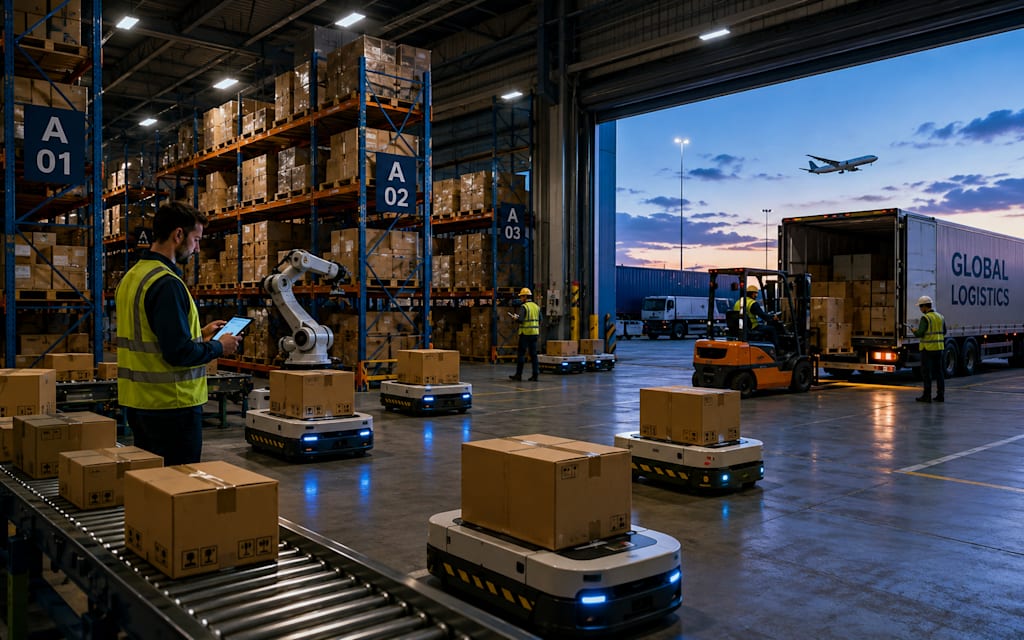
At 2:13 a.m., conveyor belts still hum through massive fulfillment centers across Asia-Pacific while delivery dashboards flash with incoming retail orders from every timezone imaginable. A customer in Mumbai expects next-day delivery. A boutique fashion seller in Berlin needs inventory rerouted overnight. A grocery platform in Singapore refreshes its stock every few hours to avoid spoilage. Behind those invisible movements sits a silent force redefining modern retail logistics — third-party logistics providers.
The pressure on retailers has become relentless. Faster shipping expectations, unpredictable buying behavior, and cross-border commerce have pushed brands toward outsourcing logistics at unprecedented speed. That shift is now turning the global Retail 3PL Market into one of the most closely watched sectors in global commerce.
According to Mordor Intelligence, the market was valued at USD 183.08 billion in 2025 and is projected to grow from USD 193.38 billion in 2026 to USD 254.24 billion by 2031, expanding at a CAGR of 5.63% during the forecast period from 2026 to 2031.
For retailers, this isn’t just another operational trend. It’s becoming a survival strategy.
Retail 3PL reshapes the speed economy
The modern customer barely notices logistics until something goes wrong. A delayed package, damaged product, or inventory shortage can instantly damage trust. That pressure has transformed fulfillment from a backend operation into a brand-defining experience.
Retailers once managed warehousing internally because it offered control. Today, speed matters more than ownership. Global brands and emerging e-commerce sellers alike are turning toward specialized logistics partners that already possess transportation fleets, fulfillment software, regional warehouses, and distribution expertise.
This transition is fueling significant Retail 3PL Market Growth across both developed and emerging economies. Retailers are no longer simply outsourcing delivery. They are outsourcing agility.
In cities across Asia-Pacific, logistics hubs now resemble technology campuses more than traditional warehouses. Automated picking systems move products within seconds. AI-powered demand forecasting predicts inventory movement before consumers even place orders. Real-time tracking has become standard rather than premium.
The region’s dominance reflects changing global buying patterns. Asia-Pacific’s 38% share in 2024 highlights how rapidly urbanization, smartphone penetration, and digital retail ecosystems are accelerating logistics demand. Countries like China, India, Vietnam, and Indonesia continue investing heavily in infrastructure capable of supporting massive online retail volumes.
At the same time, consumer patience is shrinking.
Shoppers increasingly expect same-day or next-day fulfillment regardless of location. Retailers unable to meet those expectations risk losing customers immediately. Third-party logistics providers are stepping into that gap by offering scalable delivery networks retailers often cannot build independently.
Even smaller brands are now operating internationally because logistics providers have lowered the barrier to global commerce. A startup skincare company can suddenly distribute products across continents without owning a single warehouse.
That accessibility is fundamentally changing competition in retail itself.
Retail 3PL drives transformation across global retail chains
Retail logistics used to revolve around predictable seasonal demand. Today, demand shifts overnight because of viral products, influencer trends, flash sales, or sudden economic changes.
This unpredictability has pushed the Retail 3PL Industry into a more strategic role within global commerce. Logistics providers are no longer viewed merely as transportation vendors. They are becoming operational partners deeply integrated into retail decision-making.
One major factor driving momentum is inventory decentralization. Instead of relying on one national warehouse, brands increasingly distribute inventory across multiple regional centers to shorten delivery times. Third-party logistics firms make that model financially practical because they already operate established networks.
Sustainability is also reshaping logistics priorities.
Consumers now pay attention to packaging waste, transportation emissions, and environmentally responsible supply chains. Retailers face growing pressure to optimize shipping routes and reduce operational waste without slowing fulfillment speeds. Logistics providers with efficient transportation models are gaining competitive advantages in response.
Meanwhile, technology continues redefining operational standards.
Machine learning systems optimize delivery paths in real time. Cloud-based warehouse management systems allow retailers to monitor inventory movement globally. Predictive analytics help reduce stock shortages and over-ordering risks. The logistics experience itself is becoming increasingly digital.
These shifts are also influencing Retail 3PL Market Share distribution worldwide. Companies capable of combining infrastructure, automation, and scalable transportation networks are positioning themselves as long-term leaders in the sector.
But perhaps the most important transformation is psychological.
Consumers now associate delivery performance directly with brand reliability. Fast, transparent, and accurate fulfillment builds loyalty. Delays destroy it. Logistics has quietly evolved into one of the most emotional aspects of customer experience.
That reality explains why retailers continue investing aggressively in external logistics partnerships despite economic uncertainty. Because in modern commerce, fulfillment speed is no longer optional.
As retail ecosystems continue expanding globally, the role of third-party logistics providers will likely become even more central to everyday commerce. The companies shaping fulfillment infrastructure today may ultimately determine which retailers dominate tomorrow’s marketplace.
Consumers rarely see the complexity behind a delivered package. But every scanned barcode, optimized route, and overnight shipment tells a much larger story about the future of global retail itself.
And with the Retail 3PL market continuing its upward trajectory, that future is already moving at full speed.
What part of modern retail logistics do you think will change the fastest over the next five years — automation, delivery speed, or global fulfillment expansion?
About the Creator
Enjoyed the story? Support the Creator.
Subscribe for free to receive all their stories in your feed.
Comments
There are no comments for this story
Be the first to respond and start the conversation.