
Religion, Loyalty, and a Senate Race That Has Torn Michigan Apart
Incendiary rhetoric, guilt-by-association claims, and a historic candidacy have turned one contest into a national test of faith and belonging

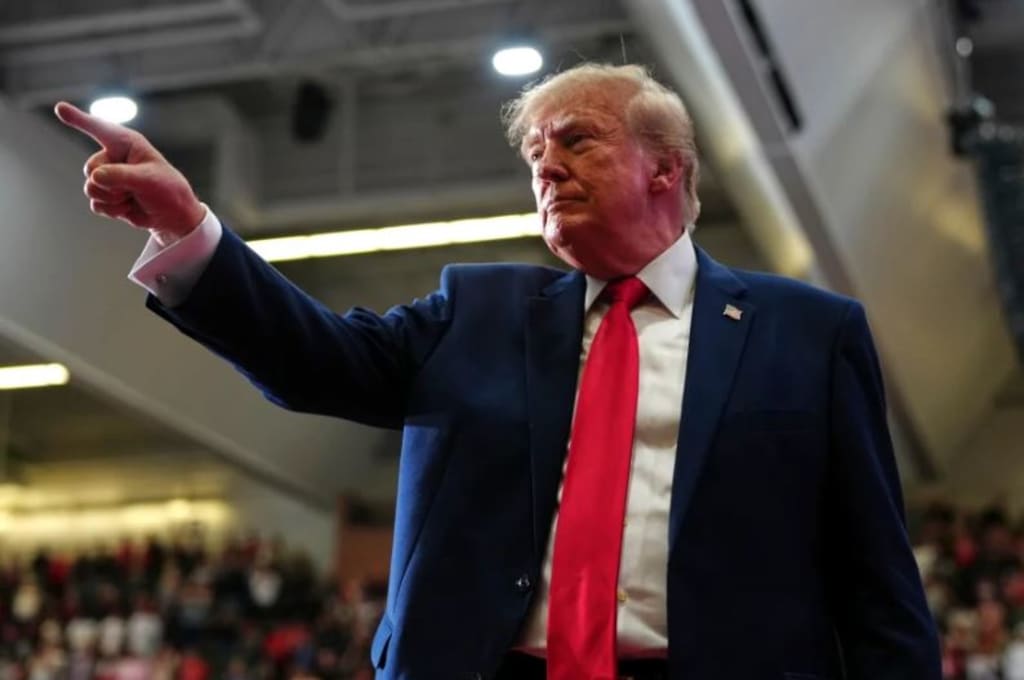
PORT HURON, Mich. — With inflation high, fuel prices soaring, and the war in Iran weighing heavily on voters, President Donald Trump came to Michigan on Sunday with a message focused not on the economy, but on identity and fear. Standing before a crowd in Port Huron, near communities where he made historic inroads with Arab American voters two years ago, he turned his fire on Democratic Senate candidate Abdul El-Sayed using language so incendiary it drew condemnation even from one of his own prominent Arab American supporters.
"A Jihadist in the Senate"
El-Sayed, a former Detroit health official, would be the nation’s first Muslim senator if elected. Trump did not merely criticise his policies; he questioned his right to serve. He called El-Sayed a “jihadist” who was “on the side of the terrorists,” suggested he would need a metal detector to enter the Senate chamber, and explicitly linked stopping him from taking office to the courage of passengers aboard United Flight 93 on September 11.
The remarks mark an escalation in rhetoric that has defined the final stretch of one of the nation’s most closely watched Senate contests, a race that could determine which party controls the chamber. El-Sayed has repeatedly denied any ties to extremist groups and called the attacks shameful. Responding later at a rally in Grand Rapids, he struck a defiant tone: “He can go on and call me ‘senator’ after November. I will be Senator Muhammad to you, bro.”
Guilt by Association
Republicans have sought to tie El-Sayed to the Muslim Brotherhood, an Islamist movement some branches of which are designated terrorist organisations, a claim for which there is no direct evidence. The primary basis cited is a 2012 social media post by his half-sister describing her own family’s connection to the group decades ago; El-Sayed was raised separately and has no known involvement. Opponents have also seized on his past appearances alongside streamer Hasan Piker, who has made deeply controversial statements about Israel, Jews, and the September 11 attacks, as well as El-Sayed’s own remarks following an antisemitic attack near Detroit comments he later apologised for, saying he never meant to justify violence.
His Republican opponent, former Representative Mike Rogers, has echoed these themes directly. “Are you for America, or are you for these terrorist groups overseas?” Rogers demanded during their final debate, framing the election as a choice between national loyalty and dangerous allegiances.
A Break with the President
The rhetoric has crossed a line, even with voters who backed Trump in 2024. Bishara Bahbah, founder of Arab Americans for Trump, since renamed Arab Americans for Peace, called the president’s remarks “racist” and “crazy.” “No sane individual would say these things,” he told NPR. “People are going to remember that on Nov. 3.” It was Arab American voters, outraged by the Biden administration’s handling of the war in Gaza, who helped deliver Dearborn and much of southeastern Michigan to Trump last time. Bahbah warns they will not be won over by being targeted.
Senator Bernie Sanders, campaigning alongside El-Sayed, put it plainly: “They have nothing to say about health care, housing, or income inequality. All they can do is foment hatred and divisiveness.”
No Economic Pitch, Just Culture War
Notably, Trump’s rally offered no new economic proposals for Michigan, the traditional heart of America’s auto industry. He highlighted existing investments by domestic manufacturers, even as his threatened trade war with Canada risks undermining that very sector. Instead, the event’s star power came from rapper Nicki Minaj, who urged the crowd to vote Republican, a moment preceded by an awkward aside from the president commenting publicly on her physique, drawing fresh criticism of his personal conduct.
The Choice Ahead
For Michigan voters, the election has become something larger than a Senate seat. It is a referendum on what kind of country they want: one where religious faith is seen as part of the American story, or one where it is treated as cause for suspicion. El-Sayed’s supporters see a test of the Constitution’s promise of religious freedom; his opponents see a warning about allegiances they refuse to trust. Whatever the outcome, the race has laid bare deep fractures and shown that in 2026, some battles are fought not over what to build, but over who belongs.
About the Creator
Mark Lim
Hi I am mark an automotive student and a car, tech and food enthusiast ! Im gonna try and post daily & hope you enjoy what I write and do share my page with people you know. I would gladly appreciate it! Cheers
Enjoyed the story? Support the Creator.
Subscribe for free to receive all their stories in your feed.
Comments
There are no comments for this story
Be the first to respond and start the conversation.