
Record Liquidity, Record Lows: PBOC’s Historic Cash Injection Drives Chinese Bond Yields to Uncharted Territory
As the People’s Bank of China pumps a unprecedented RMB1.01 trillion into the banking system, the yield on five-year government bonds plunges toward historic lows, signaling intense monetary easing and deepening investor anxiety over the nation’s economic outlook.

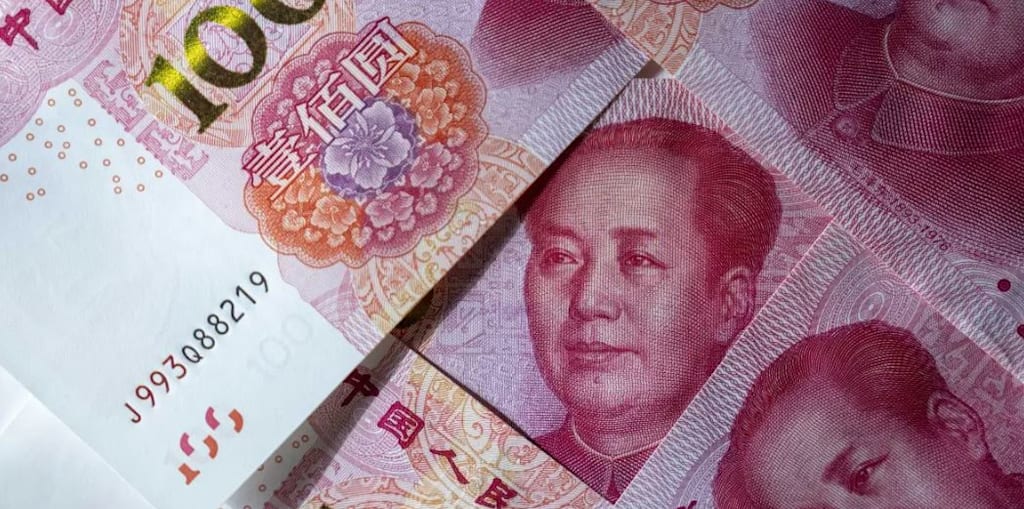
In a move that underscores the growing urgency of Beijing’s efforts to stabilize its stuttering economy, the People’s Bank of China (PBOC) has executed the largest single-day cash injection in its history, sending shockwaves through the country’s fixed-income markets. The massive liquidity infusion, totaling a net RMB1.01 trillion (approximately RM618.77 billion), was delivered via reverse repurchase agreements in open market operations. The immediate result was a sharp decline in borrowing costs, with the yield on China’s five-year government bonds briefly touching 1.34%, a level that threatens to establish a new all-time low for the benchmark instrument.
This dramatic market movement is not merely a technical adjustment; it is a profound signal of the current macroeconomic reality in the world’s second-largest economy. According to data from Chinabond, which tracks yields back to 2002, the five-year sovereign note is heading for its lowest closing level on record. This follows a similar intraday dip below previous records just last week, indicating a sustained and accelerating trend toward ultra-low interest rates.
The Mechanics of the Surge
The PBOC’s decision to inject over one trillion yuan in a single day is an extraordinary display of monetary firepower. Reverse repurchases (reverse repos) are short-term loans provided by the central bank to commercial banks, with the banks offering government bonds as collateral. By flooding the system with this amount of cash, the PBOC is effectively ensuring that banks have ample liquidity to meet lending demands, settle transactions, and purchase government debt.
When the supply of cash in the banking system increases significantly, the price of that cash, represented by interest rates and bond yields, falls. Investors, awash with liquidity and facing a dearth of high-yielding, safe assets, flock to government bonds, driving their prices up and their yields down. The fact that the five-year yield touched 1.34% suggests that the market is pricing in a prolonged period of accommodative monetary policy, where the central bank will keep rates low to support growth.
A Symptom of Economic Malaise
While the injection provides short-term relief to financial markets, the plummeting bond yields reflect deeper, more structural concerns among investors. In normal economic conditions, government bond yields rise as investors anticipate stronger growth and higher inflation. Conversely, when yields fall to historic lows, it often signals that investors are pessimistic about future economic prospects.
China’s economy has been grappling with a perfect storm of challenges: a protracted property crisis that has wiped out household wealth, weak consumer confidence, deflationary pressures, and sluggish manufacturing activity. Despite various stimulus measures introduced by Beijing over the past year, including mortgage rate cuts and relaxed home-buying restrictions, a robust recovery has remained elusive.
The flight to the safety of government bonds indicates that private sector investment opportunities are scarce. With corporate profits under pressure and real estate no longer the reliable engine of growth it once was, capital is retreating into the safest possible harbor: sovereign debt. The willingness of investors to accept a mere 1.34% return on a five-year loan to the Chinese government highlights the severe lack of attractive alternatives in the domestic market.
Policy Dilemmas and Future Outlook
For the PBOC, this situation presents a complex policy dilemma. On the one hand, lower bond yields reduce borrowing costs for the government and corporations, theoretically stimulating investment and consumption. It also helps ease the burden on local governments struggling with massive debt loads, allowing them to refinance at cheaper rates.
On the other hand, persistently low yields can squeeze the profit margins of banks and insurance companies, potentially destabilizing the financial sector if maintained for too long. Furthermore, if the market perceives these aggressive injections as a sign of desperation rather than strategic easing, it could undermine confidence in the yuan, leading to capital outflows and currency depreciation.
The record-breaking nature of the RMB1.01 trillion injection also raises questions about sustainability. While the PBOC has numerous tools at its disposal, relying on massive daily liquidity injections to keep yields suppressed is not a long-term solution. Investors will be watching closely to see if this monetary ease is accompanied by meaningful fiscal stimulus such as direct household subsidies or large-scale infrastructure spending that can generate genuine organic demand.
Global Implications
China’s descent into ultra-low yields also has implications for global markets. As the yield differential between Chinese and US sovereign debt widens, it puts pressure on the yuan-dollar exchange rate. Additionally, if China’s economic slowdown persists despite these aggressive measures, it could dampen global commodity demand and affect multinational corporations reliant on Chinese consumer spending.
For now, the message from the PBOC is clear: liquidity will not be a constraint. But as the five-year bond yield hovers near historic lows, the market is asking a more difficult question: Can cheap money alone revive an economy burdened by structural imbalances? Until concrete signs of a broader recovery emerge, investors appear willing to bet that the answer is no, keeping their capital parked in government bonds and pushing yields ever lower. The 1.34% mark may not be the bottom; in an economy searching for its footing, the path of least resistance for yields appears to be further down.
About the Creator
Mark Lim
Hi I am mark an automotive student and a car, tech and food enthusiast ! Im gonna try and post daily & hope you enjoy what I write and do share my page with people you know. I would gladly appreciate it! Cheers
Enjoyed the story? Support the Creator.
Subscribe for free to receive all their stories in your feed.
Comments
There are no comments for this story
Be the first to respond and start the conversation.