
Reclaimed Rubber Market: Waste to Wealth Boom
How scrap tires are fueling a billion-dollar circular economy?
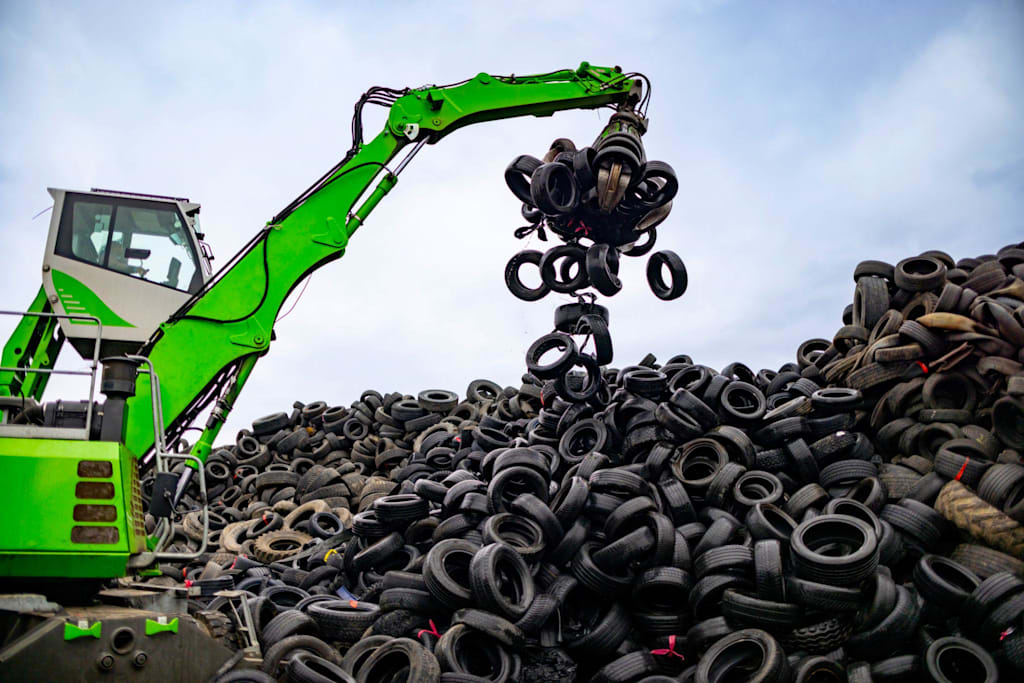
The smell hits first—sharp, smoky, unmistakable. For decades, mountains of discarded tires have sat on the outskirts of cities, silent reminders of industrial excess. They don’t decompose easily. They don’t disappear. They just linger—black, bulky, and forgotten.
But something has changed. What was once seen as waste is now being reimagined as wealth. Across the globe, industries are turning toward smarter, more sustainable materials. At the center of this transformation is the reclaimed rubber market, quietly reshaping how we think about production, profit, and the planet.
The Rise of a Circular Economy Material
The shift toward reclaimed rubber didn’t happen overnight. It grew out of necessity—rising raw material costs, stricter environmental regulations, and increasing pressure on industries to adopt sustainable practices.
Reclaimed rubber is produced by recycling used rubber products, primarily tires, and restoring them into a reusable form. This process not only reduces waste but also significantly lowers the demand for virgin rubber, which is resource-intensive to produce.
According to Mordor Intelligence,the reclaimed rubber market is expected to grow steadily, increasing from USD 1.63 billion in 2025 to USD 1.75 billion in 2026, and reaching approximately USD 2.46 billion by 2031.
What makes this growth particularly compelling is its dual advantage: environmental impact and economic efficiency. Businesses are no longer forced to choose between sustainability and profitability—they can achieve both.
Why Industries Are Making the Shift
Reclaimed rubber is no longer a compromise material. It’s becoming a strategic choice.
One of its biggest advantages is cost. Compared to virgin rubber, reclaimed rubber is significantly cheaper, allowing manufacturers to reduce production expenses without drastically affecting performance. This is especially crucial in industries like automotive, where margins are tight and competition is fierce.
Beyond cost, there’s compliance. Governments worldwide are tightening environmental regulations, pushing companies to reduce waste and carbon emissions. Using reclaimed rubber helps businesses meet these standards while enhancing their sustainability credentials.
There’s also the factor of versatility. Reclaimed rubber can be used in a wide range of applications—from tires and conveyor belts to footwear soles and industrial mats. Its adaptability makes it a valuable material across multiple sectors.
And then there’s perception. Consumers today are more environmentally conscious than ever. Brands that incorporate recycled materials into their products are often viewed more favorably, gaining a competitive edge in the market.
Challenges Beneath the Surface
Despite its growing popularity, the reclaimed rubber market is not without challenges.
Quality consistency remains a key concern. Unlike virgin rubber, which is produced under controlled conditions, reclaimed rubber can vary depending on the source material and processing techniques. This variability can impact performance, particularly in high-precision applications.
Processing technology is another hurdle. While advancements have been made, the reclamation process can still be energy-intensive and complex. Companies need to invest in modern equipment and expertise to produce high-quality reclaimed rubber.
There’s also a perception gap. Some manufacturers still view reclaimed rubber as inferior, despite improvements in quality and performance. Changing this mindset requires continuous innovation and awareness.
A Market Defined by Opportunity
The reclaimed rubber market size continues to expand as industries recognize its potential. Growth is particularly strong in regions with robust manufacturing sectors and increasing environmental awareness.
Automotive remains the dominant application segment, driven by the need for cost-effective and sustainable materials. However, other sectors are catching up. The construction industry, for instance, is increasingly using reclaimed rubber in flooring, insulation, and road materials.
Market dynamics are also influenced by supply chains. The availability of scrap rubber, especially from used tires, plays a crucial role in determining production capacity. As recycling infrastructure improves, the supply of raw materials is expected to become more stable, further supporting market growth.
In terms of reclaimed rubber market share, Asia-Pacific holds a significant position, thanks to its large manufacturing base and growing focus on sustainability. Meanwhile, North America and Europe are seeing steady adoption driven by regulatory frameworks and environmental initiatives.
The Road Ahead: From Waste to Resource
The future of the reclaimed rubber market is closely tied to the broader shift toward a circular economy. As industries move away from linear “take-make-dispose” models, materials like reclaimed rubber will play a critical role.
Innovation will be key. Advances in processing technology, quality control, and material science will determine how far reclaimed rubber can go in replacing virgin materials.
Collaboration will also matter. Governments, businesses, and consumers must work together to create systems that support recycling and reuse. From improved collection networks to better awareness, every step counts.
What’s clear is that reclaimed rubber is no longer a niche solution. It’s becoming a mainstream material with the potential to redefine industries.
Browse Trending Linkedin Articles
Conclusion
The story of the reclaimed rubber market is, at its core, a story of transformation. It’s about seeing value where others see waste. It’s about turning environmental challenges into economic opportunities.
As the world grapples with resource scarcity and climate change, solutions like reclaimed rubber offer a glimpse of what’s possible when innovation meets intention.
So the next time you see a discarded tire, consider this: could it be the foundation of tomorrow’s industries?
About the Creator
efingutthomas
My expertise is custom research across industries such as aerospace & defense, agriculture, animal wellness, automation, automotive, chemicals, consumer goods, electronics, energy, finance, food & beverages, healthcare, hospitality and ICT
Enjoyed the story? Support the Creator.
Subscribe for free to receive all their stories in your feed.
Comments
There are no comments for this story
Be the first to respond and start the conversation.