
Ready-to-Eat Food Market: A Modern Mealtime Overhaul
Strict Processing Reformulations & Q-Commerce Networks Guide the Convenience Food Business Toward $568 Billion by 2031

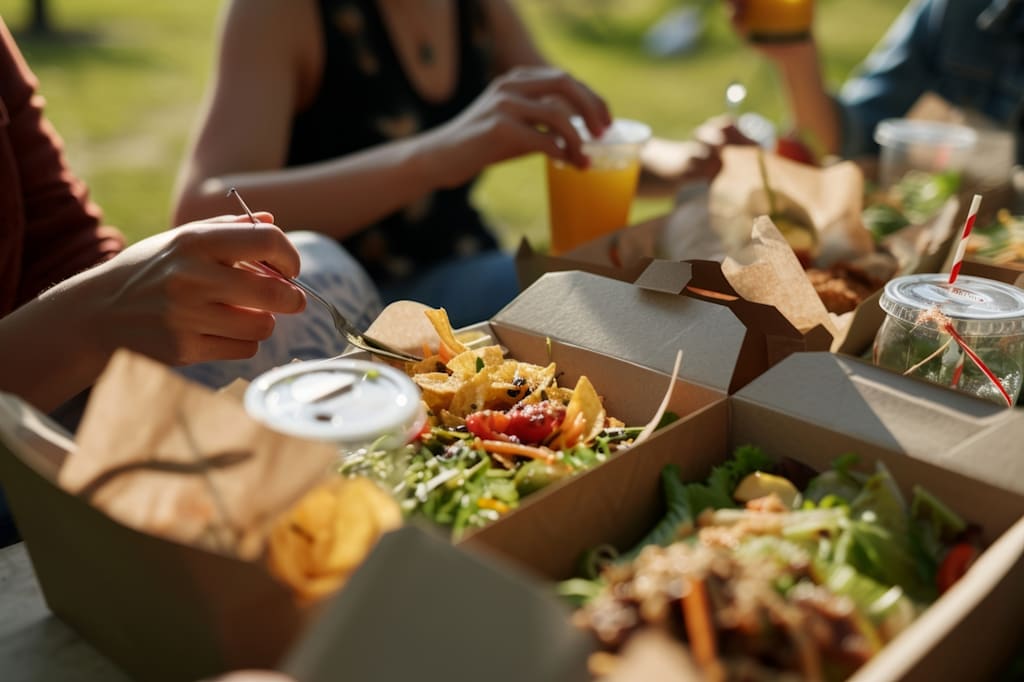
The way we approach our daily dinner tables and quick lunch hours is undergoing a quiet but massive rewrite.
It wasn’t that long ago that reaching for a ready-to-eat meal meant settling for a bland, overly salty TV dinner in a flimsy aluminum tray or a highly processed pot of instant noodles.
But browse any modern grocery aisle or scroll through a rapid-delivery application today, and you will see a total transformation. Time-pressed professionals are stocking their refrigerators with gourmet, vacuum-sealed ready meals, tracking down clean-label organic lunch pots, and ordering pre-portioned, microwave-safe trays that steam fresh ingredients in minutes. Fully prepared food has successfully broken away from its historic reputation as a low-quality fallback option to establish itself as a highly functional, nutritious staple for the modern on-the-go lifestyle.
This widespread reliance on convenience is generating massive commercial value. According to the latest comprehensive data from Mordor Intelligence, the global ready-to-eat food market size was valued at USD 398.25 billion in 2025 and is estimated to grow from USD 422.62 billion in 2026 to reach USD 568.73 billion by 2031. Fueled by a profound structural shift toward compact households and swift, friction-free meal preparation, the industry is forecast to expand at a steady 6.12% CAGR during the forecast period.
The Regulatory Pushback: Navigating the Ultra-Processed Label
Operating a global convenience food enterprise requires navigating an increasingly complex and strictly monitored public health environment. A defining factor driving product reformulation across the industry is the intensifying institutional scrutiny surrounding ultra-processed foods (UPFs).
Public health authorities and consumer advocacy groups are placing strict emphasis on nutritional transparency, pushing for front-of-pack warning labels regarding high sodium, saturated fat, and synthetic preservative levels. To protect their market presence and win over increasingly skeptical shoppers, major global brands are investing heavily in extensive recipe reformulations. They are systematically stripping out artificial stabilizers, replacing chemical flavor enhancers with natural yeast extracts, and deploying sophisticated batch-cooking methods that preserve nutritional integrity. While these extensive quality control systems ensure regulatory safety, they are highly capital-intensive, inadvertently creating a massive entry barrier for smaller regional competitors who lack the scale to absorb continuous compliance testing costs.
Strategic Market Breakdown: Products, Categories, and Channels
The internal product architecture of the global marketplace highlights a highly dynamic balance between traditional baking volume and fast-rising functional categories:
- Baked Goods Lead Volume, Soups Take the Fast Lane: By product type, baked goods dominated the industry, holding a 34.15% share of the global ready-to-eat food market size in 2025 due to deep retail penetration and universal breakfast appeal. Conversely, instant soups and snacks are forecast to post the fastest 6.62% CAGR through 2031, driven by an intense consumer demand for quick, portion-controlled mini-meals.
- The Conventional Core vs. Clean-Label Velocity: The conventional segment controlled the bulk of the industry at a 75.32% value share in 2025, providing affordable everyday options. However, organic and clean-label alternatives are expanding rapidly at a 6.05% CAGR, capturing premium center-shelf placement in upscale urban markets.
- Supermarkets Anchor Sales, Online Channels Surge: Traditional brick-and-mortar networks like supermarkets and hypermarkets remain the undisputed volume workhorse, managing 45.62% of global revenue in 2025. Concurrently, online retail stores are expanding the quickest, set to record a highest-in-class 7.74% CAGR through 2031.
Digital Disruptors: The Quick-Commerce and AI Integration
The rapid growth of the e-grocery sector is completely transforming the financial and operational realities of the category. While digital grocery platforms currently hold a smaller absolute share of the overall market compared to physical retail giants, they are experiencing explosive growth by eliminating the friction of traditional grocery trips.
These digital disruptors are finding immense success by deploying sophisticated quick-commerce (Q-commerce) networks and automated localized dark stores. By integrating AI-powered demand forecasting and automated inventory management tools, platforms can accurately predict local neighborhood eating habits, minimizing food waste for highly perishable chilled meals. Paired with hyper-targeted mobile promotions and effortless automated reordering systems, digital channels turn a basic chore into a highly convenient, personalized routine, making repeat purchases incredibly easy for the time-strapped consumer.
Regional Dynamics: Asia-Pacific Scale, Middle East Velocity
From a geographic standpoint, the market highlights an exciting contrast between high-volume production powerhouses and high-velocity emerging corridors:
- Asia-Pacific: Stands firmly as the largest regional market, capturing a dominant 41.20% of global revenue in 2025. This leadership is anchored by robust local manufacturing capabilities that ensure highly cost-efficient production scales, combined with soaring urbanization and an expanding workforce across major industrial hubs in China, India, and Southeast Asia.
- Middle East & Africa: Has emerged as the global hotspot for fastest incremental growth, projected to expand at an industry-leading 6.95% CAGR through 2031. This rapid acceleration is being powered by progressive urban planning, long working hours in metropolitan trade hubs, and a rising consumer preference for premium, shelf-stable international delicacies across expanding urban middle-class demographics.
Final Thoughts: A Highly Calibrated Kitchen
As the global ready-to-eat food market marches toward its USD 568.73 billion milestone in 2031, the category illustrates how an industry rooted in mass production can successfully adapt to a highly health-conscious society. By combining advanced preservation packaging with strict clean-label compliance and hyper-fast digital delivery systems, the sector has turned a simple time-saving shortcut into a sophisticated lifestyle solution.
The next time you open a premium, vacuum-sealed ready meal at your office desk or unwrap a fresh portion-controlled breakfast option on your morning commute, take a moment to look at the engineering behind the package. Behind that effortless prep sits a highly sophisticated global web of advanced food biochemistry, rigid regulatory compliance, and predictive cloud logistics working in perfect harmony to streamline your day. Modern dining has officially stepped past the stove bringing complete, masterfully calibrated meal solutions directly to your fast-paced routine.
About the Creator
Harvey Specter
I am passionate about Food & Beverage, Ag, & Animal Nutrition companies. I help organizations unlock their data's potential and fuel business growth. My expertise transforms raw data into actionable insights for strategic decisions.
Enjoyed the story? Support the Creator.
Subscribe for free to receive all their stories in your feed.
Comments
There are no comments for this story
Be the first to respond and start the conversation.