
Railway Wiring Harness Market: Powering Smart Rail Systems
How advanced cabling systems are enabling safer, faster, and connected rail networks
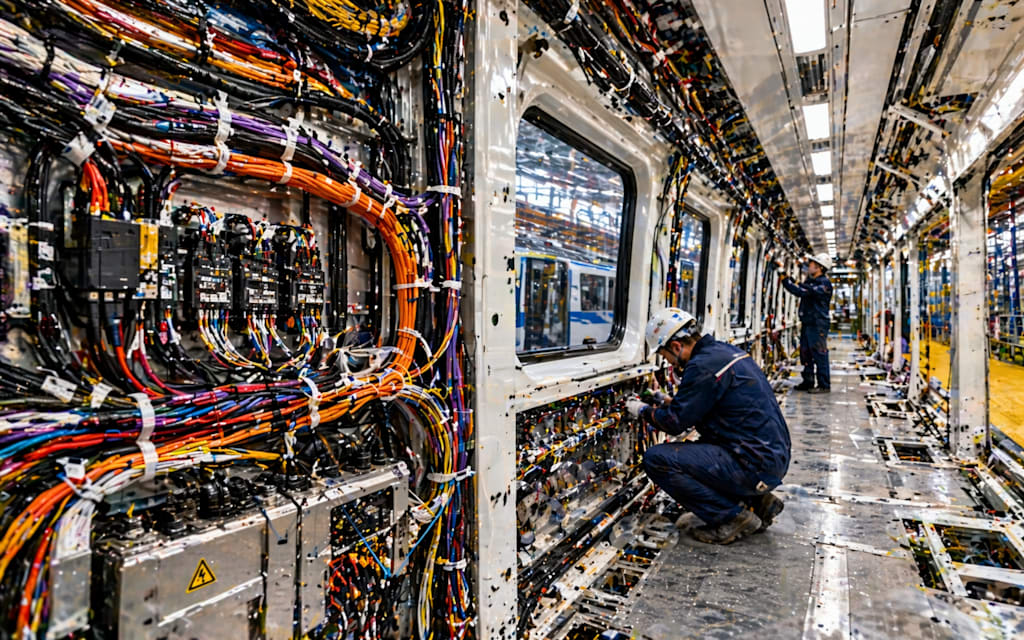
Behind every smooth train journey lies a network you never see. It does not carry passengers or cargo. Instead, it carries signals, power, and data that keep everything running seamlessly.
From lighting and braking to infotainment and safety systems, every function inside a train depends on a carefully engineered wiring network. This invisible backbone is at the center of the Railway Wiring Harness Market, where innovation supports the growing complexity of modern rail systems.
Why Wiring Harness Systems Matter in Railways
Railway wiring harnesses are integrated assemblies of wires, connectors, and terminals that distribute power and transmit data across train systems. As trains become more advanced, the need for reliable and high performance wiring systems continues to grow.
According to Mordor Intelligence, the Railway Wiring Harness Market size was valued at USD 2.85 billion in 2025, reached USD 3 billion in 2026, and is projected to grow to USD 3.87 billion by 2031, expanding at a CAGR of 5.25% during the forecast period.
Inside the Railway Wiring Harness Market Structure
The Railway Wiring Harness industry is shaped by multiple segments reflecting the complexity of train systems.
By insulation type, PVC accounted for 44.72% of the Railway Wiring Harness Market share in 2025, driven by cost efficiency and widespread use. Halogen free flame retardant materials are growing faster at 7.58% CAGR as safety standards tighten.
By wire material, copper dominated with 58.15% share in 2025, while optical fiber is expanding at a 7.22% CAGR, driven by demand for high speed data transmission.
High speed rail accounted for 36.02% of the Railway Wiring Harness Market size in 2025, while metro systems are growing at a 6.18% CAGR, supported by urban transit expansion.
In terms of application, engine and traction systems led with 33.12% share, while infotainment and connectivity are expanding at 7.89% CAGR, reflecting passenger demand for better onboard experience.
Trends Driving Market Evolution
Several Railway Wiring Harness Market trends are shaping the future of rail systems.
• Shift toward halogen free and low smoke materials to meet strict safety regulations
• Growing adoption of optical fiber for high speed data transmission
• Increasing use of smart cabling for predictive maintenance
• Expansion of driverless metro systems requiring advanced wiring networks
Railway systems are becoming more digital and connected. Wiring harnesses now support not only power distribution but also real time data transmission and automation systems.
Regional Growth and Market Dynamics
The Railway Wiring Harness Market analysis highlights strong regional momentum driven by infrastructure investments.
Asia Pacific leads the market with 44.05% share in 2025 and is also the fastest growing region with a 7.45% CAGR, supported by large scale rail projects.
Europe continues to drive demand through electrification goals and advanced rail control systems. North America is investing in rail modernization, contributing to steady growth.
These regional dynamics reflect a global push toward efficient and connected rail networks.
Challenges and Opportunities
Despite steady growth, the market faces challenges such as copper price volatility, complex certification requirements, and the need for skilled labor.
At the same time, opportunities are emerging through innovation. Lightweight materials help reduce costs, modular harness designs simplify installation, and digital monitoring improves maintenance efficiency.
Manufacturers are increasingly focusing on integrated solutions that combine hardware with data driven insights.
Railway Wiring Harness Market Forecast
The Railway Wiring Harness Market forecast indicates continued expansion as rail systems become more advanced and interconnected. Electrification projects, high speed rail investments, and smart transit networks will continue to drive demand.
Future wiring systems will support higher data loads, improved safety systems, and deeper integration with digital infrastructure. As trains evolve into connected mobility platforms, wiring harnesses will remain essential.
About the Creator
Enjoyed the story? Support the Creator.
Subscribe for free to receive all their stories in your feed.
Comments
There are no comments for this story
Be the first to respond and start the conversation.