
Qatar’s PM Visits Tehran as US-Iran Tensions Escalate Over Sanctions and Strait of Hormuz
Doha seeks to revive diplomacy amid Washington’s "economic war" and deadlocked negotiations, while Tehran leverages control of a global oil chokepoint.

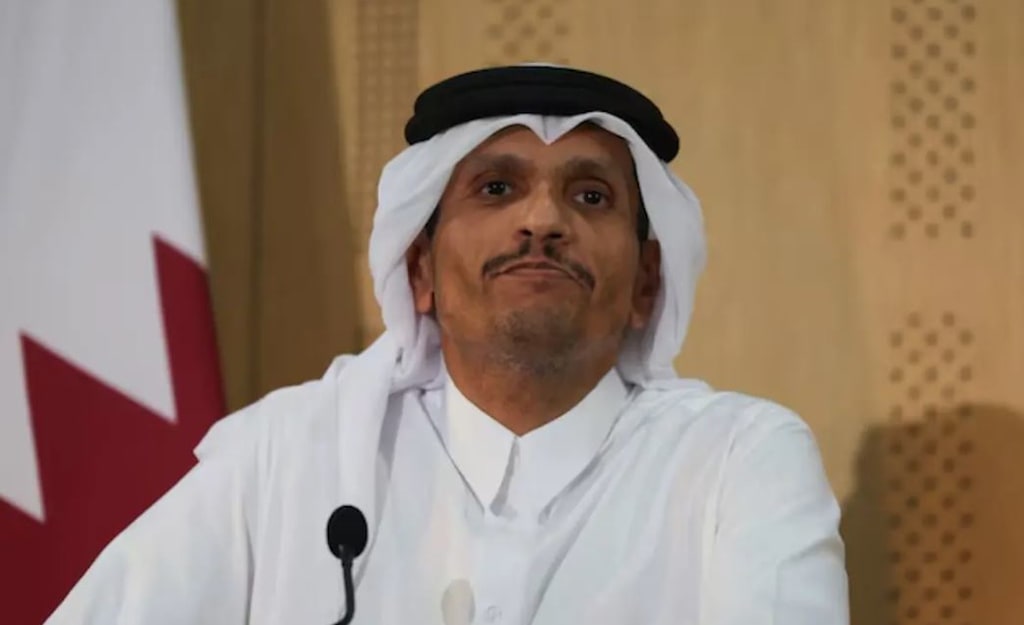
The Prime Minister of Qatar, Sheikh Mohammed bin Abdulrahman Al Thani, travelled to Tehran on Thursday in a fresh attempt to revive diplomatic channels between the United States and Iran, even as the two adversaries exchanged sharp rhetoric over Washington’s latest sanctions offensive described by a senior Iranian official as an "all-out economic war." The visit underscores Qatar’s growing role as a regional intermediary, leveraging its close ties to both Washington and Tehran to de-escalate a conflict that has now entered its sixth month with no clear end in sight.
A Gulf neighbour of Iran, Qatar has previously served as a discreet back-channel negotiator for the warring parties. It played a direct role in securing a June ceasefire that briefly halted hostilities, though that truce ultimately failed to hold. The current diplomatic push comes against a backdrop of largely paused fighting but persistent deadlock over fundamental issues, most notably the strategic Strait of Hormuz, a narrow waterway through which approximately one-fifth of the world’s oil passed before the war began on February 28. Tehran has used its control over the strait as powerful leverage, insisting it will remain closed unless the US meets conditions agreed under the interim ceasefire, including the lifting of the blockade on Iranian ports, compensation for damages, and the removal of sanctions.
During his Tehran visit, Sheikh Mohammed, who also serves as Qatar’s Foreign Minister held talks with Iranian Foreign Minister Abbas Araqchi, according to Iran’s foreign ministry channel on Telegram. The discussions centred on a proposed phased framework that includes the establishment of a temporary joint Iranian-Omani shipping corridor through the strait, as well as a joint project to clear mines from the waterway, Qatar’s foreign ministry confirmed. However, a previous memorandum of understanding between the US and Iran reached in June broke down in part because of disagreements between Iran and Oman over the strait’s operational arrangements.
The White House, meanwhile, has signalled no immediate appetite for direct engagement. Press secretary Karoline Leavitt stated on Thursday that President Donald Trump "continues to retain all options on the table" with regard to Iran. She reiterated that "no negotiations are happening right now" and that Washington would only consider talks if Tehran "comes to the table in a meaningful way" a condition the administration says has not yet been met. Leavitt also framed the current sanctions drive as part of a broader strategy, dubbing it "Operation Economic Outcast" to destroy Iran’s economy, following earlier military operations labelled "Operation Epic Fury." While direct military strikes have paused, the US this week intensified economic pressure by announcing plans to cut Iran off from its trading partners through expanded sanctions.
Iranian leaders have responded defiantly. Parliament Speaker Mohammad Baqer Qalibaf called for national unity in the face of what he termed "all-out economic war," warning that internal division would serve the enemy’s interests. Ebrahim Azizi, head of the parliament’s national security committee, described the sanctions as an "inhumane and hostile act" but argued they had lost their effectiveness, pointing to Iran’s decades of experience under various US sanctions since the 1979 Islamic revolution.
On the military front, Iran’s Revolutionary Guards announced on Wednesday that Tehran and Oman had agreed on how to share the Strait of Hormuz and its revenues, though a senior Iranian source later clarified that details were still being worked out. Before the war, the strait was open to free navigation, but Iran has since asserted control as both a bargaining chip and a potential revenue source, seeking to charge ships a commission a move the US opposes. Despite suffering significant conventional military losses from aerial bombardment earlier in the conflict, Iran retains enough missile and drone capability to threaten Gulf neighbours hosting US bases and to disrupt oil tankers in the strait. The International Maritime Organization has recorded 70 incidents in the waterway since February 28, resulting in the deaths of 19 seafarers. Thousands of others have died elsewhere, predominantly in Iran and Lebanon, since the US and Israel launched attacks aimed at denying Iran nuclear weapons, encouraging regime change, and dismantling Tehran’s missile programme.
As Qatar continues its shuttle diplomacy, the prospects for a breakthrough remain uncertain. The gulf between US demands and Iranian conditions appears wide, and the phased framework for the strait faces unresolved technical and political hurdles. Yet Doha’s persistent engagement reflects a broader regional recognition that without dialogue, the risk of a wider conflagration or a protracted economic strangulation will only deepen. For now, the war of words continues, but the door to negotiation, however narrow, remains slightly ajar.
About the Creator
Mark Lim
Hi I am mark an automotive student and a car, tech and food enthusiast ! Im gonna try and post daily & hope you enjoy what I write and do share my page with people you know. I would gladly appreciate it! Cheers
Enjoyed the story? Support the Creator.
Subscribe for free to receive all their stories in your feed.
Comments
There are no comments for this story
Be the first to respond and start the conversation.