
Privacy vs. Public Safety: The Flock Safety Debate and the Push to Ban Federal Use of License Plate Surveillance
Senator Bernie Sanders Introduces Ban-Flock Act 120,000+ Cameras, 20 Billion Reads Monthly Cities Terminate Contracts at Record Pace Company Tightens Rules as Scrutiny Grows

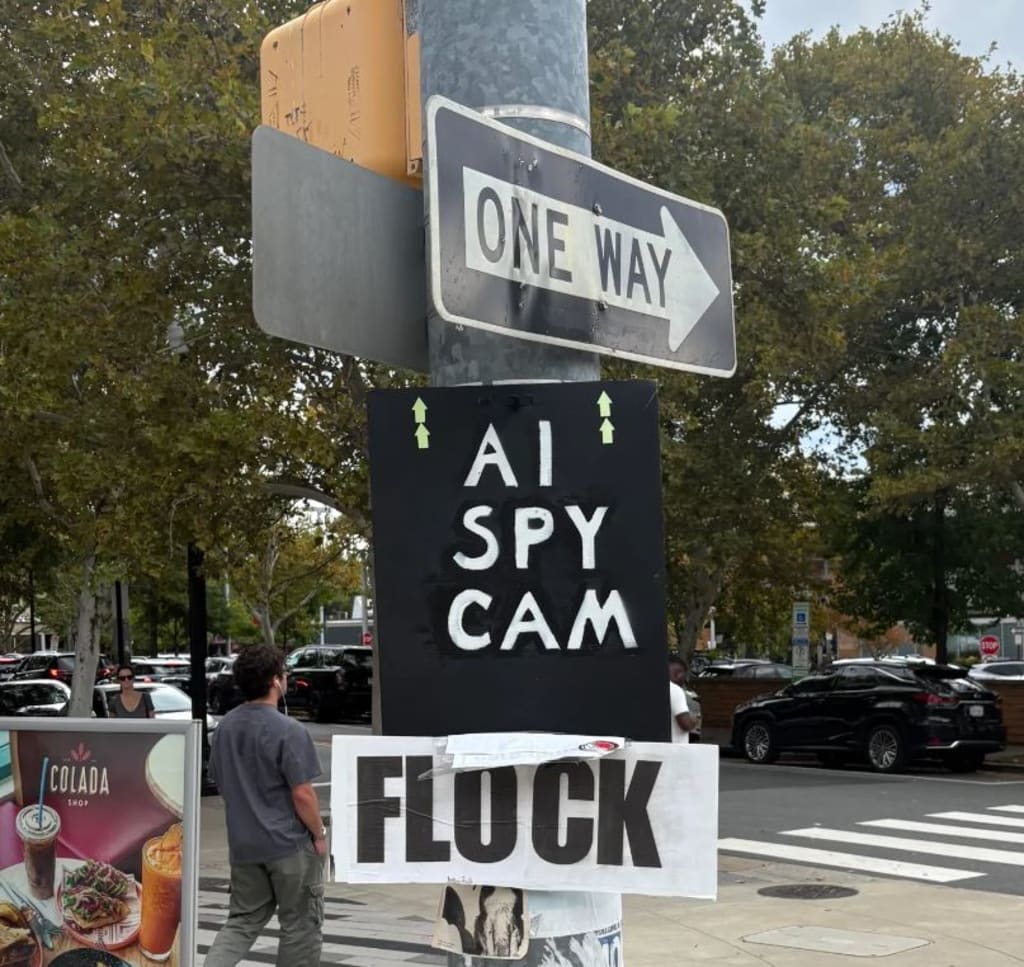
A national reckoning over automated license plate recognition (ALPR) technology has reached the halls of Congress. On Friday, Senator Bernie Sanders introduced the Ban Flock Act legislation that would bar federal agencies from using automated license plate readers or tapping into data collected by local police departments and private vendors. Though titled for the industry leader, the bill applies broadly to all such systems, marking the most significant federal challenge yet to a surveillance network that has spread rapidly across the United States.
The Scale of the Network
Flock Safety, the largest ALPR vendor in the country, operates more than 120,000 cameras nationwide. Valued at roughly $8 billion by its investors, including Andreessen Horowitz and Tiger Global, the company has stated that its network processes over 20 billion vehicle reads each month. Every time a car passes a camera, its license plate number, location, and timestamp are logged, stored, and potentially shared across jurisdictions. For supporters, this is a powerful tool for solving crimes, recovering stolen vehicles, and keeping communities safe. For critics, it is a permanent, pervasive tracking system that records the movements of millions of people including those never suspected of any wrongdoing, with little oversight or transparency.
What the Bill Would Do
The Ban Flock Act would:
Prohibit federal agencies from operating or accessing data from ALPR systems, with narrow exceptions only for toll collection and future uses explicitly approved by Congress which would be required to limit data retention to 48 hours.
Withhold federal funding from state and local governments that continue using the technology. Starting the first fiscal year after enactment, non‑compliant jurisdictions would lose grants from five key departments, including Justice and Homeland Security.
Create enforcement pathways: individuals could sue the federal government over violations, and state attorneys general would have authority to enforce the law.
Representative Alexandria Ocasio‑Cortez and Senator Jeff Merkley are co‑sponsors, signalling growing bipartisan concern on the left. Like most proposed legislation, the bill faces long odds in the current political climate but its introduction alone elevates the debate and sets a benchmark for future policy.
Escalating Pushback Across the Country
Public opposition has moved beyond commentary into action. In Los Angeles, the LAPD suspended use of Flock cameras in July over unresolved privacy concerns. By August, cities across the U.S. were terminating contracts at a record pace, driven by community pressure, reports of misuse, and questions about long‑term data stewardship.
Cases of abuse have fuelled the backlash. In Milwaukee, a former police officer pleaded guilty to misconduct after searching for his then‑partner and her ex 179 times, listing the purpose generically as “investigation.” Incidents like this have raised fears that without robust safeguards, powerful systems can be weaponised for personal, political, or discriminatory ends.
Company Responds: New Limits, New Tools
Under mounting pressure, Flock Safety has begun revising its practices. In August, CEO Garrett Langley announced a default data retention period of seven days, down from the previous 30. Officers now face automated audits and can be locked out of the system pending review if searches appear unusual. Langley has also noted that proposals such as a “double‑key” approval system where two authorised people must sign off on a query are being considered.
These changes acknowledge concerns but leave deeper questions unresolved: Who defines “unusual”? How are communities assured these rules are followed in practice? And can private companies be trusted to police the use of data that captures the daily movements of an entire nation?
The Conversation Continues
The debate is far from settled. TechCrunch will sit down with Garrett Langley at Disrupt 2026 in San Francisco next month, where he will face questions about privacy, accountability, and the future of public surveillance. Whether through legislation, local bans, or company reform, one thing is clear: the era of unexamined adoption is ending. Communities, lawmakers, and the company itself are being forced to answer the same question how do we stay safe without losing the very freedom we are trying to protect?
About the Creator
Mark Lim
Hi I am mark an automotive student and a car, tech and food enthusiast ! Im gonna try and post daily & hope you enjoy what I write and do share my page with people you know. I would gladly appreciate it! Cheers
Enjoyed the story? Support the Creator.
Subscribe for free to receive all their stories in your feed.
Comments
There are no comments for this story
Be the first to respond and start the conversation.