
Primary Cell Culture Market: 13% Growth Surge Ahead
Why this fast-evolving biotech segment is quietly reshaping the future of research and medicine
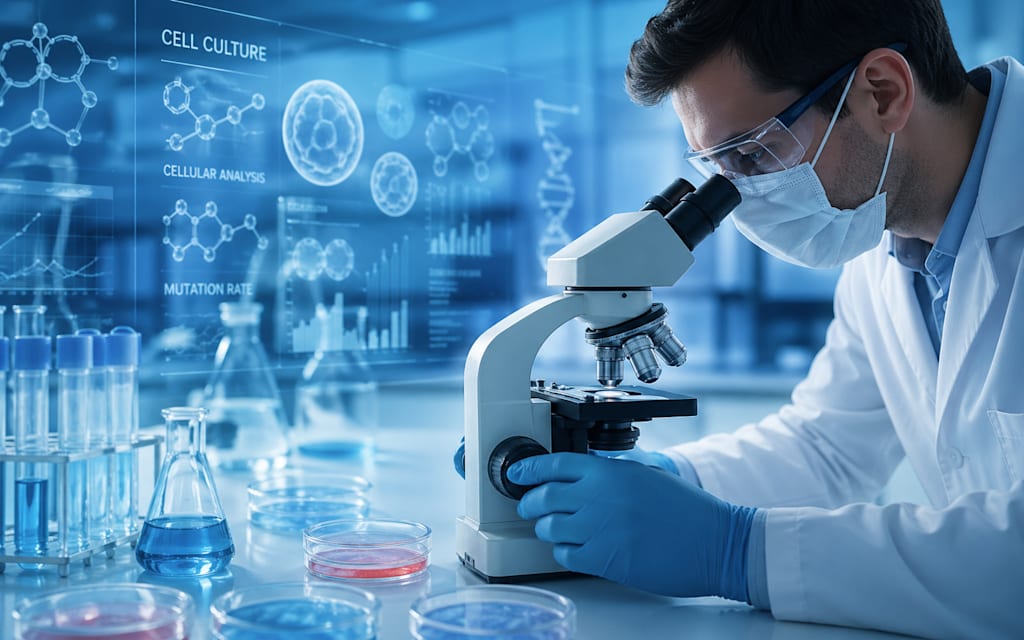
The hum of incubators never stops. Inside tightly controlled lab environments, something extraordinary is happening—cells, once part of a living organism, are growing independently, telling stories about disease, drug responses, and the very nature of life itself. These tiny biological units are not just samples; they are the foundation of a rapidly expanding scientific frontier.
And yet, most people never hear about it.
Behind breakthroughs in cancer therapies, vaccine development, and regenerative medicine lies a quiet revolution driven by the Primary Cell Culture Market. It’s not flashy. It doesn’t make headlines like AI or space travel. But its impact? Profound, immediate, and increasingly indispensable.
The Silent Engine Behind Modern Biomedical Innovation
Primary cell culture refers to the process of isolating cells directly from living tissues and maintaining them in a controlled environment. Unlike immortalized cell lines, these cells retain the closest resemblance to their natural physiological state. That makes them invaluable—and also more complex to handle.
According to Mordor Intelligence, the Primary Cell Culture Market is projected to grow at a CAGR of 11.72% during the forecast period (2026–2031). That’s not just steady growth—it’s a signal of escalating global demand.
So what’s driving this surge?
At its core, the answer lies in authenticity. Researchers are moving away from generalized models toward highly accurate biological representations. Whether it's studying how cancer cells respond to a new drug or understanding viral infections at a cellular level, primary cells provide insights that are closer to real human biology.
This demand is further amplified by the rise of personalized medicine. As treatments become more tailored to individual patients, the need for precise cellular models becomes non-negotiable.
Where Science Meets Urgency: Real-World Applications
Step into any advanced research facility, and you’ll find primary cell cultures at the heart of critical experiments. They are used extensively in:
- Cancer research, where tumor-derived cells help identify effective therapies
- Vaccine development, especially for emerging infectious diseases
- Drug toxicity testing, reducing reliance on animal models
- Regenerative medicine, including stem cell therapy and tissue engineering
But beyond these applications lies a deeper narrative—one of urgency.
The global burden of chronic diseases continues to rise. Aging populations, lifestyle-related disorders, and increasing incidences of conditions like cancer and diabetes are pushing healthcare systems to their limits. Researchers are under pressure to deliver faster, more effective solutions.
Primary cell culture is not just a tool—it’s becoming a necessity.
And that necessity is translating into market momentum.
The increasing investments in biotechnology and pharmaceutical R&D are further accelerating adoption. Governments, private institutions, and global organizations are channeling funds into life sciences innovation, recognizing that the future of healthcare depends on it.
Challenges That Shape the Market’s Evolution
Growth, however, doesn’t come without friction.
Primary cell culture is inherently complex. Unlike immortalized cell lines, primary cells have a limited lifespan. They are sensitive, require precise conditions, and are more expensive to maintain. Even slight deviations in temperature, pH, or nutrient supply can compromise results.
This creates a barrier to entry for smaller labs and institutions.
Moreover, ethical considerations around tissue sourcing and regulatory compliance add another layer of complexity. Researchers must navigate strict guidelines, ensuring that all procedures meet global standards.
Yet, these challenges are not slowing the market—they’re shaping it.
Innovation is stepping in to bridge the gaps. Advanced culture media, automated systems, and improved storage solutions are making processes more efficient and scalable. Companies are investing heavily in developing technologies that simplify workflows while maintaining accuracy.
In a way, the very difficulties of primary cell culture are fueling innovation within the industry.
A Market Fueled by Precision and Possibility
One of the most compelling aspects of the Primary Cell Culture Market is its alignment with broader scientific trends.
We are entering an era where precision matters more than ever. From gene editing to targeted therapies, the focus is on understanding biology at the most granular level. Primary cells, with their near-natural state, fit perfectly into this paradigm.
Additionally, the integration of digital technologies—like AI-driven data analysis and automated lab systems—is enhancing the efficiency of cell culture processes. Researchers can now analyze cellular behavior with unprecedented accuracy, unlocking insights that were previously out of reach.
The ripple effects are significant:
- Faster drug discovery timelines
- Reduced failure rates in clinical trials
- More personalized treatment options for patients
And as these benefits become more apparent, adoption is expected to accelerate further.
Breaking Down the Growth Story
Let’s bring it back to the numbers—because they tell a story of their own.
The Primary Cell Culture Market’s projected CAGR of 11.72% (2026–2031) reflects a convergence of multiple growth drivers:
- Rising demand for biologics and biosimilars
- Increasing focus on cell-based research
- Expansion of pharmaceutical and biotech industries
- Growing prevalence of chronic and infectious diseases
But beyond these drivers lies a deeper shift—a change in how we approach science itself.
We are moving from generalized assumptions to precise, data-driven understanding. From one-size-fits-all treatments to individualized care. From reactive medicine to proactive solutions.
Primary cell culture sits at the center of this transformation.
The Human Element Behind the Science
It’s easy to get lost in technical details and market projections. But at its core, this story is about people.
It’s about the scientist working late into the night, carefully monitoring cell growth, hoping for a breakthrough.
It’s about patients waiting for better treatments, for hope where there was once uncertainty.
It’s about a global community striving to understand life at its most fundamental level.
The Primary Cell Culture Market is not just a segment of the biotech industry—it’s a reflection of our collective ambition to solve some of the most complex challenges in healthcare.
What Lies Ahead?
As we look toward the future, one thing becomes clear: this market is not slowing down.
With continuous advancements in technology, increasing research funding, and a growing emphasis on precision medicine, the trajectory is firmly upward. The challenges that exist today are likely to become opportunities for innovation tomorrow.
And as the market evolves, so too will its impact.
From accelerating drug discovery to enabling personalized treatments, primary cell culture will continue to play a pivotal role in shaping the future of medicine.
Final Thought
The next time you hear about a breakthrough in medicine—a new cancer therapy, a life-saving vaccine, or a revolutionary treatment—remember the unseen work behind it.
Remember the cells.
Because sometimes, the smallest things drive the biggest changes.
What do you think—will primary cell culture become the backbone of future medicine, or will emerging technologies disrupt its path?
About the Creator
Enjoyed the story? Support the Creator.
Subscribe for free to receive all their stories in your feed.
Comments
There are no comments for this story
Be the first to respond and start the conversation.