
Preparing Your Marina: Infrastructure Requirements for Heavy-Duty Boat Hoists
A Comprehensive Guide to Heavy-Duty Maritime Lifting Capacity
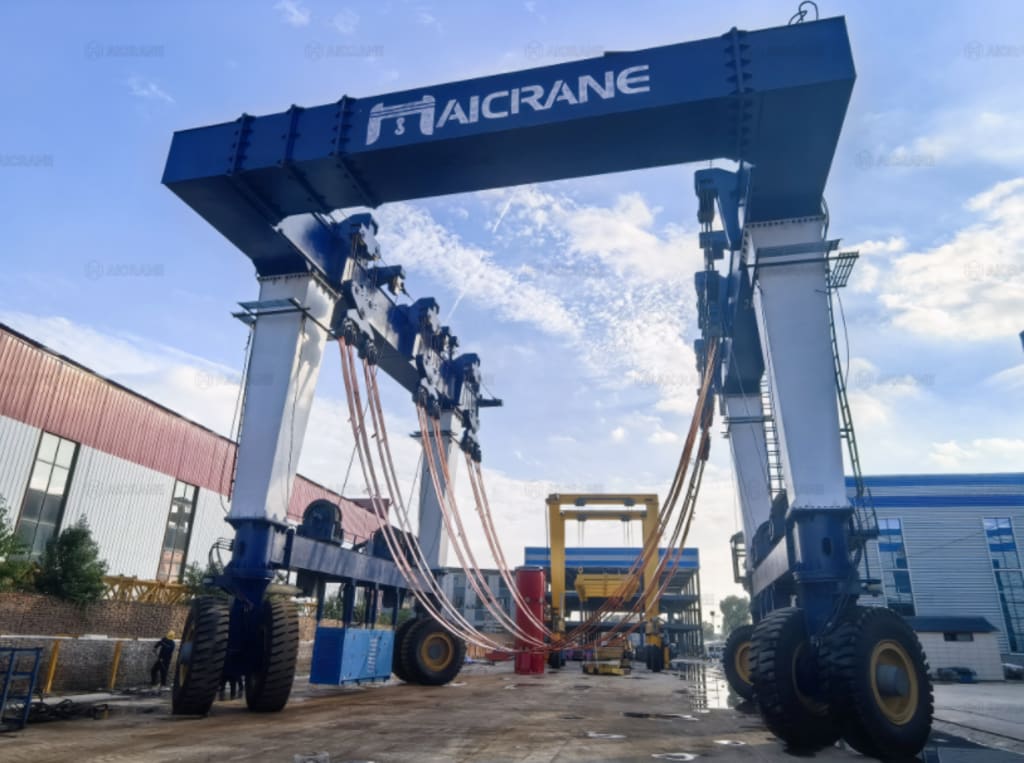
The global maritime industry is witnessing a significant trend: vessels are becoming larger, beamier, and heavier. For marina operators, this shift represents a prime opportunity to capture the high-end yachting and commercial vessel market. However, upgrading to a heavy-duty boat hoist—typically defined as equipment with a lifting capacity of 50 to 1,000 tons—is not a simple plug-and-play investment.
The installation of a heavy-duty mobile boat hoist (MBH) necessitates a comprehensive evaluation and often a complete reconstruction of your marina’s physical infrastructure. From the structural integrity of the runways to environmental compliance and electrical upgrades, every detail must be engineered to withstand immense localized forces. This article explores the critical infrastructure requirements necessary to support heavy-duty lifting operations.
1. Structural Engineering: The Foundation of Safety
The most significant challenge a heavy-duty hoist poses to a marina is the concentrated point load. Unlike standard vehicles that distribute weight across a large surface, a mobile boat hoist concentrates hundreds of tons onto a few tire contact patches.
Reinforced Concrete Runways
Standard asphalt or thin concrete pads will fail immediately under the pressure of a 100-ton hoist. Specialized runways are mandatory.
Concrete Specifications: Runways must be constructed using high-PSI (pounds per square inch) reinforced concrete. Depending on the hoist's capacity, thickness typically ranges from 10 to 18 inches.
Reinforcement: Heavy-duty rebar grids are essential to prevent cracking and structural fatigue. The design must account for the "worst-case scenario"—the maximum weight of the hoist plus the maximum weight of the vessel, focused on the front or rear axles during movement.
Geotechnical Considerations and Soil Stability
The concrete is only as strong as the ground beneath it. Because marinas are located on waterfronts, the soil is often comprised of soft silt, clay, or reclaimed land.
Soil Borings: A geotechnical survey is required to determine the soil’s bearing capacity.
Deep Foundations: If the soil is unstable, the runways may need to be supported by friction piles or end-bearing piles driven deep into the bedrock. Without this, the runways will undergo uneven settlement, leading to catastrophic failure of the concrete and potential tipping of the hoist.
2. Pier and Finger Design: The Critical Interface
The "fingers" or piers where the hoist straddles the water to lift a boat are the most high-risk areas of the marina. These structures must manage both vertical loads and lateral (sideways) forces.
Pier Width and Spacing
Modern yachts, especially catamarans, have significantly wider beams than older vessels. When designing the pier infrastructure:
Inside Clear Width: The distance between the piers must be wide enough to accommodate the widest vessels you intend to service, plus a safety margin for the hoist’s slings.
Out-to-Out Dimension: The overall width of the piers must match the tire track of the hoist. If the piers are too narrow, the hoist tires will ride too close to the edge, increasing the risk of structural collapse.
Dynamic Loading and Scour
When a hoist picks up a vessel, the load isn't just static. Wind, slight movements of the boat, and the hoist’s own braking/acceleration create dynamic forces.
Bumper and Curb Systems: Substantial concrete curbs (bull rails) are necessary to prevent the hoist from inadvertently driving off the pier.
Scour Protection: The turbulence created by large propellers and the displacement of heavy hulls can erode the seabed around the pier pilings (scour). Underwater infrastructure must be reinforced with rip-rap or concrete mats to ensure the pilings remain secure.
3. Yard Layout and Maneuverability
A heavy-duty marine boat lift is a massive piece of machinery. Its efficiency is entirely dependent on the layout of the "dry side" of the marina.
Turning Radii and Clearances
Heavy-duty hoists do not have the tight turning circles of smaller equipment.
Aisles and Turning Basins: You must ensure that the path from the lift well to the blocking area is wide enough. Any "tight corners" will require the operator to perform multi-point turns, which increases wear on the tires and slows down operations.
Overhead Clearances: Ensure that power lines, tree branches, and building eaves are high enough to clear not just the hoist, but the hoist carrying the tallest vessel in your fleet.
Ground Rating Throughout the Facility
A common mistake is only reinforcing the area near the water. A heavy-duty hoist must be able to carry a boat to its storage or maintenance position. If the hoist travels over a utility trench, manhole cover, or unreinforced patch of ground, it will likely crush it. The entire travel path must be rated for the maximum axle load.
4. Electrical and Utility Integration
As the industry moves toward sustainability, many manufacturers are offering electric or hybrid hoists. Even traditional diesel units require significant utility support.
Shore Power for Hoists: High-capacity electric hoists require dedicated charging stations. This may necessitate a new transformer or an upgrade to the marina’s electrical grid to handle the high-amperage draw.
Wash-down and Environmental Compliance: Once a boat is lifted, it is usually power-washed. Heavy-duty lifting usually involves vessels with large surface areas covered in anti-fouling paint. Your infrastructure must include a "closed-loop" wash-down pad that captures all runoff, filters out heavy metals and biological waste, and complies with environmental regulations (such as the Clean Water Act in the US).
5. Safety and Operational Zones
Increased weight equals increased risk. The infrastructure must include built-in safety features to protect personnel and property.
Lighting: Operations often occur at dawn or dusk. High-intensity LED mast lighting should be integrated into the lift well area to provide 360-degree visibility for the operator.
Exclusion Zones: Permanent signage and physical barriers (fencing or painted lines) should designate "hoist-only" zones where pedestrians and vehicle traffic are prohibited during lifting operations.
Weight Scales: Modern infrastructure often integrates load-cell technology into the runways or the hoist itself to provide real-time weight data, ensuring the vessel does not exceed the capacity of the hoist or the pier.
Conclusion: A Holistic Investment
Preparing a marina for a heavy-duty boat hoist is an exercise in comprehensive engineering. The hoist itself is the "star" of the show, but the infrastructure is the "stage" that makes the performance possible.
By investing in high-specification concrete runways, geotechnically sound foundations, wide-clearance piers, and environmentally compliant wash-down areas, marina owners protect their equipment, their staff, and their clients' multi-million dollar assets. Before proceeding, always consult with a specialized maritime structural engineer and your hoist manufacturer to ensure that your site’s physical reality meets the machine’s technical requirements.
Proper preparation today ensures a safe, efficient, and profitable service operation for decades to come.
About the Creator
Aicrane01
Welcome to the Aicrane Blog, your practical guide to lifting solutions. Discover articles covering overhead cranes, gantry cranes, winches, steel structures, boat lifts, and more.
Website: https://steelmillcranes.com/
Enjoyed the story? Support the Creator.
Subscribe for free to receive all their stories in your feed.
Comments
There are no comments for this story
Be the first to respond and start the conversation.