
Power, Price, and Balance: Navigating Malaysia’s Electricity Landscape in an Era of Rising Costs and Demand
Regulated Tariffs, Global Fuel Volatility, and Surging Data Centre Loads Put TNB and Policymakers at the Centre of a Delicate Equilibrium

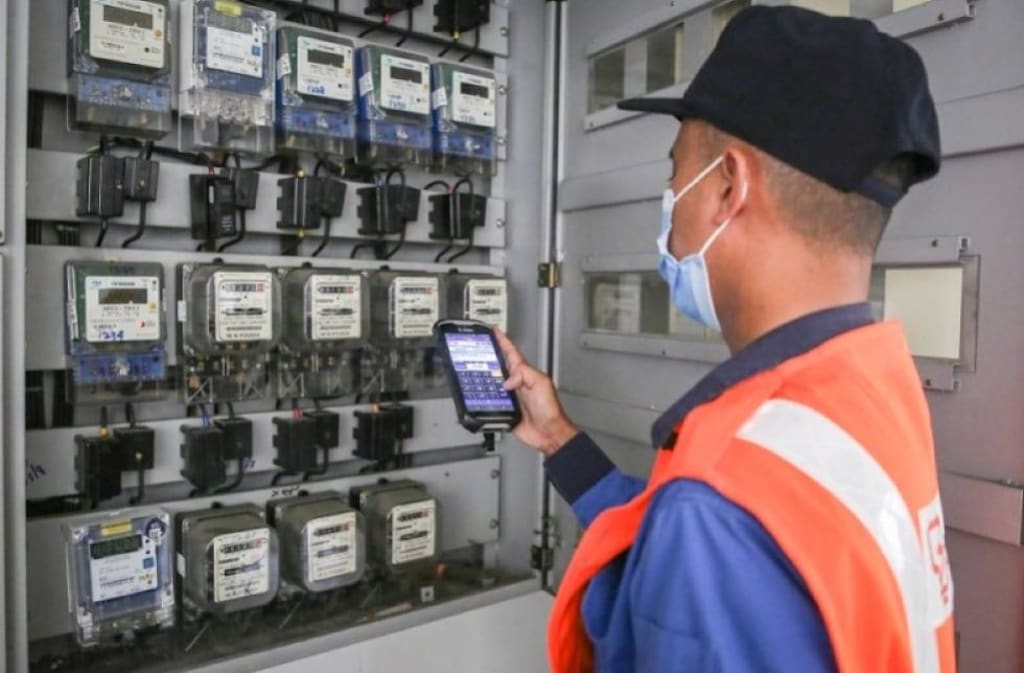
Tenaga Nasional Berhad (TNB) stands at the heart of Peninsular Malaysia’s electricity system and at the centre of a growing balancing act. Unlike businesses free to adjust prices in response to market shifts, the national utility operates within a tightly regulated framework designed to reconcile three often-competing goals: keeping power affordable for households, ensuring the grid remains reliable and well-maintained, and supporting the nation’s transition toward cleaner energy. As global fuel prices climb and electricity demand driven heavily by data centres, surges to new highs, that equilibrium is being tested as never before.
The Regulatory Foundation: Fairness, Transparency, and Control
Electricity tariffs in Peninsular Malaysia are not set by TNB alone. They are determined by the Energy Commission (EC) under powers granted by the Electricity Supply Act 1990, with final approval from the Minister of Energy Transition and Water Transformation. The current framework Regulatory Period 4 (RP4), running from July 1, 2025, to December 31, 2027 establishes an Incentive-Based Regulation (IBR) system that defines allowable costs, performance targets, and reasonable returns on assets.
The base tariff was set at 45.40 sen per kilowatt-hour (kWh) a slight reduction from the 45.62 sen approved in late 2024 effective July 1, 2025. A key innovation under RP4 is the unbundling of charges into four clear categories: energy, capacity, network, and retail, giving consumers unprecedented visibility into what they are paying for. This structure acknowledges that electricity is not just fuel it is infrastructure, maintenance, and service and that each component deserves to be understood.
Fuel Costs: The Global Factor in Local Bills
For all the precision of the regulatory framework, Malaysia’s generation mix remains heavily exposed to global markets. In 2025, coal accounted for 58.5% of electricity generated, and natural gas for 33.5% together supplying more than 92% of the nation’s power. When international prices rise, so does the cost of keeping the lights on:
Coal climbed from US$129.63 per tonne in July to US$130.67 in August, reaching US$148 by September 10.
Liquefied natural gas (LNG) rose 13.2% in August alone, averaging US$21.87 per MMBtu before approaching US$30 by mid-September.
These shifts are captured through the Automatic Fuel Adjustment (AFA) mechanism introduced in July 2025 to replace the six-monthly Imbalance Cost Pass-Through which updates monthly to reflect actual generation costs. Critically, higher fuel prices do not translate into extra profit for TNB; they are passed through as a separate adjustment, ensuring the utility’s regulated returns remain distinct from volatile energy markets.
Demand Surges: Peak Loads and the Data Centre Factor
Even as costs rise, demand is accelerating. On September 9, daily peak electricity demand hit 21,949 megawatts (MW), 4.7% above the August average though it remains within the system’s 25% reserve margin. Growth is projected at 5.0% in 2026 and 3.5% in 2027, driven by industrial expansion, electric vehicle adoption, weather effects, and most notably, data centres.
Kenanga Investment Bank estimates that data centre investments could generate 8,000 MW of demand by 2035, roughly 30% of Malaysia’s total generation capacity, with 700 MW expected to come online this year alone. To prevent these massive new loads from burdening ordinary households, the government has adopted a “user pays” principle: dedicated ultra-high-voltage tariffs and project-specific connection charges ensure that those requiring enhanced infrastructure pay for it directly.
Protecting Households: Subsidies, Thresholds, and Cost Absorption
The most visible pressure point for consumers has been rising bills amplified by El Niño-driven heat and prolonged haze that pushed up air-conditioning use. In response, the government raised the protected subsidy threshold from 600 kWh to 800 kWh per month, effective September 1 through December 2026. This change shields 90% of domestic users, an additional one million households, from the AFA adjustment, retail charges, and sales and service tax.
The protection comes at a price: TNB estimates absorbing the difference will cost RM120 million to RM150 million through year-end. While Kenanga notes this represents less than 3% of projected FY2026 earnings, the investment bank warns that extending these measures beyond 2026 could introduce volatility if high fuel prices persist and full cost recovery remains delayed. As Finance Minister II Datuk Seri Amir Hamzah Azizan observed: “No pricing framework can insulate households from the weather.” Equally, no framework can sustain indefinitely absorbing costs that must eventually be met.
Shared Responsibility, Sustainable Pathways
Malaysia’s electricity system is more than wires and generators it is a compact between people, government, and industry. TNB bears the operational burden; regulators balance fairness and sustainability; policymakers must choose between immediate relief and long-term resilience. But as Amir Hamzah reminds us, responsibility cannot rest with institutions alone: “Efficient energy usage must be the new norm, not a temporary adjustment.”
The path forward will require difficult choices balancing affordability with investment, accommodating growth with decarbonisation, and protecting today without compromising tomorrow. For now, the system holds. But maintaining that balance in an era of global volatility and local expansion will demand vigilance, transparency, and participation from every Malaysian.
About the Creator
Mark Lim
Hi I am mark an automotive student and a car, tech and food enthusiast ! Im gonna try and post daily & hope you enjoy what I write and do share my page with people you know. I would gladly appreciate it! Cheers
Enjoyed the story? Support the Creator.
Subscribe for free to receive all their stories in your feed.
Comments
There are no comments for this story
Be the first to respond and start the conversation.