
Politics Has Already Entered the Asian Games, OCA President Concedes
Incident Over Taiwan Minister’s Access Highlights Tensions Between Sporting Neutrality and Diplomatic Realities

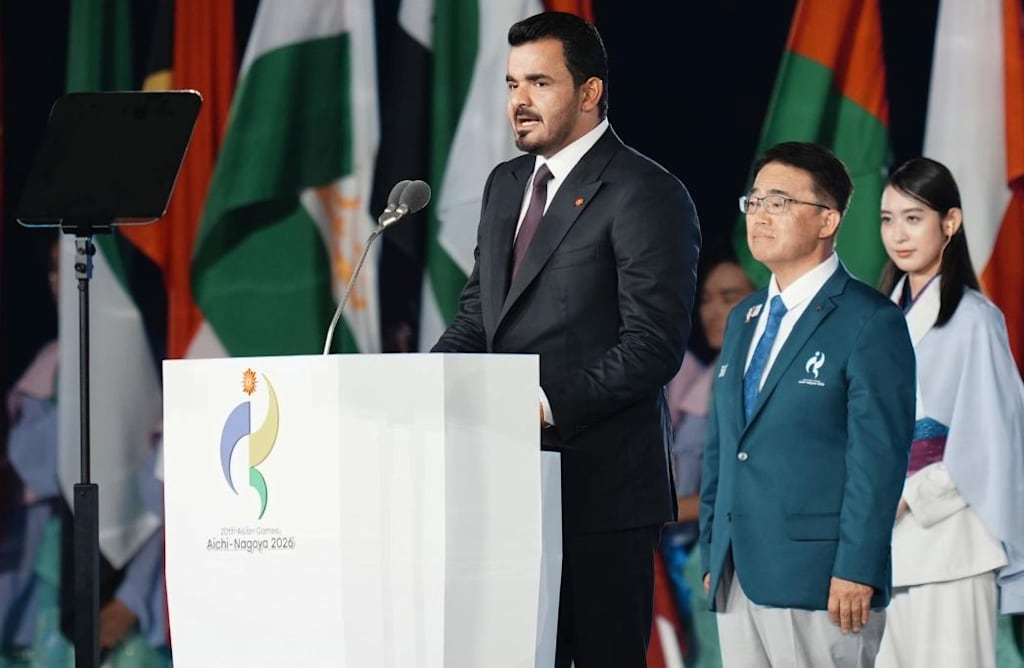
The President of the Olympic Council of Asia (OCA), Sheikh Joaan bin Hamad Al Thani, openly acknowledged on Saturday that politics has already entered the 2026 Asian Games, a development he made clear he neither welcomed nor endorsed. Speaking to the media just hours before the official opening ceremony, Sheikh Joaan expressed regret that the line between sport and geopolitics had already been crossed, even as he reaffirmed the OCA’s commitment to upholding established protocol for all participating delegations.
“I don’t think, you know, the politicians or politics should be involved in sports,” Sheikh Joaan stated plainly. “We don’t mix sports with politics, and we already have.” His remarks came in direct response to an incident the previous day, Friday, in which Lee Yang Taiwan’s Sports Minister and a celebrated two-time Olympic gold medallist in badminton, was initially barred from attending a welcoming ceremony and flag-raising event for the Chinese Taipei delegation. Lee was later permitted to join the proceedings, with the OCA attributing the restriction to a misunderstanding.
The incident drew immediate attention from Taiwanese officials and media. Reports from the island stated that the OCA had issued an order barring Lee from the event, and that when Chinese Taipei representatives asked to see the written directive, no document could be produced. The disagreement escalated into negotiations between the Chinese Taipei Olympic Committee, local organisers, and the OCA discussions that centred on fairness, dignity, and equal treatment under the Olympic spirit.
Chen Shih-kwei, Vice President of the Chinese Taipei Olympic Committee, confirmed that his delegation had stood firm throughout the process. “We chose to stick to our principles,” he said. “We asked the local organising committee and the OCA to uphold the Olympic spirit, so that we could attend all events equally and with dignity. We insisted on this, and then negotiations began. We stood firm on our dignity and principles.”
Lee Yang himself addressed reporters after the issue was resolved, emphasising that the Taiwanese team remained determined to compete without compromise. “We are doing our best to safeguard our rights and do not want to be subjected to any form of suppression,” he said. “We also hope more Taiwanese athletes can perform at their best and give their all at the games so that Taiwan can be more visible on the international stage.”
The conflict unfolds against a long-standing and complex diplomatic backdrop. Taiwan participates in both the Asian Games and the Olympic Movement under the name “Chinese Taipei” and without the use of its national flag, arrangements shaped by China’s territorial claim over the island. These parameters have been in place for decades, but they remain sensitive, and interpretations of protocol can quickly escalate into disputes over recognition and respect.
Sheikh Joaan, the younger brother of the Emir of Qatar, Sheikh Tamim bin Hamad Al Thani noted that all delegations are fully briefed on what is and is not permitted under OCA rules. “All the delegations know what the protocol is and what should be done, and what shouldn’t be done,” he said, adding that the OCA has established procedures for addressing deviations from agreed standards. His tone, however, carried a note of resignation: despite every effort to keep politics out of competition, the very presence of senior government figures and differing diplomatic expectations has made separation impossible.
Practically, the scale of the current games underscores the difficulty of managing such issues. With more than 17,000 athletes and officials taking part, roughly 5,000 of whom are being accommodated aboard cruise ships, organisers have already begun some competitions ahead of the opening ceremony to accommodate the packed schedule. Amid such immense logistics, the appearance of diplomatic friction serves as a reminder that the Asian Games are never entirely free of the world beyond the stadium.
As competition proceeds, the question remains whether this incident will stand as an isolated misunderstanding or signal further tensions. For the athletes, the priority remains the same: to perform, to represent their people, and to let their achievements speak. For the officials, the challenge is far more complicated balancing protocol, principle, and politics in an arena where every gesture carries weight.
About the Creator
Mark Lim
Hi I am mark an automotive student and a car, tech and food enthusiast ! Im gonna try and post daily & hope you enjoy what I write and do share my page with people you know. I would gladly appreciate it! Cheers
Enjoyed the story? Support the Creator.
Subscribe for free to receive all their stories in your feed. You could also become a paid subscriber, letting them know you appreciate their work.
Comments
There are no comments for this story
Be the first to respond and start the conversation.