
Plastic Waste Management Market Quietly Transforming Industry
Plastic waste management reshaping global systems and sustainability
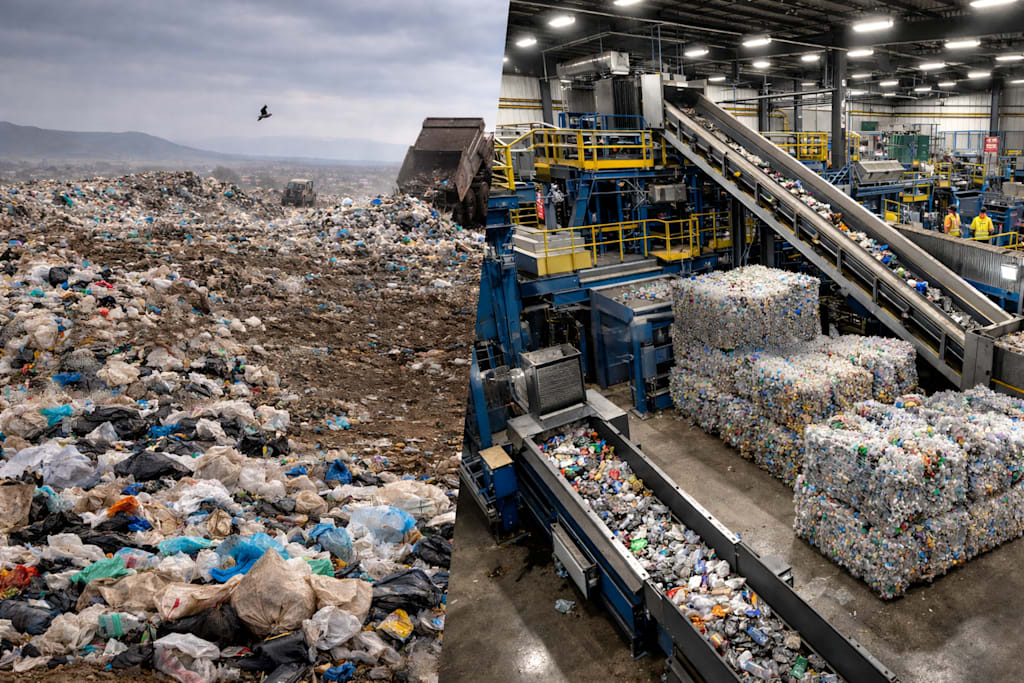
At sunrise, the landfill looks almost still, until the trucks arrive. One by one, they unload yesterday’s convenience: bottles, wrappers, fragments of modern life. For a moment, it feels like an ending. But just beyond the horizon, another scene unfolds, machines sorting, melting, and reshaping what seemed like waste into something usable again.
This contrast tells a deeper story. The global shift toward sustainability is no longer abstract, it’s operational, measurable, and accelerating. The Plastic Waste Management Market is becoming a cornerstone of this transformation, influencing industries, policies, and everyday consumer choices in ways that are both visible and hidden.
The Evolving Landscape of Plastic Waste Management
The modern plastic waste management industry is no longer just about disposal, it’s about reinvention. Across cities and industrial hubs, systems are being redesigned to capture value from waste, turning discarded plastics into raw materials for new products.
The plastic waste management market size is expected to grow from USD 48.10 billion in 2025 to USD 49.81 billion in 2026 and is forecast to reach USD 59.31 billion by 2031 at 3.55% CAGR over 2026-2031.
This steady rise reflects a broader realization: waste is not the end of a product’s journey. Governments are enforcing stricter recycling mandates, while corporations are embedding sustainability into their core strategies. Together, these forces are reshaping how plastic is perceived, not as a problem alone, but as a resource waiting to be recovered.
In neighborhoods, this shift shows up in subtle ways, segregated bins, awareness campaigns, and recycling incentives. On a larger scale, it’s driving infrastructure investments and technological breakthroughs that redefine efficiency.
Technology Reshaping the Plastic Waste Management Cycle
Step inside a modern recycling facility, and the future feels tangible. Optical sorters scan plastics at lightning speed, separating materials with precision. AI-driven systems track waste streams, ensuring minimal loss and maximum recovery. These advancements are directly influencing the plastic waste management market size, making processes faster, cleaner, and more scalable.
Key innovations transforming the space include:
- Chemical recycling that breaks plastics down to molecular levels
- Smart waste tracking systems powered by artificial intelligence
- Automation reducing human error in sorting processes
These developments are not just technical upgrades—they are economic drivers. As efficiency improves, the cost of recycling decreases, making it a viable alternative to producing new plastic. This shift is critical for industries aiming to reduce their environmental footprint without compromising profitability.
Competitive Dynamics and Market Share Expansion
The race to dominate the plastic waste management market share is intensifying. Large corporations are expanding their recycling capabilities, while startups introduce disruptive technologies that challenge traditional methods.
Partnerships are becoming a defining feature of this ecosystem. Waste management firms collaborate with manufacturers, retailers, and municipalities to create integrated systems that ensure consistent material flow. These alliances are essential in building a circular economy where waste is continuously repurposed.
Consumer behavior also plays a pivotal role. Increasing awareness about environmental issues is influencing purchasing decisions, pushing companies to adopt transparent and sustainable practices. Brands that fail to adapt risk losing relevance in a market that is becoming increasingly conscious.
Growth Trajectory and Future Outlook
The momentum behind plastic waste management market growth is steady and resilient. Unlike volatile sectors, this market benefits from long-term drivers such as urbanization, population growth, and regulatory frameworks that prioritize sustainability.
Several trends are shaping its future:
- Expansion of recycling infrastructure in emerging economies
- Integration of circular economy principles across industries
- Increased investment in research and development
This growth is not just about numbers, it represents a shift in mindset. Businesses are beginning to see sustainability as an opportunity rather than a constraint, leading to innovations that benefit both the environment and the economy.
From landfills to advanced recycling plants, the journey of plastic is being rewritten. The systems that once struggled to manage waste are evolving into engines of transformation, influencing industries and redefining value.
As this shift continues, one question remains:
Will society fully embrace this circular future, or will convenience once again outpace responsibility?
About the Creator
Enjoyed the story? Support the Creator.
Subscribe for free to receive all their stories in your feed.
Comments
There are no comments for this story
Be the first to respond and start the conversation.