
PH's Crown Jewels Under Threat: Selangor, Penang and Perak Face an Uncertain Future
As BN and PN consolidate their partnership, Pakatan Harapan risks losing Selangor and weakening further in Perak, while Penang may survive but without its two-thirds majority.

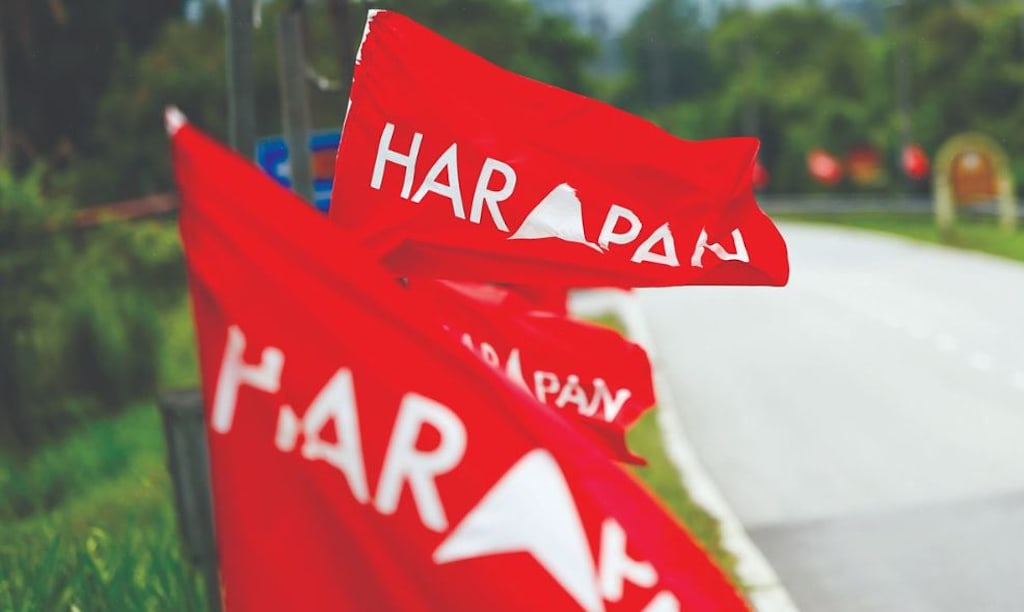
After Pakatan Harapan (PH) lost control of Negeri Sembilan in the August 1 state election, attention has shifted to the coalition's two remaining crown jewels: Selangor and Penang. Both states were first won by PH in 2008 and are now being contested by Barisan Nasional (BN) and Perikatan Nasional (PN), who are expected to extend their partnership after consolidating support in Johor and Negeri Sembilan. PH's position is also at stake in Perak, where it is the largest bloc in a BN-led state government after falling short of a simple majority in 2022.
If state elections were held today, what are PH's chances in these three states? Based on the latest available breakdown of PH, BN and PN vote shares, The Edge's analysis suggests that PH could retain Penang with a simple majority, but risks losing Selangor and weakening further in Perak. The analysis assumes 100% vote transfer between PN and BN in a straight fight against PH. The arithmetic, however, is only a starting point. Much depends on whether PH can hold on to its electoral base, make inroads among Malay voters now aligned with BN-PN, and navigate a rapidly changing opposition landscape.
Selangor: The State Most at Risk
In the 56-seat Selangor assembly, PH led by two-term Menteri Besar Datuk Seri Amirudin Shari of PKR holds 32 seats, while PN controls 22 and BN just two. A BN-PN combination could take as many as eight seats from PH, including DAP-held Kuala Kubu Baharu (N06) and Sungai Pelek (N56), where the projected margins are 5% or less. That would leave PH with 24 seats, five short of the 29 needed for a simple majority.
But Selangor is also where the political realignment is most fluid. In recent days, Bersatu and PKR leaders have exchanged unusually warm signals, fuelling speculation of renewed ties that were severed by the 2020 Sheraton Move. During the debate on the Lembaga Tabung Haji royal commission of inquiry in the Dewan Rakyat last week, Bersatu MPs, led by its president Tan Sri Muhyiddin Yassin, stayed when thPAS-Wawasan camp walked out to protest the absence of Prime Minister Datuk Seri Anwar Ibrahim. Anwar, who also serves as PH chairman and PKR president, was absent as he was undergoing a medical procedure.
In the Selangor assembly, Datuk Seri Mohamed Azmin Ali, Bersatu secretary-general and Selangor chief, drew attention after calling Amirudin "adindaku" my younger brother and DAP state vice-chairman Datuk Ng Suee Lim "sahabatku". He also took a jibe at PN by saying Selangor "has no space for identity politics". Amirudin, despite pushback from others in PH, has said "cooperation with any party, not just Bersatu or PN, can be considered", although no talks have taken place. He also posted a photo of himself with Datuk Seri Hamzah Zainudin, leader of Bersatu's breakaway faction Wawasan, describing Hamzah and Azmin as his "kakanda" or older brothers. Wawasan, like Umno, is also eyeing Bersatu seats, as seen in its electoral debut in Negeri Sembilan.
The Bersatu Factor
Unlike in Johor and Negeri Sembilan, where Bersatu was wiped out, Selangor's position as the party's stronghold remains untested. Bersatu won 12 of the 31 seats it contested in 2023 against PH-BN, including seven from PKR and Amanah. If Bersatu supporters back its split from PN, combining Bersatu and PH votes could lift their tally to 31 seats. PH would need five Bersatu seats to cross the majority line, a target that, based on past voting patterns, could be met even if Bersatu retains only about one-third of its support in those constituencies alongside PH voters.
The bigger question is whether both camps can move past the bitterness of 2020, when Azmin Ali then PKR deputy president led an exodus of MPs that toppled the first PH federal government. Still, Malaysian politics has seen less likely reconciliations, including between Umno and PAS this year. One cannot discount a Bersatu-PH pact, says political analyst Bridget Welsh.
Non-aligned Malay voters are a swing group and bigger in share and number in Selangor than elsewhere. Expect them to assess the terrain in alliances still evolving, says Welsh, honorary research associate with the University of Nottingham Asia Research Institute Malaysia. "Mohamed Azmin has a base, but it will depend on whether the party makes new alliances as on its own, [Bersatu] cannot cross the electoral finishing line, even those historically grounded," she says.
Umno-led BN and PAS-led PN, she adds, "need each other more in Selangor than was the case in recent polls". "BN is rejuvenating as part of the ground movement of the state," Welsh adds. Several Umno warlords who joined Bersatu during its downturn have since returned, particularly in outlying areas such as Sungai Besar, although the impact on younger voters remains unclear.
A Wildcard in Bersama
PH also faces another wildcard in Bersama, led by former PKR deputy president and Pandan MP Datuk Seri Rafizi Ramli. Former Subang MP Wong Chen also joined the party last week. Based on previous voting trends, Bersama could threaten Lembah Jaya (N20) in the Ampang parliamentary constituency, where PH's projected advantage over BN-PN is around 5.4%, as well as Pandan Indah (N21) in Pandan and Seri Setia (N32) in Subang.
The emergence of Bersama adds another layer of complexity to Selangor's political landscape. As a party led by a former PKR leader, it could attract disaffected PH voters and further fragment the opposition vote, potentially benefiting BN-PN.
Perak: A Clear BN-PN Path, but Who Leads?
Perak presents a different challenge. Even with Bersatu in its fold, PH appears unlikely to secure a simple majority. BN-PN could take as many as six seats from PH in a straight fight. All these six seats could go to BN if it gets to contest them, given its stronger presence than PN in those constituencies.
Yet Bersatu remains an obstacle to BN's revival from its poor 2022 showing, when the coalition won just nine seats. Perak has had menteris besar from Umno, PAS and Bersatu over the past nine years, a reflection of the fluid political dynamics in the state.
Perak is also home to several national political heavyweights: Bersatu vice-president and former MB Datuk Seri Ahmad Faizal Azumu (who lost Tambun to Anwar in the 15th general election [GE15]); Wawasan's Hamzah (Larut MP), who is also former Bersatu deputy president; Umno president and Deputy Prime Minister Datuk Seri Ahmad Zahid Hamidi, who has been MP for Bagan Datuk for over 30 years; PAS vice-president Datuk Idris Ahmad (Bagan Serai MP); and DAP deputy chairman and Perak chairman Nga Kor Ming (Teluk Intan MP).
It remains unclear whether Bersatu intends to reconcile with PH in Perak. Ahmad Faizal Azumu, better known as Peja, has a complicated history with PH. He served as Perak menteri besar from 2018 to 2020, but tensions with DAP escalated publicly before Bersatu's exit from PH during the Sheraton Move. Peja then formed a new government with Umno and PAS, only to be ousted in 2022 after Umno engineered a no-confidence vote against him.
Against this backdrop, whether BN and PN can maintain their partnership could therefore determine PH's survival in Perak, says political analyst Ahmad Zaharuddin Sani Ahmad Sabri. "If BN-PN can hold together, Malay vote consolidation could reshape the state. If they cannot, PH may survive through the very fragmentation that BN and PN are trying to eliminate," says Ahmad Zaharuddin of Global Asia Consulting.
The arithmetic is straightforward: domination of Perak's 39 Malay-majority seats would put BN-PN comfortably above the 30-seat simple-majority threshold, should the blue wave momentum persist. In GE15, PKR's Anwar won Tambun against Bersatu's Peja with a margin of just 3% or 3,716 votes. Zahid won Bagan Datuk against Anwar's former political secretary Shamsul Iskandar Mohd Akin with an even narrower margin of 0.8% or 348 votes.
PH also has to watch for further splintering within PKR. Sungai Siput MP Kesavan Subramaniam, a former ally of Rafizi, attended Bersama's launch in May, although he denied links to the party. Any future defection could give Bersama a fresh opening to weaken PH's support.
Penang: PH to Retain Unless Core Support Wanes
Unlike Selangor and Perak, Penang appears considerably safer for PH because of its strong non-Malay voter base. Of the 40 state seats, 25 are mixed seats that PH could still retain if it contests alone only two fewer than in 2023 when it partnered with BN. The two at risk are its remaining Malay-majority seats, Batu Maung (N37) and Bayan Lepas (N38).
That would still cost PH its two-thirds majority for the first time in nearly two decades. However, PH's position "is not as precarious as in Selangor now," says Universiti Sains Malaysia political scientist Azmil Mohd Tayeb. "While there is a lot of dissatisfaction with the current DAP government, many Chinese voters will still vote for PH come election time simply because the opposition is ineffective and non-existent," he adds.
Recent voting trends support this view. Around 80% of Chinese voters who turned out in Johor backed PH, rising to more than 90% in Negeri Sembilan, according to analysis by former deputy minister of international trade and industry and DAP MP for Bangi and Serdang Ong Kian Ming.
Bersatu is also less of a factor in Penang. It won four seats in 2023, three from PKR, but lacks the depth it has in Selangor. The only risk for the incumbent is if its supporters decide to stay home and not come out to cast their ballot. Turnout in Penang fell from 77.9% in GE15 to 72.7% in the 2023 state election. In Negeri Sembilan, overall turnout in the latest election was 72.6%, but only an estimated 62% of Chinese voters cast their ballots.
A Test for PH's Floor
Penang, Perak, and Selangor have the lowest proportions of Malay voters among peninsular states, making them a key gauge of PH's electoral floor as the BN-PN "blue wave" builds momentum ahead of GE16. Elsewhere, BN and PN have largely consolidated their domains. BN now has five MBs in Pahang, Melaka, Perak, Johor and Negeri Sembilan, compared with PN's three (Kelantan, Terengganu and Kedah). Perlis is led by a Bersatu MB following a party-hopping episode involving several PAS assemblymen.
The next immediate test is Melaka, where a BN-PN tie-up could show whether their Negeri Sembilan formula can travel, and whether the two can accommodate each other as partners. For PH, it remains to be seen how long Anwar will be able to keep the federal government intact, with Budget 2027 set to be tabled and voted on in two months.
Perak's state assembly is due for dissolution by December 2027, and polls must be called by February 2028, around the same time as parliament. However, Selangor and Penang, on paper, have more breathing room. With their latest state elections held in 2023, their assemblies are only required to be dissolved by August 2028. PH may choose to hold the elections in its two strongholds separately from GE16 as it did in 2022-2023 spreading its electoral tests rather than facing them all at once.
For now, the future of PH's crown jewels remains uncertain. The coalition's ability to hold onto Selangor, Penang, and Perak will depend on its ability to navigate a rapidly changing political landscape, manage internal divisions, and respond to the growing BN-PN challenge. The next few years will be critical for PH's survival as a dominant force in Malaysian politics.
About the Creator
Mark Lim
Hi I am mark an automotive student and a car, tech and food enthusiast ! Im gonna try and post daily & hope you enjoy what I write and do share my page with people you know. I would gladly appreciate it! Cheers
Enjoyed the story? Support the Creator.
Subscribe for free to receive all their stories in your feed.
Comments
There are no comments for this story
Be the first to respond and start the conversation.