
Persecution, statelessness, and the refugee crisis among the Rohingya
Rohingya crisis

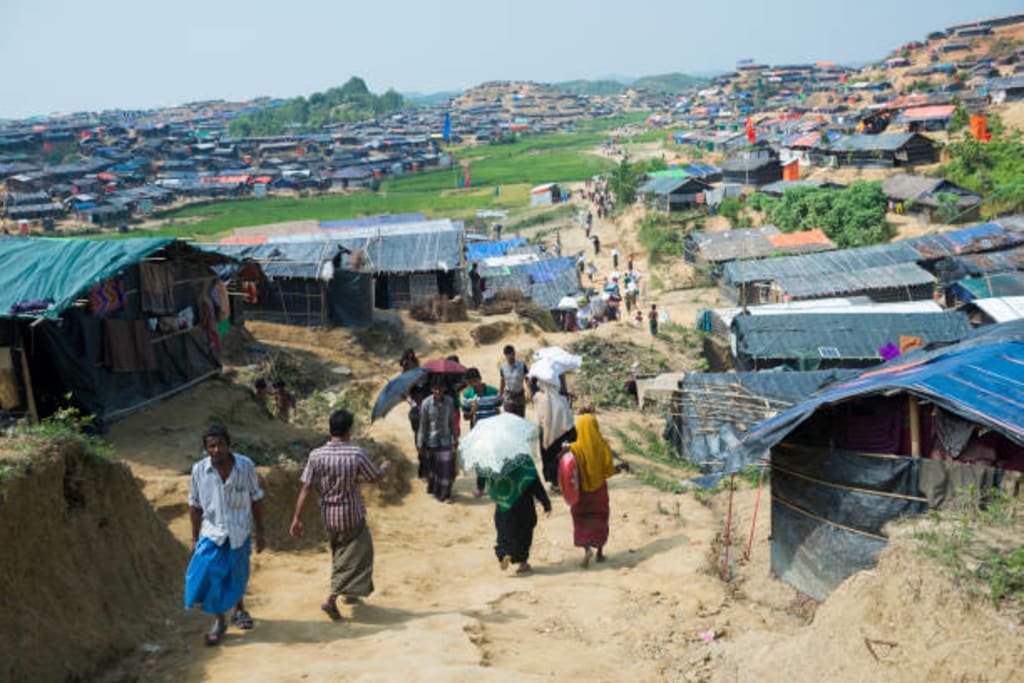
The Rohingya are a Muslim ethnic group primarily from Myanmar (Burma)'s Rakhine State (formerly Arakan). A severe humanitarian crisis has developed as a result of decades of systematic persecution, discrimination, and violence against them.
Background in History Origins:
• The Rohingya are an Indo-Aryan people whose ancestors have lived in Myanmar's Rakhine State since at least the 15th century. However, the government of Myanmar claims that the Rohingya are "Bengali migrants" from British India during the colonial era.
• After independence in 1948, they were initially recognized as citizens, but their rights were taken away following Ne Win's coup in 1962.
• The 1982 Citizenship Law made the Rohingya stateless by excluding them from the 135 "official" ethnic groups.
Key Atrocities & Military Operations
1978 (Operation Dragon King):
• Mass expulsions to Bangladesh; some returned under UN-brokered deals.
• Between 1991 and 1992, more than 250,000 people were forced to leave.
• 140,000+ Rohingya were forced into camps as a result of Buddhist-nationalist violence during the 2012 Rakhine Riots.
2017 Clearance Procedures:
• ARSA attacked police posts on August 25, 2017.
Military response:
• Mass killings, sexual violence, village burnings.
• More than 700,000 people fled to Bangladesh, according to a UN report.
Life as a refugee in Bangladesh
Camps near Cox's Bazar:
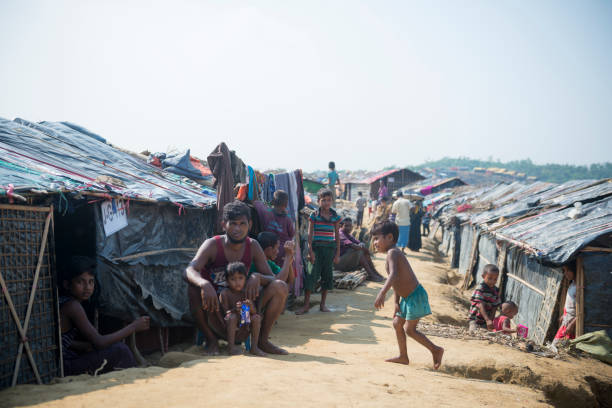
• 1 million+ refugees in cramped, flood-prone bamboo shelters.
• Bans on Formal education, work permits, leaving camps.
Security threats:
• Human trafficking and violence among gangs.
• Due to a lack of funds, the United Nations reduced food rations in 2023.
Char Island, Bhashan:
• Concerns about isolation and rights violations prompted Bangladesh to relocate more than 30,000 people to this remote island.
International Court Proceedings
Case ICJ (Gambia v. Myanmar):
• Argues that Myanmar has broken the Genocide Convention.
• Ordered Myanmar to prevent genocide (ignored by the junta) through interim measures (2020).
• Forced deportation as a human rights violation is the focus of an ICC investigation.
USA and sanctions:
• The Trump administration referred to it as "ethnic cleansing" in 2018.
• Biden declared that Myanmar's treatment of the Rohingya was a genocide in 2021.
Impossibilities for Repatriation
Myanmar's Situation:
• Demands of the Rohingya that accept "National Verification Cards" There are no assurances of citizenship or safety.
Rohingya Demands:
• Restitution of land, citizenship, and justice for atrocities.
The Junta's Role:
• After the coup of 2021, the military stepped up fighting in Rakhine, making it impossible to return.
Geopolitical and regional dynamics
• China and Russia support Myanmar while preventing UN Security Council actions.
• ASEAN's failures include members deporting Rohingya and divisions preventing collective pressure.
• India's Position Hosts ~40,000 Rohingya but labels them "security threats," pushing deportations.
Future Challenges
• There is no safe return due to the Junta's control and Rakhine's escalating civil war (AA vs. military).
• Radicalization Risks: Desperation in camps could fuel extremism (e.g., ARSA splinter groups).
• Loss of Generations: Refugee children do not attend school, resulting in a "lost generation."
Key Issues:
Statelessness & Citizenship:
• The 1982 Citizenship Law of Myanmar exempts the Rohingya from citizenship, rendering them stateless.
• They are classified as "illegal Bengali immigrants," despite many having lived in Myanmar for generations.
Persecution & Violence:
• Mass murder, rape, and arson were all results of military crackdowns in 2012, 2016, and 2017 among others.
• The 2017 military campaign forced over 700,000 Rohingya to flee to Bangladesh (the UN called it "a textbook example of ethnic cleansing").
• Under the Genocide Convention, the International Court of Justice (ICJ) is looking into allegations of genocide in Myanmar.
Crisis Among Refugees:
• The largest refugee settlement in the world, Cox's Bazar, Bangladesh, is home to refugee camps housing over a million Rohingya.
• Additionally, many fled to Malaysia, India, Thailand, and Indonesia, where they frequently faced detention or expulsion.
Living Conditions:
• Disease, overcrowding, and a lack of access to education and work all plague refugee camps.
• Because Bangladesh prohibits movement, the Rohingya are forced to rely on aid.
• Repatriation attempts fail due to fears of persecution in Myanmar.
Response from the World:
• The UN, the US, the EU, and human rights organizations condemn Myanmar's actions.
• At the International Court of Justice, former Myanmar leader Aung San Suu Kyi defended the military, harming her global reputation.
• ASEAN has criticized the poor intervention.
Present Situation in 2024:
• Rohingya remain in limbo—unable to return safely to Myanmar and struggling in refugee camps.
• Security in Rakhine is made more difficult by the Arakan Rohingya Salvation Army (ARSA) and other groups.
• Myanmar’s military junta (since the 2021 coup) has shown no signs of granting Rohingya rights.
How Can I Help?
• Help non-governmental organizations like Médecins Sans Frontières (MSF), Amnesty International, and BRAC.
• Support citizenship rights, secure repatriation, and international pressure on Myanmar.
• Contribute to UNHCR, IRC, Save the Children, or local organizations like the Rohingya Youth Association.
• Advocate: Persuade nations to impose sanctions on Myanmar, provide aid, and support the ICJ case.
• Share verified reports to raise awareness, such as Fortify Rights and Reuters' "Massacre at Tula Toli."
About the Creator
Enjoyed the story? Support the Creator.
Subscribe for free to receive all their stories in your feed.
Comments
There are no comments for this story
Be the first to respond and start the conversation.