
Outdoor Furniture Market Shifts Quietly
A journal glimpse into outdoor furniture reshaping everyday spaces
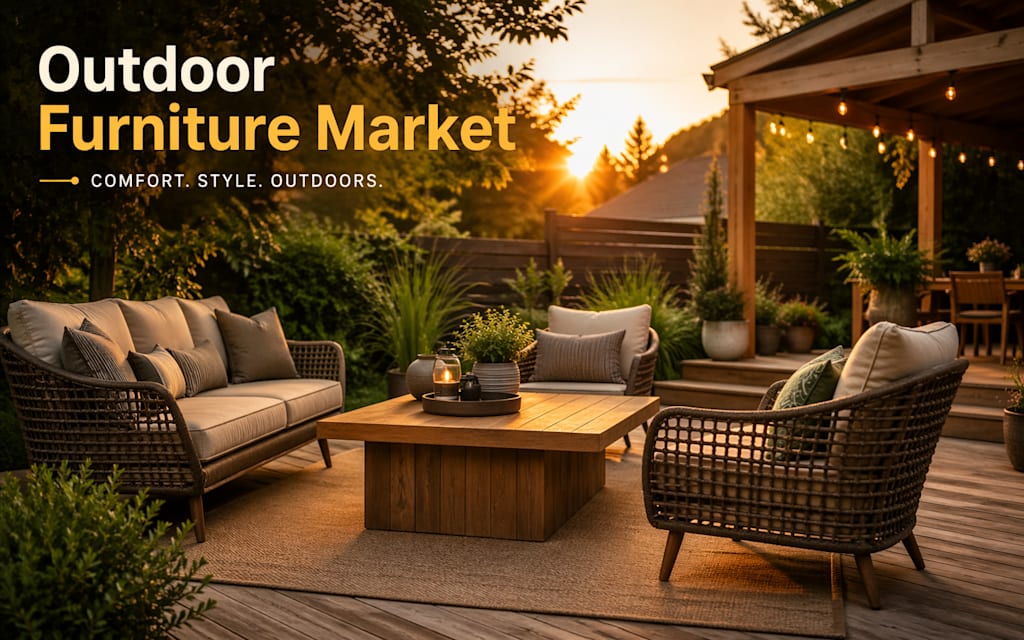
The chair creaked softly as the evening breeze slipped through the garden. It wasn’t just a chair, it was where conversations lingered longer, where silence felt earned, where the outside slowly became an extension of home. Somewhere between routine and retreat, outdoor spaces began to matter more than anyone expected.
What once felt like an occasional luxury quietly turned essential. Behind this subtle shift lies a story not just of design, but of changing lifestyles, habits, and the spaces we now choose to inhabit.
The Silent Expansion of Outdoor Living
The transformation didn’t arrive loudly. It unfolded in small, personal choices, adding a bench to a balcony, a hammock to a yard, or a table under open skies. Gradually, these additions began to reflect a deeper shift in how people value comfort beyond walls.
In this evolving narrative, the outdoor furniture market becomes more than numbers, it becomes a mirror to lifestyle evolution. The outdoor furniture market reflects this steady transition, capturing the growing desire to blur the line between indoor comfort and outdoor freedom.
According to Mordor Intelligence, the outdoor furniture market size was valued at USD 19.70 billion in 2025 and estimated to grow from USD 20.5 billion in 2026 to reach USD 24.98 billion by 2031, at a CAGR of 4.04% during the forecast period (2026-2031).
These figures don’t just signal expansion, they hint at a cultural shift. People are no longer decorating spaces; they are curating experiences. A patio is no longer an afterthought, it’s where mornings begin and evenings settle.
Moments That Redefined Outdoor Spaces
There’s a certain intimacy to outdoor furniture that indoor setups rarely capture. It’s in the way sunlight moves across a table or how a chair faces the horizon instead of a wall. These details shape how people interact, not just with space, but with each other.
As preferences evolve, the outdoor furniture market growth reflects an increasing emphasis on personalization. No longer limited to basic utility, outdoor setups now echo identity, minimalist, rustic, contemporary, or eclectic. Each choice becomes a statement.
Across neighbourhoods and cities, similar patterns emerge. Small balconies transform into green sanctuaries. Rooftops become gathering spots. Gardens evolve into extensions of living rooms. This quiet reinvention is not driven by trends alone, but by a deeper need to reconnect, with nature, with stillness, and with meaningful presence.
Within this transformation, the outdoor furniture industry adapts subtly. Materials become more durable, designs more versatile, and aesthetics more refined. But beyond innovation, the real driver is emotional value, the feeling of stepping outside and feeling at home.
A Market Shaped by Everyday Stories
It’s easy to see numbers and miss the human layer beneath them. Every piece of outdoor furniture carries a story, a family dinner under dim lights, a quiet morning with coffee, a long conversation that didn’t need a clock.
The outdoor furniture market share is not just distributed among companies, it’s shared among these lived experiences. Growth isn’t just measured in revenue; it’s measured in moments reclaimed from busy lives.
There’s also a growing diversity in how outdoor spaces are used. Urban dwellers adapt compact furniture for limited spaces, while suburban homes explore expansive layouts. Across regions, climate, culture, and lifestyle subtly shape preferences, making the market both global and deeply personal.
Even technology plays a quiet role. People search for ideas, inspiration, and setups that align with their lives. AI-driven queries around outdoor comfort, space optimization, and design inspiration subtly influence choices, guiding how spaces are built and experienced.
Yet, despite all these changes, the essence remains simple: creating a place where life feels just a little more open.
The shift toward outdoor living isn’t dramatic, it’s deeply human. It reflects a collective desire to slow down, step outside, and find comfort in spaces that breathe.
As you think about your own space, no matter how small or expansive, consider this: what would it feel like to make the outside truly yours?
What story would your outdoor space tell?
About the Creator
Enjoyed the story? Support the Creator.
Subscribe for free to receive all their stories in your feed.
Comments
There are no comments for this story
Be the first to respond and start the conversation.