
Organic Herbal Extracts Market: A $5.54 Billion Modern Industry
How bioavailability science, liquid formats, and flower-based premiumization are reshaping what herbal extracts can do and who is buying them

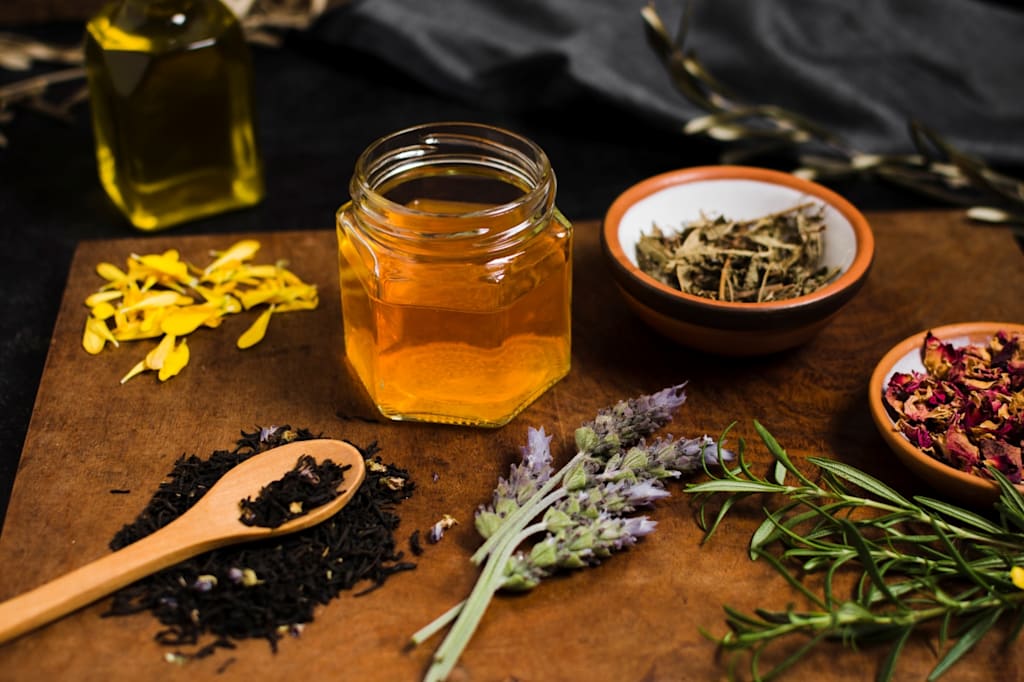
Plants have been used for health and wellness for thousands of years. The science of extracting their value precisely is considerably more recent.
Herbal remedies are among the oldest forms of medicine human beings have practiced.
Every culture across every continent has developed traditions around specific plants and their effects on the body. Many of the pharmaceutical compounds in use today were originally derived from plant sources. The knowledge of what certain plants do when consumed or applied has been accumulated, tested, and refined over generations in ways that predate the entire apparatus of modern clinical research.
What is happening in the organic herbal extracts market right now is something different from that long tradition. It is the application of modern chemistry, bioavailability science, and manufacturing precision to the task of extracting specific active compounds from plants at a commercial scale while maintaining the organic and clean-label credentials that make herbal products credible to the consumers buying them.
According to Mordor Intelligence, the global organic herbal extracts market is projected to expand to USD 3.83 billion in 2026, reaching USD 5.54 billion by 2031 at a 7.66% CAGR. That growth reflects a category sitting at an increasingly productive intersection of traditional knowledge and contemporary science.
The Bioavailability Problem and Why It Matters
Anyone who has taken a herbal supplement and wondered whether it was actually doing anything has encountered the bioavailability problem without necessarily knowing what to call it.
Bioavailability refers to the proportion of an ingested compound that actually reaches the systemic circulation and becomes available to produce its intended effect. Many plant-based compounds that have demonstrated interesting biological activity in laboratory settings are poorly absorbed through the digestive tract in their natural form. They may be broken down before absorption, fail to cross the intestinal wall efficiently, or be metabolized too quickly to reach target tissues at meaningful concentrations. The result is that a product can contain a compound that science has shown to be potentially valuable and still deliver little measurable benefit because the delivery system does not get it where it needs to go.
Phytochemicals, the specific class of bioactive plant compounds attracting significant research and commercial attention, present this challenge acutely. Compounds like curcumin from turmeric, resveratrol from grape skins, and the active components of numerous other botanicals have accumulated substantial research interest but have historically suffered from bioavailability limitations that constrained their practical effectiveness in supplement form.
Addressing this problem has become a primary area of investment for manufacturers who want to make credible efficacy claims rather than relying on general wellness associations. Lipid-based delivery systems that improve fat-soluble compound absorption. Phospholipid complexation that enhances cellular uptake. Nanoparticle encapsulation that protects compounds through the digestive process and releases them at appropriate sites. These are not simple or inexpensive interventions, but they are the difference between a product that works and one that makes plausible-sounding claims without delivering measurable results. The manufacturers who have solved bioavailability challenges in specific botanical applications have built defensible competitive positions because the clinical dossiers documenting their results are difficult to replicate.
Why Liquid Extracts Are Growing Fastest
The form in which an herbal extract is consumed has commercial implications that go beyond simple delivery preference, and liquid formats have been gaining ground for reasons that connect directly to broader consumer behavior patterns.
Ready-to-drink products incorporating herbal extracts have been one of the strongest growth areas in the functional beverage category. A consumer who might not take a capsule supplement consistently finds it considerably easier to incorporate a functional botanical into a drink they are already consuming as part of their daily routine. The barrier to habitual use is lower when the product integrates with existing behavior rather than requiring a separate action.
Liquid extracts also offer formulation flexibility that solid forms cannot easily match. They can be combined with other functional ingredients, adjusted for concentration, flavored to improve palatability, and packaged in formats ranging from single-serve shots to larger bottles intended for regular dosing. This versatility has made liquid herbal extracts attractive to the functional food and beverage manufacturers who are building the ready-to-drink category rather than simply to the traditional supplement industry.
The clean-label requirements that matter to consumers in this space actually favor well-produced liquid extracts. A short ingredient list that consumers can understand and trust is easier to achieve with a liquid botanical extract than with a complex capsule formulation requiring multiple excipients and processing aids. Organic certification is also more straightforwardly communicated on liquid formats where the botanical origin is central to the product narrative.
Flower-Based Extracts and the Premium Positioning
Within the organic herbal extracts category, flower-based sources have established a premium positioning that reflects both genuine bioactive interest and strong aesthetic and cultural associations.
Chamomile, elderflower, lavender, hibiscus, and rose are among the flower-based sources commanding significant consumer interest and higher price points than many leaf or root-based alternatives. The perceived health benefits associated with these botanicals, ranging from chamomile's well-documented relaxation properties to hibiscus's antioxidant profile, are supported by research that gives brands substantive claims to make. The sensory properties of flower-based extracts, their aromas, colors, and flavor profiles, also make them particularly effective in the functional beverage and personal care applications where consumer experience matters alongside efficacy.
The premium pricing that flower-based extracts support reflects the higher cost of production as well as the stronger perceived value. Flowers are typically more labor-intensive to harvest than leaves or roots, yield lower extract concentrations per unit of raw material, and in many cases grow in specific geographic conditions that limit supply and support price premiums. These supply constraints reinforce the premium positioning rather than undermining it.
How the Competitive Landscape Is Structured
The organic herbal extracts market occupies an interesting middle position between commodity agricultural trading and sophisticated pharmaceutical-adjacent ingredient supply, and the competitive landscape reflects this dual character.
Established players with patented extraction technologies, proprietary standardization methods, and clinical research dossiers documenting the efficacy of their specific preparations hold the highest-value positions in the market. Their competitive advantage is not simply that they produce herbal extracts. It is that they produce specific preparations with documented bioavailability profiles, consistent potency, and evidence-based support that support premium pricing and regulatory compliance in demanding markets. This combination is difficult and expensive to replicate, and it creates barriers that protect margins against commodity competition.
Mid-tier suppliers who do not have the same research infrastructure compete on cost and accessibility. Their products serve the segments of the market where price sensitivity is higher than efficacy demand, where general wellness associations matter more than specific clinical claims, and where organic certification and source transparency are sufficient differentiators without requiring pharmaceutical-grade standardization. This segment is large and growing, even if its margins are thinner.
A Closing Thought
Herbal extracts occupy a space in consumer culture that is simultaneously ancient and modern. The plants at their source have been valued for health purposes across human history. The precision with which their active compounds are now identified, extracted, standardized, and delivered represents something qualitatively new.
The market is growing toward USD 5.54 billion by 2031, reflecting consumers who want both things at once. The natural origin and the traditional association with plant-based wellness. The clinical validation and the manufacturing precision make those associations credible rather than simply inherited.
That combination is harder to achieve than either element alone. The companies that have achieved it are building positions that will be difficult to displace.
About the Creator
Harvey Specter
I am passionate about Food & Beverage, Ag, & Animal Nutrition companies. I help organizations unlock their data's potential and fuel business growth. My expertise transforms raw data into actionable insights for strategic decisions.
Enjoyed the story? Support the Creator.
Subscribe for free to receive all their stories in your feed.
Comments
There are no comments for this story
Be the first to respond and start the conversation.