
One Company, Three Names: Paramount and Warner Bros. Discovery to Reign as Skydance
David Ellison's roughly $110 billion merger closes October 6, uniting two of Hollywood's oldest studios under the name of his original production company while promising that neither legendary brand will fade from the marquee

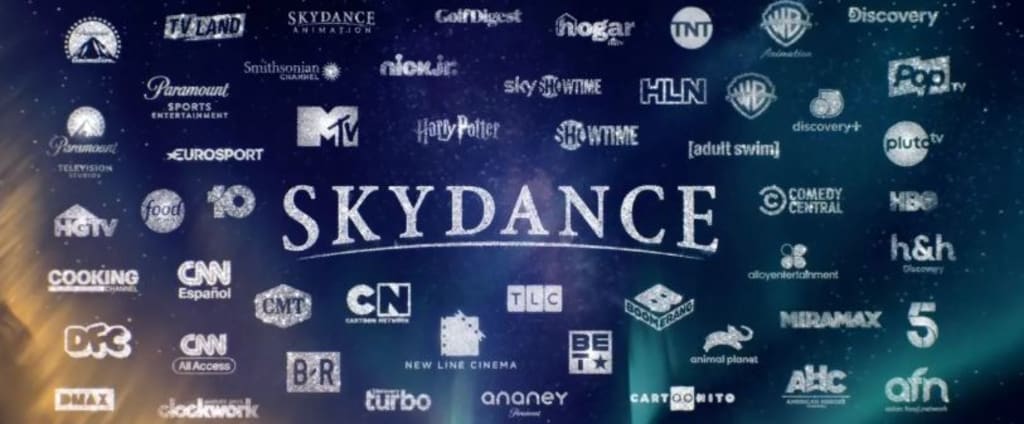
Every Hollywood merger produces a scramble for the headline, but few have arrived with as much history compressed into a single word. On Friday, Paramount CEO David Ellison announced that Paramount and Warner Bros. Discovery will operate as Skydance once their merger formally closes, a name drawn not from either of the century-old studios being joined, but from the independent production company Ellison founded and built before the corporate chess game that led him here. The roughly $110 billion deal is expected to close on October 6, and when it does, it will stand as one of the largest media combinations ever assembled.
The scale of what is being built is difficult to overstate. The merger combines two major Hollywood studios and their streaming platforms, Paramount+ and HBO Max, under a single roof and with them, a portfolio of networks that reads like a cable-era greatest-hits collection: CBS, CNN, MTV, TBS, Comedy Central and Food Network. Beneath the corporate architecture sits a treasure chest of intellectual property that most rivals can only envy: "The Lord of the Rings," "Game of Thrones," the DC Universe, and "Yellowstone." In an industry where content is currency, Skydance begins life as one of the wealthiest houses on the street.
The battle behind the deal
The road to this announcement was anything but smooth. The merger followed a drawn-out corporate battle in which Netflix had agreed to acquire Warner Bros.' streaming and studio businesses before the broader Paramount deal moved forward, a reminder that in the streaming wars, alliances form and fracture with remarkable speed. The contest did not end at the negotiating table. Twelve states challenged the deal, arguing it could reduce competition and harm consumers and workers. Only this week did a judge approve a settlement with the state attorneys general, clearing the final legal obstacle and setting the stage for Tuesday's closing.
That history matters because it frames the significance of Friday's naming announcement. Skydance is not merely absorbing assets; it is attempting to absorb legitimacy the institutional goodwill embedded in two of the most storied names in entertainment while convincing regulators, employees and audiences that the combination serves rather than swallows them.
What's in a name?
The choice of "Skydance" itself is telling. Rather than elevate one studio's brand over the other, or invent something entirely new, Ellison reached for the name of the company that started it all, his own. It is a subtle assertion of authorship over the combined enterprise: this empire, the name implies, is the culmination of a vision that began with a scrappy independent producer, not merely the product of financial engineering.
At the same time, Ellison was careful to frame the decision as preservation rather than replacement. "We never wanted a new corporate identity to diminish, alter or overshadow either one," he wrote on X, explaining that the new name gives the company "an identity of its own" while letting both studios "remain in the spotlight."
That balancing act will define the company from day one. Paramount traces its lineage to the founding of Hollywood itself; its mountain logo is among the most recognised symbols in global culture. Warner Bros. carries nearly a century of filmmaking history, from the golden age of the studio system to the HBO prestige era. A corporate parent that diminished either would be diminishing the very value it paid $110 billion to acquire. The names will remain on studio gates, on title cards, on the streaming menus where audiences actually make their choices. What changes is who signs the checks at the top.
For all the grandeur of the announcement, Skydance inherits an industry in the midst of painful adjustment. Streaming profitability remains elusive across the sector; cable networks continue their secular decline; and the franchise properties now under its control demand enormous, disciplined investment to keep audiences engaged. Integrating two massive studio cultures with their own legacies, hierarchies and creative identities is a task that has humbled lesser executives.
Then there is the political dimension. The settlement with the twelve challenging states suggests concessions were made, and the deal will likely remain under scrutiny as its effects on consumers, workers and content diversity become measurable rather than theoretical.
Still, Tuesday marks a genuine inflection point for Hollywood. A company that controls two of the five historic studios, two major streamers, a broadcast network, a global news channel and some of the most valuable franchises in entertainment will begin operating under a name most casual moviegoers have never heard. Whether Skydance becomes a third name worthy of standing beside Paramount and Warner Bros., or a corporate wrapper the public never quite learns to say, will be determined by what Ellison does with what he has bought.
For now, the message from the new CEO is clear: the mountain and the shield are not going anywhere. But at the top of the tower, a new sign goes up on October 6 and with it, a new chapter in the history of Hollywood begins.
About the Creator
Mark Lim
Hi I am mark an automotive student and a car, tech and food enthusiast ! Im gonna try and post daily & hope you enjoy what I write and do share my page with people you know. I would gladly appreciate it! Cheers
Enjoyed the story? Support the Creator.
Subscribe for free to receive all their stories in your feed.
Comments
There are no comments for this story
Be the first to respond and start the conversation.