
On the front line of Ecuador's drugs war, police fight gangs, guns and corruption
As Ecuador confronts an unprecedented surge in drug-related violence, police officers risk their lives daily battling powerful criminal gangs, illegal weapons networks, and corruption that threatens to undermine the nation's fight for security and stability.
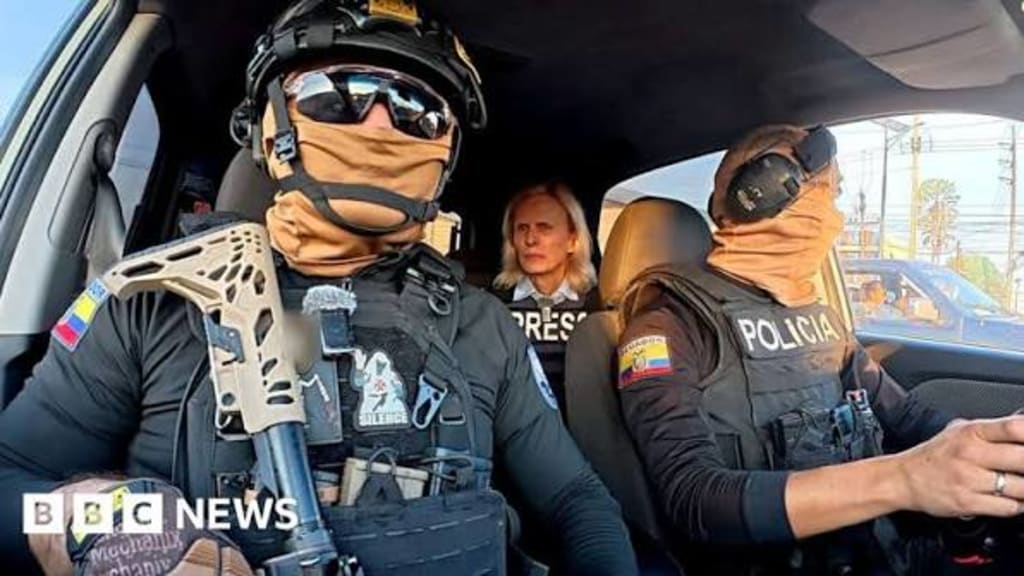
Ecuador's battle against organized crime has transformed the once relatively peaceful South American nation into one of the region's most dangerous security hotspots. Across major cities and coastal provinces, police officers find themselves on the front line of a conflict driven by drug trafficking, gang violence, and deep-rooted corruption. As criminal organizations expand their influence, law enforcement agencies face mounting challenges in restoring order and public confidence.
The country's strategic location between Colombia and Peru, the world's two largest cocaine producers, has made Ecuador a critical transit route for international drug traffickers. Criminal groups use Ecuador's ports to ship narcotics to markets in North America and Europe. Over the past decade, powerful gangs have strengthened their control over neighborhoods, prisons, and transportation networks, turning the country into a battleground for rival organizations competing for territory and profits.
For police officers, the dangers are immediate and constant. Patrol units in cities such as Guayaquil, Esmeraldas, and Durán routinely respond to shootings, extortion cases, kidnappings, and gang-related murders. Armed criminals often possess military-grade weapons, including assault rifles and explosives, giving them significant firepower. Officers conducting raids on gang hideouts frequently face heavily armed resistance, making every operation a high-risk mission.
The violence has left a profound impact on communities. Residents in gang-controlled areas often live under constant fear, avoiding public spaces after dark and limiting their daily activities. Businesses are frequently targeted by extortion schemes, with criminal groups demanding protection payments. Those who refuse risk violent retaliation. Many citizens say they feel trapped between criminal organizations and an overstretched security apparatus struggling to maintain control.
Police commanders argue that the challenge extends far beyond street-level crime. Drug trafficking organizations have evolved into sophisticated networks capable of moving vast quantities of narcotics while laundering millions of dollars through legitimate businesses. These groups recruit young people from impoverished neighborhoods, offering money and protection in exchange for loyalty. The result is a cycle of violence that becomes increasingly difficult to break.
Adding to the complexity is the crisis within Ecuador's prison system. In recent years, prisons have become centers of gang power, where rival factions coordinate criminal operations and wage deadly battles against one another. Mass prison riots and massacres have resulted in hundreds of deaths, exposing weaknesses in the country's ability to manage incarcerated gang leaders. Police and military forces have repeatedly been deployed to regain control of correctional facilities, but long-term solutions remain elusive.
Corruption represents another major obstacle. Security analysts warn that organized crime thrives when criminal groups are able to infiltrate public institutions. Allegations of corruption involving local officials, prison staff, police officers, and judicial personnel have raised concerns about the effectiveness of anti-crime efforts. Even a small number of compromised officials can undermine investigations and provide criminal organizations with valuable information about law enforcement operations.
Despite these challenges, Ecuadorian police continue to intensify their operations. Authorities have launched large-scale raids targeting gang leaders, drug warehouses, and arms trafficking networks. In many cases, officers work alongside military personnel to secure neighborhoods and strategic infrastructure. The government has also invested in surveillance technology, intelligence gathering, and international cooperation to disrupt criminal supply chains.
International partnerships play a crucial role in the fight against drug trafficking. Ecuador collaborates with neighboring countries and global law enforcement agencies to track criminal networks operating across borders. Information sharing and joint investigations have led to significant drug seizures and the arrest of high-profile suspects. However, experts note that as long as demand for narcotics remains strong in consumer markets abroad, traffickers will continue seeking new routes and methods.
The human cost of the conflict is evident among police officers themselves. Many work long hours under intense pressure, knowing that they may become targets for retaliation. Several officers have been killed in attacks linked to organized crime, while others require constant security protection. Families of law enforcement personnel also face risks, highlighting the personal sacrifices involved in combating criminal organizations.
For ordinary Ecuadorians, the hope is that stronger institutions and sustained security measures can reverse the current trend. Community leaders emphasize the importance of addressing the social and economic factors that allow gangs to recruit vulnerable youth. Investments in education, employment opportunities, and public services are widely seen as essential components of any long-term strategy.
While recent security operations have achieved some successes, few observers believe there are quick solutions. Ecuador's drugs war reflects broader regional challenges involving transnational crime, weak institutions, and economic inequality. Police officers remain at the center of this struggle, confronting armed gangs while attempting to uphold the rule of law.
As the country continues its fight against organized crime, the outcome will depend not only on arrests and seizures but also on the ability of institutions to resist corruption and regain public trust. For those serving on the front line, the mission remains clear: protect communities, dismantle criminal networks, and restore security in a nation facing one of the most serious challenges in its modern history.
About the Creator
Enjoyed the story? Support the Creator.
Subscribe for free to receive all their stories in your feed.
Comments
There are no comments for this story
Be the first to respond and start the conversation.