
Nvidia’s Jensen Huang Faces a National Security Test
A reported intelligence operation, an admitted affair and a board investigation have put the world's most influential AI chipmaker under scrutiny. The bigger questions concern executive access, US-China technology policy and the security of the AI industry.
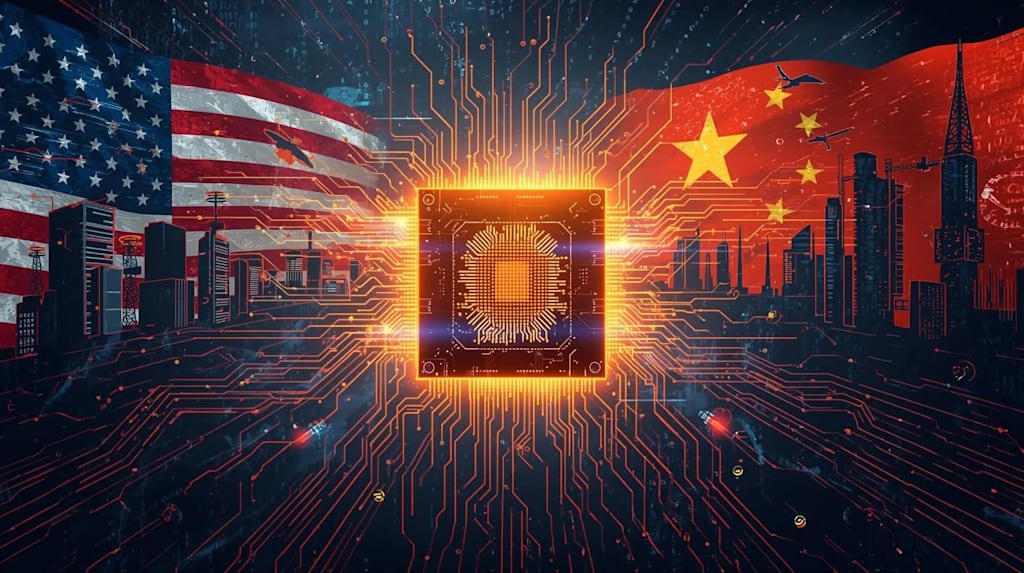
On November 8, 2026, Jensen Huang sent Nvidia employees a personal letter acknowledging that he had been unfaithful to his wife. On the same day, Nvidia's board announced an independent investigation into reports that the company's chief executive had been targeted by a foreign intelligence operation.
The timing brought two very different issues into the same corporate crisis.
Huang's letter addressed his family, his employees and his responsibilities as CEO. The board's announcement addressed a separate concern: whether his reported relationship with a former executive at a Singapore-based cloud computing company had created a national security risk for Nvidia.
The woman, identified in media reports as Alice Huang, also known as Huang Le, was reportedly assessed by US intelligence officials as an asset of China's Ministry of State Security. The allegations have not been established through a public investigation or court finding. Nvidia has said it has no reason to believe national security or company secrets were compromised, although its board intends to examine the available information.
The distinction matters. An admitted affair is a personal matter. An alleged intelligence operation involving the chief executive of a strategically important American technology company raises questions about corporate security, export controls and the relationship between Silicon Valley and Washington.
That is where the Nvidia case has become much larger than its opening headlines.
The allegations behind the investigation
The story gained national attention on October 29, when The New York Times reported that US intelligence agencies believed Alice Huang had been passing information to Beijing and had developed a close relationship with Jensen Huang.
Alice Huang was associated with Megaspeed, a Singapore-based data centre company that had already attracted scrutiny over suspected efforts to help Chinese customers obtain advanced Nvidia chips subject to US export restrictions.
According to the newspaper's reporting, US intelligence agencies had monitored her activities and concluded that she was a Chinese intelligence asset. Their concern extended beyond the possible movement of hardware. Investigators were also examining whether her access to Nvidia's chief executive could provide information about the company's technology plans and its efforts to influence American export policy.
A subsequent Financial Times report added another dimension. It said a classified US government memorandum described a romantic relationship between the two and alleged that the woman had been recruited by China's Ministry of State Security.
These are intelligence assessments reported by news organisations, not findings established in an open court proceeding.
Nvidia has disputed the suggestion that Huang's interactions with the Megaspeed executive were unusual. The company said its chief executive meets thousands of customer executives and that regional cloud customers receive ordinary commercial information rather than sensitive trade secrets or information relevant to US national security.
Huang's November 8 letter confirmed his infidelity but did not publicly identify the other person. It also stated that he would cooperate with the board's investigation and reaffirmed his commitment to Nvidia and American national security.
The public record therefore leaves several important questions unanswered. Did any sensitive information change hands? Was Huang aware of the intelligence concerns? Were his conversations with the executive limited to normal commercial matters? And did Nvidia's internal controls adequately manage the risks associated with an executive of his position?
The board's investigation will need to address these questions rather than simply establish the nature of the personal relationship.
How a customer relationship became a security concern
Megaspeed's commercial relationship with Nvidia is central to the case.
The company operates in a part of the AI industry that has become politically sensitive: overseas data centres equipped with advanced American processors, providing computing capacity to customers across borders.
US export controls traditionally focus heavily on the physical movement of restricted equipment. Regulators determine which chips can be exported, which companies can receive them and what licensing conditions apply.
Cloud computing complicates that approach.
A chip can be installed in a data centre outside China while computing services are sold remotely to customers inside China. The hardware may never physically enter Chinese territory, but the computing capability remains accessible to Chinese users.
That creates a regulatory distinction between controlling the location of a processor and controlling who can use its computing power.
Megaspeed has faced scrutiny over allegations that it helped Chinese customers obtain access to restricted Nvidia technology. Those allegations should not be treated as proof that every transaction involving the company was illegal. They do, however, illustrate why US authorities are paying closer attention to overseas AI infrastructure providers.
The alleged intelligence connection introduces an additional concern.
Commercial access to a technology company can provide a person with opportunities to learn about customers, product plans, commercial priorities and executive thinking. Such information does not necessarily qualify as a trade secret or classified material. Yet in an industry where corporate decisions can influence national technology policy, even ordinary business intelligence can be commercially or politically valuable.
There is a further distinction between obtaining information and influencing a decision.
The reported intelligence task list included efforts to encourage Nvidia to lobby for the sale of more advanced chips to China. That allegation, if substantiated, would point to a strategy focused on policy influence rather than simply obtaining technical information.
Huang has been one of the most prominent corporate voices arguing that American chipmakers should retain access to the Chinese market. His position reflects Nvidia's commercial interests, but it also places him close to decisions involving US technology restrictions and relations with Beijing.
That access gives the company influence. It also means that the personal and professional relationships surrounding its CEO deserve careful scrutiny.
Washington's response raises questions of its own
The public timeline reveals a second issue: how US agencies handled the intelligence concerns.
According to reporting by The New York Times, US intelligence officials had briefed President Donald Trump about concerns involving Huang's contact with a suspected Chinese intelligence asset well before the story became public.
A later Financial Times report described a classified memorandum circulated among senior officials ahead of Trump's May 2026 China trip.
The reported timing raises questions about how the White House, intelligence agencies and Nvidia communicated with one another.
Why was the matter not brought to the company's attention earlier? What information could officials disclose without compromising an intelligence operation? Was there an opportunity to warn Huang about a possible foreign intelligence approach while protecting classified sources?
These questions are difficult because counterintelligence work often involves competing obligations. Warning a potential target may protect the individual, but it can also alert the suspected intelligence service that its communications or activities are being monitored.
That tension does not automatically justify withholding information from a company. Nvidia's board and shareholders have legitimate interests in understanding whether the company's leadership faces a security threat that could affect its operations.
The matter has also moved into congressional scrutiny.
On November 4, the chairs of three Republican-led House committees requested a closed-door briefing with Huang for November 18. The committees are seeking information about his interactions with Alice Huang and Nvidia's procedures for protecting sensitive information from foreign intelligence operations.
Reuters also reported on November 10 that the FBI was investigating the matter.
An FBI investigation does not establish that Huang committed wrongdoing. It does indicate that the matter has moved beyond a dispute over corporate public relations and into the national security and counterintelligence process.
There is also a distinction between the responsibilities of intelligence agencies and those of law enforcement. An intelligence assessment may identify a suspected foreign operation without establishing that a particular individual knowingly participated in it. Criminal liability requires evidence that satisfies a different legal standard.
That distinction should remain clear as the congressional and corporate investigations proceed.
Nvidia's financial strength does not remove its governance risk
The investigation comes at a difficult moment for Nvidia's investors.
The company reported revenue of $96.2 billion for the second quarter of fiscal 2027, representing growth of 106 percent from a year earlier. Its data centre business generated $89 billion during the quarter.
Nvidia forecast third-quarter revenue of approximately $108 billion, with a projected gross margin of 74 percent. The company also said its forecast did not assume data centre computing revenue from China.
These figures show that Nvidia's current financial performance does not depend on an immediate recovery in its Chinese data centre business.
That matters because the political controversy surrounding export restrictions has often been discussed as though access to China were essential to Nvidia's continued growth. Its latest guidance tells a different story. Demand elsewhere is sufficiently strong to support an enormous revenue forecast without assuming Chinese data centre sales.
The market environment, however, remains sensitive.
On November 5, Nvidia shares fell 9.26 percent during a wider sell-off in technology and AI stocks. The decline came amid concerns about election results, potential changes to AI policy and the pace of investment in data centre infrastructure.
That trading session preceded Huang's November 8 admission and the board's investigation announcement. It would therefore be misleading to attribute the November 5 decline directly to those later developments.
The more important financial question is how additional governance and political uncertainty might affect Nvidia's valuation.
Investors are accustomed to assessing semiconductor companies through earnings growth, product demand, competition and manufacturing capacity. The Huang investigation adds a different category of risk: whether an issue involving the personal relationships of the chief executive could affect government confidence, export licensing or the company's ability to work with US authorities.
The investigation also raises a board-level question about succession.
Nvidia's success has been closely associated with Huang's leadership, technical direction and long-standing relationships across the technology industry. Reuters has noted that the company has no obvious successor and that the board's independence is likely to face scrutiny.
A founder-led company can make decisions quickly because responsibility is concentrated around a small group of senior executives. The same arrangement can become a governance weakness when the chief executive's judgment, availability or reputation comes under examination.
Nvidia's board has expressed confidence in Huang while commissioning an investigation. Both positions can coexist, but the independence of the review will depend on whether directors and outside counsel can examine uncomfortable evidence without being constrained by their long-standing relationships with management.
For shareholders, the outcome matters beyond the immediate allegations. They need to know whether Nvidia can continue operating effectively if Huang's ability to represent the company in political and commercial discussions becomes restricted.
What the case could change for the AI industry
The Nvidia investigation points to three areas that may receive greater attention across the technology sector.
The first is executive security.
Technology companies have traditionally focused their security programmes on research facilities, computer networks, intellectual property and supply chains. Senior executives also hold valuable information and maintain relationships that can influence major business decisions.
A chief executive who regularly meets government officials, customers, investors and overseas business partners is an obvious target for anyone seeking access to a company's plans or political influence.
Boards may need to examine executive travel, customer meetings, disclosure procedures and the handling of sensitive commercial discussions. The objective should not be to prohibit normal business relationships. It should be to ensure that senior executives receive appropriate security support and that companies understand the risks created by their access.
The second is the direction of export controls.
The Megaspeed allegations have drawn attention to overseas computing providers and the possibility that restricted AI capabilities can reach prohibited customers through remote services.
Regulators may increasingly examine the identity of cloud customers, the location of computing workloads and the parties that ultimately benefit from access to advanced processors.
For Southeast Asian data centre operators, this could bring additional compliance obligations. Companies that rent computing capacity across borders may face closer questions about customer identity, end users and the purpose for which their infrastructure is being used.
The distinction between owning a chip and controlling access to its computing capacity may become more important in future regulatory decisions.
The third is the relationship between Washington and major technology companies.
Nvidia is not an ordinary supplier. Its processors occupy a central position in the global AI infrastructure market, and its chief executive has become an important participant in discussions over American technology policy.
That creates a complicated relationship between private commercial interests and government objectives.
The company wants access to international markets. Washington wants to protect American technological advantages and limit the transfer of sensitive capabilities to strategic competitors. These objectives overlap in some areas and conflict in others.
When a company's chief executive has direct access to policymakers, those relationships can help government officials understand the commercial effects of regulation. They can also create concerns about whether corporate interests are receiving too much influence over national security decisions.
The Huang case may intensify scrutiny of the arrangements under which advanced AI chips are approved for export and the role major technology companies play in shaping those decisions.
Other AI companies should pay attention. Their executives may not occupy the same position as Huang, but the security questions are increasingly relevant to any business whose products have strategic importance.
The unanswered question is about trust
Huang's future at Nvidia will depend heavily on what the board's investigation establishes.
If investigators find no evidence that sensitive information was compromised, the company may be able to contain the matter through stronger internal controls and clearer security procedures.
If the investigation identifies the disclosure of commercially sensitive information, Nvidia will have to address the consequences for its executive oversight and customer relationships.
Evidence of classified information exposure or deliberate assistance to a foreign intelligence operation would create a much more serious situation. At present, the public record does not establish either outcome.
Three dates now matter.
Nvidia is scheduled to report its third-quarter fiscal 2027 results on November 17. The House committees have requested a closed-door briefing with Huang for November 18. The company's independent board investigation has no publicly announced completion date.
Those events will test different parts of the crisis. The earnings call will show whether investors are prepared to focus on Nvidia's financial performance. The congressional briefing will bring questions about national security and executive access directly to Huang. The board investigation must determine whether the company itself was exposed to information or influence it failed to recognise.
The central issue for Nvidia is the preservation of trust.
Customers need confidence that their information remains protected. Employees need confidence in the company's leadership. Investors need confidence that the board can supervise management independently. The US government needs confidence that a strategically important technology supplier can protect sensitive information while complying with export restrictions.
Huang built Nvidia into a company whose decisions carry consequences far beyond the semiconductor industry. His position now places his personal judgment under a level of scrutiny that few corporate leaders have faced.
The investigation must determine what happened, what information was exposed and whether Nvidia's security procedures were adequate.
Until those questions are answered, the case will remain a test of how much responsibility a modern technology company must assume for the people who lead it.
About the Creator
Jin
Writer of reamstories
https://reamstories.com/jin
Enjoyed the story? Support the Creator.
Subscribe for free to receive all their stories in your feed. You could also become a paid subscriber, letting them know you appreciate their work.
Comments
There are no comments for this story
Be the first to respond and start the conversation.