
Nvidia’s B300 resale wave is a geography problem
Thousands of high-end GPUs are hunting for buyers while Nvidia says supply still trails demand. Both can be true, and the clearing price will show which side blinks first.
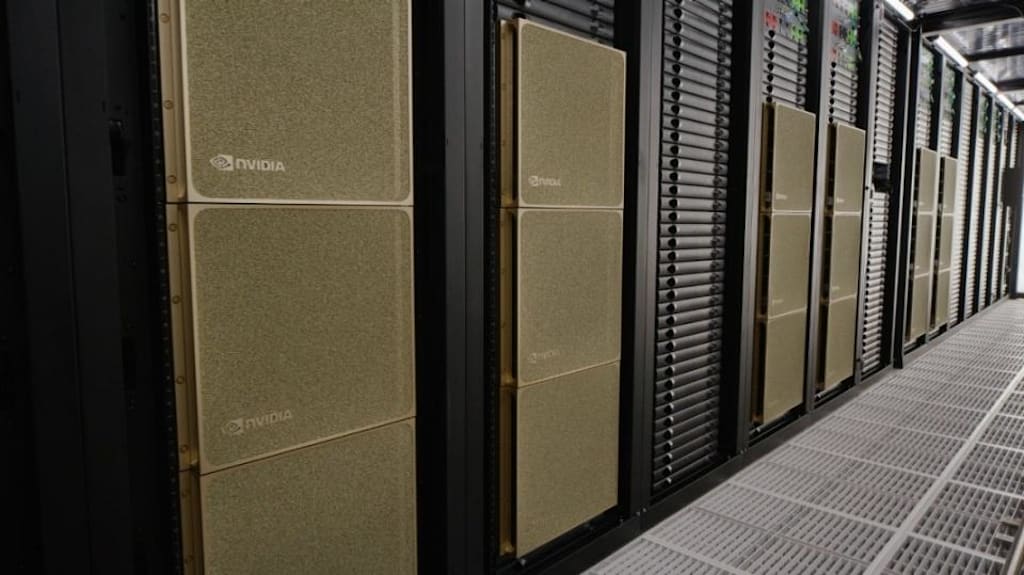
A high-end AI chip that could barely be found a few months ago is now appearing in resale listings by the thousand. CNBC reported on Nov. 25 that Nvidia GPU sellers are hunting for new buyers after Washington tightened export rules. GPU Mart president Jack Duhamel and two people familiar with the market told CNBC that the number of Nvidia GPUs offered for sale rose unusually after the Nov. 16 rule. The listings include inquiries involving thousands of B300 chips. Prices, sellers, and final deal sizes remain undisclosed.
The listings describe a permission shock more than a demand shock. B300 is a Blackwell Ultra class part for training and high-throughput inference. Its buyers are cloud providers, model labs, and state-backed compute projects. Those buyers do not shop like consumers. They need power, cooling, building space, and a legal route to take delivery. When one of those pieces disappears, a chip can be stranded even if the model behind it still needs compute.
Nvidia says overall demand still exceeds supply. That claim can survive the resale wave because Nvidia’s order book is not the same market as the secondary listings. Nvidia sells new allocation into regions and accounts that can close. A B300 sitting in a reseller’s inventory because its intended Chinese customer cannot take it does not ease the shortage for a compliant buyer in the United States or the Gulf. The chip exists. The permission does not. The shortage moved from silicon to paperwork, power, and sites.
Idle GPUs are expensive. A server that is not training still depreciates. The financing behind it still accrues interest. The colocation contract still bills for power and space. A reseller holding thousands of B300s has a choice: wait for the rule to change, or cut the price and recover cash. Short contracts are a tell. Operators who normally want long commitments are offering short ones because they want the asset off their books before the next policy headline.
The overseas hosting route is part of the story. Some operators planned to place clusters outside China and rent capacity back to Chinese customers. That model needs a host country, a power contract, and a customer that can pay without triggering enforcement. Reports of a threat to tax US firms that build data centers abroad add another risk. Moonshot reportedly canceled a $150 million Indonesia lease that would have used B300 clusters from 2027. A canceled anchor tenant turns planned capacity into excess capacity. The chips do not disappear. They move to the resale market.
The property comparison is imperfect. It still helps. A developer can report strong demand while investors who bought early dump units because they cannot carry the mortgage. The buyers who queued are not always the buyers who can close. GPU resale shows the same split. Strategic demand for AI compute remains. Financial demand for a specific batch of GPUs in a specific legal jurisdiction can evaporate in a week.
Nvidia’s supply chain also has its own queue. New B300 and GB300 systems go to large cloud contracts first. Smaller buyers wait. That queue can stay long even as a secondary market fills with stranded units. The two markets clear at different prices. Nvidia’s list allocation carries support, warranty, and a legal path. A resold B300 carries policy risk and a shorter useful life. If the discount on resale units grows, some buyers will cancel or delay new orders. That is how a resale wave reaches Nvidia’s revenue.
What would prove a broad demand change? Look for weakness across several regions, not one policy corridor. Look for cloud providers cutting capital spending, hyperscalers canceling orders, and resale prices falling below the cost of carrying the hardware. Those signals are not here yet. What exists now is a pile of advanced chips on the wrong side of a border, and sellers who need cash before the policy picture clears.
Watch the clearing price for a B300 that has no compliant home. If that price falls far enough, the resale market stops being a side story. It becomes the first place buyers look, and Nvidia’s order book will feel it.
About the Creator
Jin
Writer of reamstories
https://reamstories.com/jin
Enjoyed the story? Support the Creator.
Subscribe for free to receive all their stories in your feed. You could also become a paid subscriber or give them a one-off tip, letting them know you appreciate their work.
Comments
There are no comments for this story
Be the first to respond and start the conversation.