
Nomura Asset Management: Seizing Japan’s Moment From Underweight to Global Growth
Turning Decades of Underinvestment Around 128 Trillion Yen in Assets and Expanding Macquarie Acquisition Opens Western Markets Equities, Bonds, and Credit as New Global Drivers "Pushing From Neutral to Overweight"

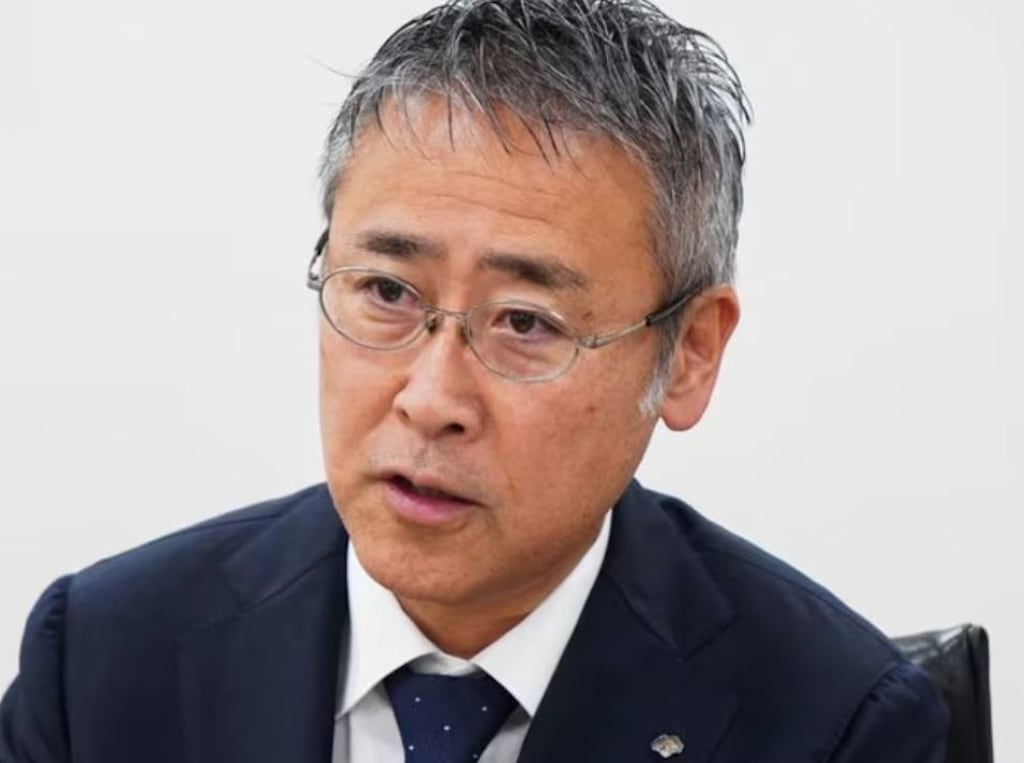
For more than a generation, Japan was the market global investors could comfortably overlook. Decades of deflation, sluggish growth, and near-zero yields meant most international portfolios held far less Japanese exposure than economic fundamentals would suggest, a trend so entrenched it became standard practice. Today, that consensus is shifting dramatically, and Nomura Asset Management, the country’s largest investment manager with 128 trillion yen ($809 billion) in assets under management, is placing itself squarely at the centre of this renaissance. Under the leadership of Chief Executive Shoichi Ohkoshi, the firm is turning renewed interest into lasting global presence, redefining what a Japanese asset manager can be on the world stage.
The Great Reappraisal: Why Japan Is Back
“Global investors were underweight Japan over the ‘lost 30 years’,” Ohkoshi acknowledged in a frank interview with Reuters. That underweight position was not accidental; it reflected years of stagnation, falling prices, and a sense that the nation’s best economic days were behind it. Now, however, the landscape has changed fundamentally. Japanese equities have delivered sustained performance, supported by improved corporate governance, record profits, and a currency that makes exports competitive. At the same time, bond yields have risen from historic lows, finally offering returns that compare, even if modestly, with other major markets.
The result is a quiet but powerful repositioning among global allocators. “Now, clearly interest is rising,” Ohkoshi said. “Those who were underweight are moving to neutral, and we’re aiming to push them further to overweight by promoting the attractiveness of Japanese stocks.” It is a deliberate, multi-stage strategy: first capture the neutral rebalancing, then build conviction to the point where investors actively choose to increase their allocation beyond benchmark levels. If successful, the capital flows involved will be transformative, and Nomura intends to be the primary beneficiary.
Buying a Global Footprint: The Macquarie Acquisition
Growing organically from a domestic base into an international leader would take decades. Nomura chose a faster path. Last year, the firm completed the acquisition of Macquarie’s United States and European public asset management businesses, a move that instantly expanded its product range, client base, and distribution networks across two continents where organic growth would have been painfully slow. “This has given it a much larger footprint and distribution network in markets where it is difficult to grow organically,” Ohkoshi explained.
The acquisition addresses a critical gap in Japan’s financial landscape: very few domestic asset managers offer truly global investment capabilities. Most remain focused on local markets, serving local clients. “There aren’t many Japanese asset management companies that truly manage global equities,” Ohkoshi noted. “After the Macquarie acquisition we are in a position to scale up significantly.” What began as a strength in Japanese and Asian equities is evolving into a balanced, multi-asset, multi-region platform capable of meeting institutional clients wherever they are and whatever they need.
Beyond Stocks: The Fixed-Income Opportunity
The revival is not confined to equities. For years, Japanese government bonds offered yields so low they were effectively uninvestable for most international portfolios. That is changing. “Yields are still low compared to other countries, but sovereign bonds are finally becoming investable assets,” Ohkoshi observed. For global investors starved of positive, reliable returns in this market for so long, the shift is significant and Nomura is well placed to guide them through it.
Beyond sovereign debt, an even larger opportunity is opening up in corporate credit. Historically, Japanese companies relied almost exclusively on banks for financing, meaning public bond markets were small, illiquid, and underdeveloped. That model is evolving. “Corporate funding demand is expanding beyond what banks alone can provide so we’re actively developing corporate credit products,” Ohkoshi said. As businesses diversify their funding sources, new markets are emerging and Nomura is building the products, structures, and distribution networks to connect global capital with Japanese enterprise in ways that simply did not exist before.
Building for the Long Term
Ohkoshi is careful not to overpromise. He declined to specify targets for new asset inflows or customer numbers, making clear that this is a strategic journey, not a quick turnaround. The firm is not chasing short-term fads; it is positioning itself for a structural shift in how the world views Japan one that could play out over years, not quarters. What is clear is that the foundation is set: 128 trillion yen in domestic assets provides stability; the Macquarie acquisition opens global doors; and a broadening product range across equities, sovereign bonds, and corporate credit meets the full spectrum of investor interest.
For Nomura Asset Management, the moment could not be better. As global investors finally stop writing Japan off and start rediscovering its potential, the country’s largest asset manager is ready to lead them forward, proving that the “lost decades” are indeed behind, and that a new era of Japanese financial leadership is just beginning.
About the Creator
Mark Lim
Hi I am mark an automotive student and a car, tech and food enthusiast ! Im gonna try and post daily & hope you enjoy what I write and do share my page with people you know. I would gladly appreciate it! Cheers
Enjoyed the story? Support the Creator.
Subscribe for free to receive all their stories in your feed.
Comments
There are no comments for this story
Be the first to respond and start the conversation.