
Noel Edmonds and Wife Release Lobsters Bought from Farm Shop in "Bizarre" Conservation Act
The former Deal or No Deal host and his wife, Liz Davies, purchased live lobsters from a tank on the Isle of Man and released them into Peel Harbour, sparking a debate among fans and marine experts.

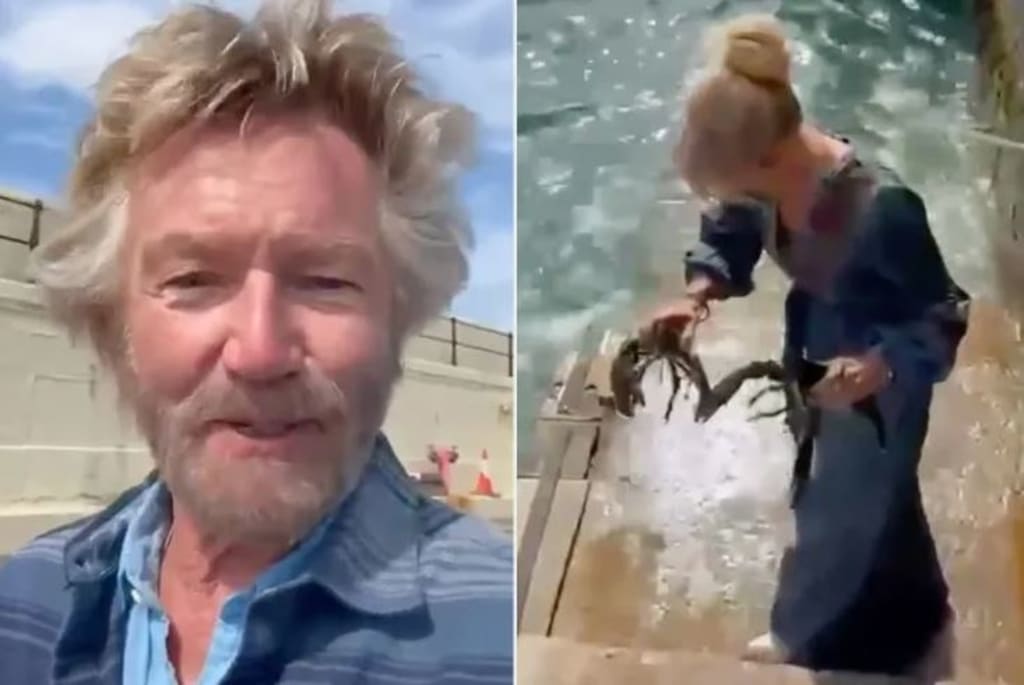
Noel Edmonds is taking marine conservation into his own hands literally. The 77-year-old former host of the U.K.’s hit game show Deal or No Deal and his wife, Liz Davies, made headlines this week after purchasing live lobsters from a farm shop on the Isle of Man and releasing them back into the wild at Peel Harbour. The couple documented the unusual act in a candid video shared to Instagram on Monday, July 27, describing it as a spontaneous response to their discomfort with keeping sentient creatures in captivity for display.
“All right, this is one of those bizarre things that happens with us,” Edmonds said in the clip, setting the scene for their impromptu rescue mission. “We were at a place where there were some lobsters in a tank, and we’re a little bit uncomfortable about the lobsters in tanks, so we bought the lobsters, and now Liz is going to release them. So here we go.”
The Release: A Moment of Compassion
In the footage, Davies is seen carefully carrying two large lobsters, one in each hand, before gently lowering them toward the water’s surface at the edge of a dock. With a final splash, the crustaceans disappeared into the depths of Peel Harbour. Edmonds narrated the scene with his characteristic charm, noting the presence of local wildlife as a positive sign of the water’s health.
“We know this is nice fresh water because a moment ago a seal went past,” he remarked, seemingly unconcerned that the very same seals might view the newly freed lobsters as lunch. He then turned to Davies and asked if she was happy with their decision. “Yeah, I am,” she responded with a smile, watching the ripples settle on the water.
The video quickly garnered attention, reflecting the public’s growing interest in animal welfare and ethical consumption. For Edmonds and Davies, the act was less about making a political statement and more about following their instincts in the moment.
Mixed Reactions: From Praise to Skepticism
As is often the case with celebrity actions involving animals, the response on social media was divided. Many of Edmonds’ 146,000 Instagram followers praised the couple’s compassion and willingness to act on their beliefs. Comments flooded in calling the gesture “heartwarming” and “kind.”
However, not everyone was convinced by the logic or the outcome of the release. Some users pointed out the potential irony of saving lobsters only to feed them to local predators. “The seals are waiting to pounce,” one user commented, suggesting that the lobsters may have simply swapped a glass tank for a natural but equally dangerous environment. Another joked that the lobsters would likely just be caught again by local fishermen, rendering the effort futile.
More serious concerns were raised by those with a scientific perspective. “Lovely sentiment, but from a marine biologist perspective it’s best not to release captive lobsters,” wrote one follower, highlighting the potential ecological risks involved in such actions.
Expert Warning: The Risk of Disease and Disruption
While the gesture was well-intentioned, marine experts caution against the unauthorized release of captive marine life. Dr. Magnus Johnson, a lecturer in environmental marine science at the University of Hull, told The Independent that the primary risk involves the potential introduction of non-native diseases or parasites, particularly if the animals were not sourced from the immediate local area.
“If they become established in U.K. waters and their parasites and diseases spread, it could be a disaster for our local industry,” Dr. Johnson explained. He noted that while native lobsters returned to their home waters pose less risk, the practice can still disrupt local ecosystems if the animals have been held in conditions that alter their health or behavior. Furthermore, releasing farmed or tank-held animals can sometimes introduce pathogens to wild populations that have no immunity to them.
In this specific case, however, the risk appears to be minimal. According to Matt Harrison, the owner of the farm shop where the lobsters were purchased, the animals had been caught nearby by a local shellfish fisherman just days prior. This means the lobsters were being returned to their native habitat, mitigating many of the ecological concerns raised by experts.
Local Business Dilemma: Ethics vs. Commerce
The incident has left Matt Harrison, the owner of the farm shop, in a difficult position. While he respects the couple’s feelings, he also relies on the sale of fresh seafood to support his business and the local fishing community.
“I’m sensitive to people’s feelings,” Harrison told Manx Radio. “But the vast majority of people want us to keep it and for us to keep supporting small businesses, which is the whole point of the shop.”
Harrison revealed that the incident has him reconsidering the future of his live lobster tank. “I’m still mulling over whether to keep [the tank],” he said. “There are still lobsters in there; they’re really healthy. We’re just going to see what happens.”
The dilemma highlights the complex intersection of personal ethics, local commerce, and consumer expectations. For some shoppers, seeing live animals in tanks is a guarantee of freshness; for others, like Edmonds and Davies, it is a source of moral discomfort.
A Growing Trend in Animal Welfare?
Edmonds’ action reflects a broader shift in public attitudes toward food sources and animal welfare. Recent studies have suggested that crustaceans like lobsters and crabs may feel pain, leading to calls for more humane handling and slaughter methods. In fact, earlier this year, researchers suggested that cooks should stop boiling lobsters alive, citing evidence of their capacity for suffering.
For celebrities like Edmonds, who have a platform to influence public opinion, these small acts can spark larger conversations. Whether viewed as a quaint eccentricity or a serious ethical stance, the release of the lobsters at Peel Harbour has certainly kept the conversation about how we treat the animals we eat front and center.
As for the lobsters themselves, their fate remains unknown. They may swim freely in the harbour, fall prey to a seal, or be caught again by a fisherman. But for Noel and Liz, the peace of mind gained from knowing they tried to give the creatures a second chance was worth the price of admission.
About the Creator
Mark Lim
Hi I am mark an automotive student and a car, tech and food enthusiast ! Im gonna try and post daily & hope you enjoy what I write and do share my page with people you know. I would gladly appreciate it! Cheers
Enjoyed the story? Support the Creator.
Subscribe for free to receive all their stories in your feed.
Comments
There are no comments for this story
Be the first to respond and start the conversation.