
Nike Just Gave Up on China as Its Own Region. What That Means for Every Global Brand.
Nine quarters of decline, $220 billion in lost value, and a playbook that keeps handing wins to Anta. This is what happens when a giant mistakes control for relevance.
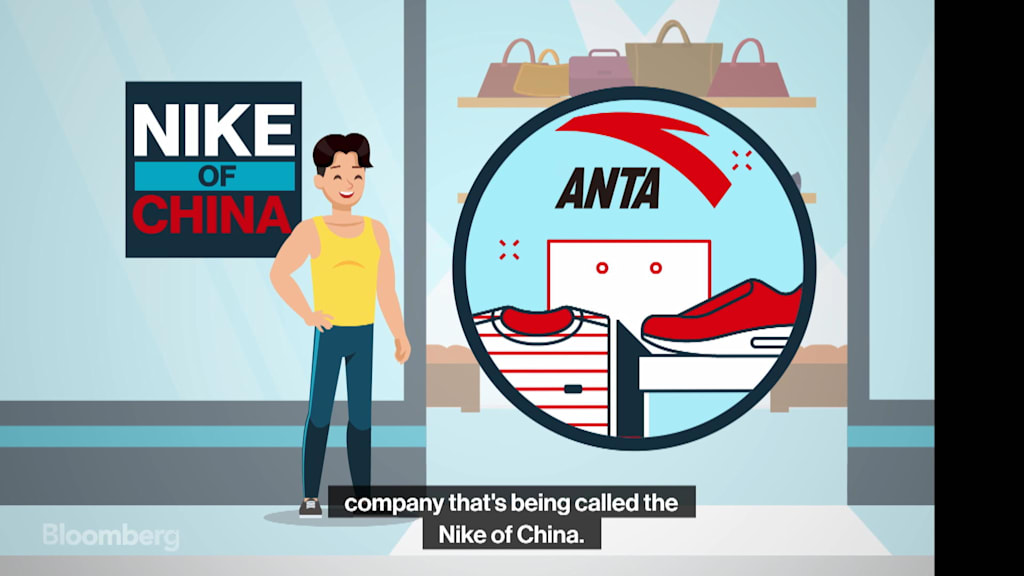
When a giant starts to shrink: Nike’s Greater China downgrade
On October 1, 2026, Nike sent an internal letter to employees. It said that starting in fiscal 2028, the company would cut its global regions from four to three. North America and Latin America would become the Americas. Europe, the Middle East, and Africa would stay as EMEA. Greater China, which had been an independent region for more than two decades, would be folded into a new Asia-Pacific and Greater China region, or APGC, based in Singapore.
No press conference. No dramatic quote in the press release. A market that Nike once called a growth engine lost its independent coordinate on the org chart.
That day came nearly five years after Nike’s market peak in November 2021. The stock was $161.91 then. Market value was $280 billion. Now the stock is $33.87, and market value is $50.2 billion. More than $220 billion, about RMB 1.476 trillion, has disappeared in five years. On September 21, 2026, Nike was removed from the S&P 100, ending an 18-year run that began in December 2008. Forbes called Nike a contrarian investment target. The phrase was cold, but accurate.
The fall of a number
Greater China did not fall in one quarter. The decline has a clear path. Each turn matches a missed chance.
In fiscal 2024, Nike Greater China was still growing. It was a profit pillar. Revenue hit a record. No one saw what came next. In fiscal 2025, revenue fell to $6.586 billion, down 13 percent. In fiscal 2026, the drop narrowed to 11 percent, but revenue was still more than $1 billion below the peak. By the first quarter of fiscal 2027, the same report that announced the restructuring, Greater China revenue was $1.18 billion. That was down 22 percent, or 26 percent at constant currency.
Nine straight quarters. On each earnings call, management said the same thing: it will take time. Elliott Hill said it again: “Reviving these underperforming businesses will take time.”
The market has stopped waiting.
Market share tells the same story. In 2021, Nike held 18.1 percent of the Chinese market. One in five sports shoes sold in China was a Nike. By 2024, that fell to 16.2 percent. By 2025, Euromonitor put it at 16 percent. Anta Group, which owns FILA, Descente, Kolon Sport, and other brands, climbed to 21.8 percent. That is 2.2 times Nike China. Anta Sports’ revenue is about 2.2 times Nike China’s, and the gap has widened past RMB 23 billion.
Anta has moved from challenger to leader.
DTC and the long backlash
To see how Nike got here in China, go back to 2017.
That year Nike launched Consumer Direct Offense. The plan was to bypass distributors and reach customers through owned stores and digital platforms. Then-CEO John Donahoe treated DTC as the next growth curve. Digital went from about 10 percent of sales to 30 percent in four years. By fiscal 2023, Nike Direct revenue hit $21.3 billion, up 14 percent. The numbers looked good.
The problems were underneath.
DTC moved inventory risk from retailers to Nike. Retailers used to absorb some inventory, returns, and clearance pressure. After the shift, Nike carried it. Gross margin fell 2.5 percentage points in fiscal 2023. Management blamed heavy markdowns. Net income fell 16 percent. By 2024, Donahoe admitted Nike had gone too far away from retailers.
In China, the damage was worse. Nike and its distributors pushed online. More stores and more distribution brought sales, but they also broke pricing. Large distributors used volume and rebates to sell low online. Under inventory pressure, they cleared stock through livestream promotions and platform subsidies. The same shoe had different prices across channels. Consumers learned to wait for discounts.
One example: the AJ1 Low OG “Banned” released on May 16 at RMB 1,099. Within five hours, resale listings were above RMB 800. When a classic sneaker goes from hard to find to easy to discount, the cool factor fades.
Nike executives admitted on an earnings call that frequent discounting, especially in digital channels, had weakened the brand. Discounting hurt gross margin. A weaker brand hurt sales. The loop fed itself.
Cutting off Topsports and Pou Sheng
Faced with that channel mess, Nike’s new leadership chose the hardest option. It cut distributors’ online rights.
On July 22, 2026, Topsports and Pou Sheng International said they had received formal notice from Nike. Starting January 1, 2027, Nike would end their online platform sales authorization for mainland China. Topsports shares fell as much as 25 percent that day.
Topsports had worked with Nike since 1999, 27 years. Pou Sheng was also a veteran of Chinese sportswear retail. Together they ran thousands of Nike stores and online shops. They were key touchpoints for Chinese consumers. Ending online authorization cleared out most of Nike’s online wholesale channel in China.
Cathy Sparks, general manager of Nike Greater China, said sales had become too fragmented. The goal was to rebuild the digital market around Tmall, JD.com, Douyin official flagship stores, and Nike’s own site and app.
The logic makes sense. When pricing power is broken by too many channels, taking back control is reasonable. The cost is clear too. Bernstein estimated the terminated wholesale online channels were a high-teens percentage of Nike’s China business, about $1 billion in lost revenue. More important, Bernstein warned that most lost wholesale sales would not come back. Customers who buy discounted products online are more likely to switch brands than pay full price through Nike’s own channels.
Citi said the same. The shift to online DTC would cost Nike more market share in China. Anta and Li Ning would benefit most.
Sparks admitted in July that channel governance would take several selling seasons. Greater China revenue and profit would stay under pressure in the short term.
Nike is accepting short-term damage to fix the business later. The question is whether it has enough cash and time to reach that health.
The price of arrogance
If DTC was the recent cause, the deeper problem is arrogance inside the organization. It has led Nike to make basic mistakes with key talent again and again.
In 2005, Lionel Messi’s father, Jorge, asked Nike’s Iberia office and South America office for a few sets of sports gear for Messi’s family. The gear cost a few hundred dollars. Neither office replied. The message disappeared.
Messi was already with Nike. In early Barcelona youth videos, he trained and played in Nike gear. When he made his Barcelona first-team debut in 2004 and scored his first professional goal in 2005, he wore Nike boots.
That unanswered request became Adidas’s opening. Adidas offered €600,000 to €1 million a year, far more than Nike’s youth contract, and promised a signature boot line. On January 29, 2006, Messi wrote to Nike to end talks. On January 31, he signed with Adidas. On February 1, he wore Adidas F50 boots in a Copa del Rey match.
Nike then sued Messi in Barcelona, using a 2005 “cooperation commitment letter” and asking for about €5.5 million. The judge ruled the letter was only an intention document. It had no clear terms on duration, breach compensation, or exclusivity. It was not a contract. Nike lost.
The same thing happened in basketball. In 2013, Nike’s renewal talks with Stephen Curry became one of the most expensive mistakes in sports business. Reports said Nike executives, including then-vice president Nico Harrison, now general manager of the Dallas Mavericks, were unprepared. Curry’s name was mispronounced as “Steph-on.” No one corrected it. The presentation still had Kevin Durant’s name on a slide. The Curry family saw the proposal was not made for him. Dell Curry lost interest. The family left Nike for Under Armour.
From Messi to Curry, from Lamine Yamal to Kylian Mbappé, Nike has lost core endorsers. The pattern is not a lack of money. It is rigidity and self-regard. When a brand with about 90 percent of the basketball market stops taking a young player seriously, it is already preparing its own decline.
Competitors move faster
Nike’s slowdown in China also has an external cause. Domestic brands are filling the gap faster and more precisely.
Anta is the clearest shock. With FILA, Descente, Kolon Sport, and Arc’teryx through Amer Sports, Anta holds 21.8 percent of China’s sportswear and footwear market. One in five sports shoes sold in China comes from Anta Group.
It is not only Anta. Adidas Greater China reported Q2 revenue of €950 million, up 15 percent, its 13th straight quarter of growth. Amer Sports’ Greater China revenue in the first half was $1.201 billion, up 40.2 percent, the largest among its four regions. Asics Greater China grew about 28 percent in the first half, with profit growth faster than sales. On’s Asia-Pacific region, including China, led growth, with Q2 net sales up 43.1 percent to CHF 170.5 million.
Jefferies was blunt: Nike’s weakness is a brand-specific problem. Adidas keeps taking share. Li Ning is doing better than feared. Share is moving away from Nike.
This is not just a price war. Demand has become more specific. A running shoe or basketball shoe used to cover commuting, training, and daily wear. Now consumers want gear for trail running, Pilates, city cycling, and light outdoor use. Domestic brands have shorter decision chains and local R&D teams. They can iterate in months. Nike’s global product cycle often runs 18 to 24 months. While Nike’s classics are still on the line, domestic brands use small-batch, quick-response production to put test winners in core shopping districts.
Scale used to protect Nike. Now speed matters more.
The Pace plan
To stop the decline, Nike launched a cost-cutting and restructuring plan called Pace. The company says it will save about $2.5 billion by fiscal 2031 and take about $1 billion in pre-tax charges, mostly employee costs. It also plans to modernize supply chains, build a campus in Bengaluru, India, and simplify the organization.
Pace focuses on cost cuts. It does not introduce a new growth plan. Elliott Hill called it a business model transformation, not a new growth strategy. Nike’s running business grew double digits in the latest quarter. Football grew double digits in all four regions because of World Cup attention. But those gains are not enough to offset sportswear, Jordan, and Greater China.
Jordan is a special problem. The brand that once defined basketball shoe culture has seen revenue fall nearly 50 percent. Many Jordan models now sell below retail in resale. When a brand built on scarcity and cultural meaning discounts often, it loses profit and its reason to exist.
Nike expects fiscal 2027 revenue to fall by a high-single-digit percentage. It guided earnings per share to $1.15 to $1.35. Analysts had expected a revenue decline of about 2 percent and EPS around $1.68. The gap was why the stock fell as much as 8.5 percent after the report.
Bank of America downgraded Nike from Neutral to Underperform and cut its target price from $30 to $24. Bloomberg data shows Nike’s analyst consensus rating is the lowest in at least 25 years.
What the downgrade means
Against falling results and hard channel changes, removing Greater China’s independent region status looks like a confirmation of reality, not a bold strategic choice.
The symbolism matters. When Consumer Direct Offense started in 2017, Nike also cut regions, but kept Greater China independent. At the time, Greater China was one of Nike’s fastest-growing markets. Independence reflected both strategic focus and business size. Now the market has shrunk for nine straight quarters and is a drag on results. Losing independence is an organizational downgrade.
Under the new structure, APGC is based in Singapore. Greater China stays under Cathy Sparks. Sparks was vice president and general manager of Nike’s Asia-Pacific and Latin America region. She replaced Dong Wei on April 1. Dong Wei had led Greater China for nearly 20 years. During her time, the market went from rapid growth to long decline. The change in leadership marks a shift in logic: from deep work in one market to coordination across many.
Nike says the new structure will strengthen local decision-making. The local product innovation team in China has doubled. The first apparel collection conceived, designed, and developed by a Chinese team is set for October. These moves are useful. But inside a downgraded region, their effect is limited. When a market needs to be coordinated from a distance, it usually has already lost its place as an independent growth pole.
After the downgrade
Nike’s decision to remove Greater China as an independent region looks like organizational optimization. In practice, it is a retreat. A brand that once attacked in one of the world’s most important consumer markets is now defending.
Two habits explain much of this: arrogance and short-term thinking. Arrogance led Nike to mishandle Messi and Curry. It also led Nike to push a global one-size-fits-all playbook into a market that needs local detail. Short-term thinking led Nike to cut distributor networks during its DTC push. It traded channel profit for brand equity.
Anta now holds 21.8 percent. Adidas has grown in China for 13 straight quarters. Domestic brands respond faster and target use cases more precisely. Nike has lost more than an independent region. It has lost a generation of Chinese consumers who once believed in “Just Do It.”
Pace may save $2.5 billion. The harder question is how to win back a market that no longer looks up to international brands.
Organizational restructuring cannot answer that.
About the Creator
Jin
Writer of reamstories
https://reamstories.com/jin
Enjoyed the story? Support the Creator.
Subscribe for free to receive all their stories in your feed. You could also become a paid subscriber, letting them know you appreciate their work.
Comments
There are no comments for this story
Be the first to respond and start the conversation.