
Nick Reiner's Trust Fund Request Blocked Amid Murder Charges: The "Slayer Statute" Takes Center Stage
The 32-year-old son of Rob and Michele Reiner has been denied access to his $1.5 million trust fund to cover legal fees and commissary expenses, as trustees invoke a California law that prevents killers from inheriting from their victims.

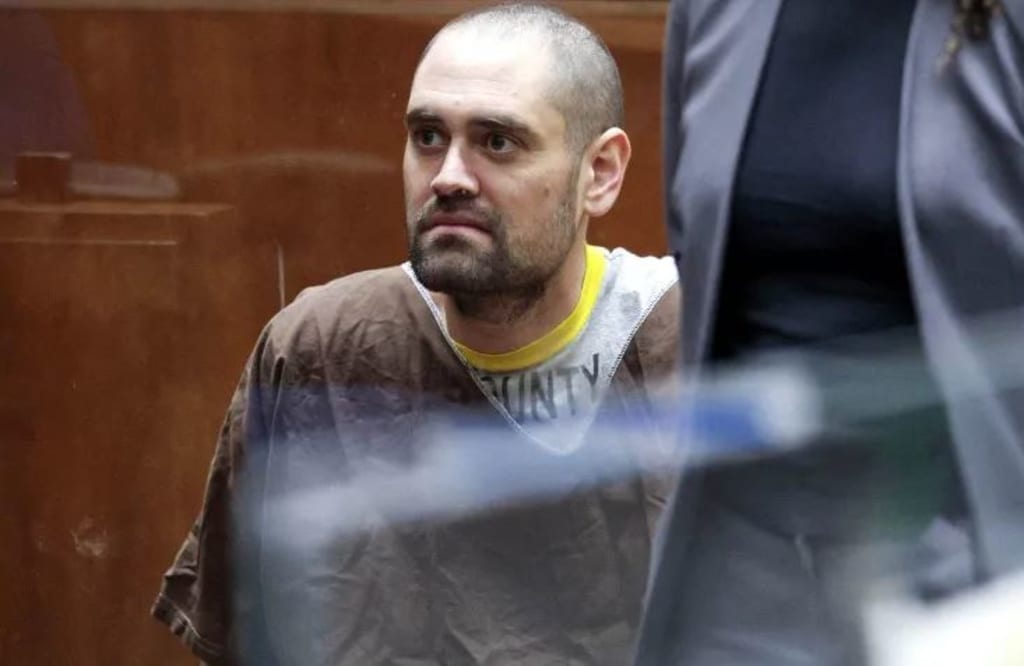
The legal battle over Nick Reiner's inheritance has taken a dramatic turn, as trustees overseeing his trust fund have formally blocked his request to access the money to cover court fees and necessities. The move comes in the wake of his indictment on murder charges in connection with the December 2025 killings of his parents, legendary filmmaker Rob Reiner and his wife, Michele Singer Reiner.
Nick Reiner, 32, filed a petition in California court in June seeking access to the trust fund, which was established in his name in 1993 shortly after his birth. According to court documents, the trust is valued in excess of $1.5 million. However, the trustees, both the previous fiduciary, Paul Kanin, and the incoming one, Jodi Pais Montgomery, have opposed his request in court papers filed in early August, citing a California law known as the "slayer statute."
The slayer statute is a legal provision that prevents individuals from inheriting money or property, including trusts from a person they "feloniously and intentionally" kill. The law is designed to ensure that no one profits from their own criminal acts. The New York Times was first to report on the trustees' decision to block Nick's request.
In his initial petition, Nick claimed that he had not yet received the mandatory distribution of one-half of the trust, which he should have received at age 30. He argued that he urgently needed the funds to cover his mounting legal expenses and to stock his commissary account at the Twin Towers Correctional Facility in Los Angeles, where he is currently being held. He cited the need for "necessities" such as socks and hygiene products.
However, the incoming trustee, Montgomery, has taken a firm stance against any distribution. In court papers obtained by PEOPLE, Montgomery argued that criminal proceedings will ultimately decide the fate of the trust fund. "No distribution should be made until the Court resolves whether the slayer statute should affect Nick's entitlement," the filing states.
The filing also addressed the urgency of Nick's request, noting, "Nick's sense of urgency is real, but it did not arise in a vacuum. It arises from the deaths of his parents, the very settlors of the Trust at issue, and Nick is presently accused of causing those deaths."
Lauriann Wright, an attorney for Montgomery, further emphasized in a previous filing that California law does not provide exceptions for criminal defense costs. "California has enacted no exception permitting a killer's inheritance to be used for criminal-defense costs," Wright wrote. She also noted that if the slayer statute applies, the money in Nick's trust would ultimately pass to his siblings, Jake and Romy Reiner.
Wright argued that Montgomery has a fiduciary responsibility to all of the Reiner siblings, and that releasing the funds now would be an "irreversible" move. While Nick currently stands accused of his parents' murder, the release of the money would be permanent, even if the legal proceedings later determine that he is entitled to it.
In response to the trustees' opposition, Nick filed his own court documents, stating that he never gave consent for the trust to withhold his distribution. "I did not give my consent to any Trustee of my Trust to withhold, defer, or retain my Age-30 Distribution indefinitely as 'property of the Trust,'" he wrote. He further argued, "I have never understood anything I did (or did not do) to constitute giving the Trustee my consent to indefinitely withhold my Age-30 Distribution from me and retain it as property of the Trust even after I have asked for it, and it was not my intention to consent to that."
Nick's attorney, Anita P. Wu, also weighed in on the matter, emphasizing her client's presumption of innocence. "The slayer statute requires a determination, not a mere accusation. Nick is presumed innocent and has been convicted of nothing," Wu told the Times.
The legal saga continues to unfold as Nick awaits his next court appearance. In July, a grand jury returned an indictment on two counts of first-degree murder, which replaced the original charges filed against him. The new indictment also includes a special circumstance of lying in wait, in addition to the use of a knife. Nick has previously pleaded not guilty to the charges. He is scheduled to return to court for a pretrial hearing on September 15.
For now, Nick Reiner's access to his trust fund remains frozen, leaving him to navigate his legal battles from behind bars without the financial resources he claims to desperately need. The case highlights the complex intersection of family tragedy, inheritance law, and the criminal justice system, raising profound questions about the rights of the accused and the protection of victims' estates.
About the Creator
Mark Lim
Hi I am mark an automotive student and a car, tech and food enthusiast ! Im gonna try and post daily & hope you enjoy what I write and do share my page with people you know. I would gladly appreciate it! Cheers
Enjoyed the story? Support the Creator.
Subscribe for free to receive all their stories in your feed.
Comments
There are no comments for this story
Be the first to respond and start the conversation.