
Neal Elbaum Shares Guidance on Managing Common Transportation Challenges
Practical Transportation Management Strategies That Help Businesses Reduce Delays, Improve Coordination, Control Costs, and Maintain Reliable Delivery Performance

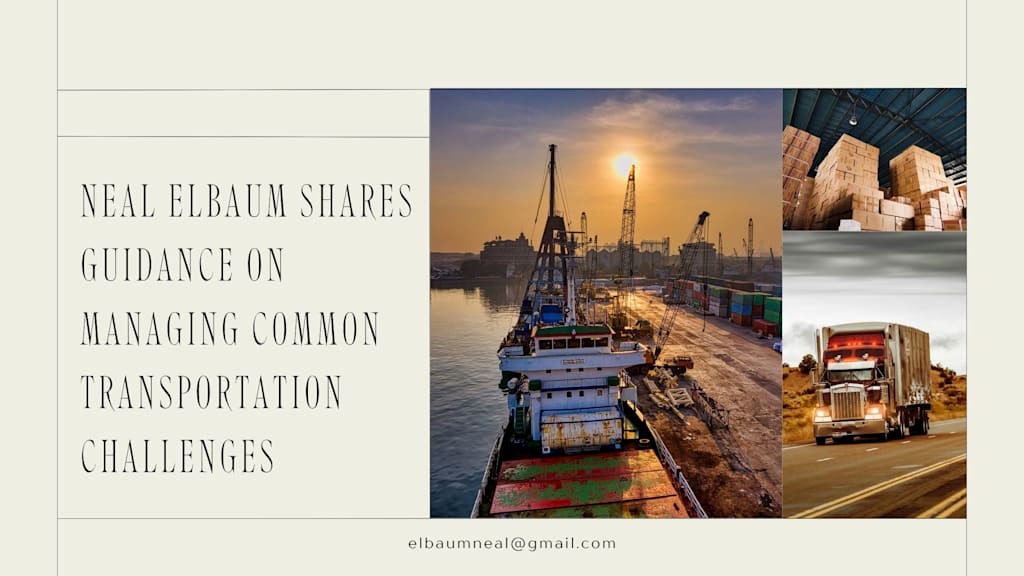
Transportation plays a critical role in modern supply chains. Businesses depend on reliable transportation systems to move products efficiently, meet customer expectations, and maintain operational stability. However, transportation management comes with several challenges that can affect delivery schedules, increase costs, and disrupt business operations.
Neal Elbaum has spent years observing the factors that influence transportation performance and logistics efficiency. Through his experience in freight movement and supply chain operations, he emphasizes the importance of planning, communication, and adaptability when addressing transportation-related obstacles. Neal Elbaum believes that organizations that proactively manage transportation challenges are better positioned to maintain consistent service and long-term operational success.
This article explores common transportation challenges and practical approaches businesses can use to overcome them.
Understanding Why Transportation Challenges Impact Business Performance
Transportation serves as the connection between suppliers, warehouses, distribution centers, and customers. When transportation problems arise, they can affect multiple parts of the supply chain.
Common consequences include:
- Missed delivery deadlines
- Increased transportation expenses
- Reduced customer satisfaction
- Inventory shortages
- Lower operational efficiency
Businesses that recognize transportation risks early can take steps to minimize disruptions and maintain smoother operations.
Managing Delivery Delays Through Better Planning
One of the most common transportation challenges is delivery delay. Delays can occur because of weather conditions, traffic congestion, equipment issues, labor shortages, or unexpected route disruptions.
Neal Elbaum highlights the importance of proactive planning to reduce the likelihood of transportation delays. Companies that prepare for potential disruptions often recover more quickly when challenges occur.
Several practices can help improve delivery reliability:
- Develop backup transportation plans
- Monitor routes in real time
- Build reasonable delivery schedules
- Maintain communication with carriers
- Review historical transportation data
When organizations plan for possible obstacles before they occur, they can respond more effectively and reduce the impact on customers.
Improving Communication Across Transportation Networks
Transportation operations often involve multiple stakeholders, including suppliers, carriers, warehouse teams, drivers, and customers. Poor communication between these groups can create confusion and delays.
Clear communication supports better coordination throughout the transportation process. Information must be shared accurately and promptly to ensure all parties understand schedules, shipment status, and potential disruptions.
Businesses can strengthen communication by implementing standardized procedures and encouraging collaboration between departments. Regular updates and transparent reporting help transportation teams make informed decisions and respond quickly to changing circumstances.
Effective communication not only reduces errors but also builds stronger relationships with transportation partners.
Addressing Rising Transportation Costs
Transportation expenses continue to be a major concern for many organizations. Fuel costs, labor expenses, maintenance requirements, and regulatory compliance can all contribute to increasing transportation budgets.
Neal Elbaum recommends focusing on efficiency rather than simply reducing spending. Cost management should involve identifying opportunities to improve resource utilization while maintaining service quality.
Businesses can control transportation expenses by:
- Optimizing delivery routes
- Consolidating shipments when possible
- Reducing empty vehicle miles
- Improving load planning
- Monitoring fuel consumption
Careful analysis of transportation operations often reveals areas where costs can be reduced without negatively affecting customer service.
Using Technology to Improve Transportation Visibility
Modern transportation management relies heavily on visibility. Without accurate information, businesses may struggle to identify delays, track shipments, or respond to disruptions.
Technology provides valuable tools that support transportation oversight. Real-time tracking systems, transportation management software, and data analytics platforms allow organizations to monitor shipments throughout the delivery process.
Improved visibility helps transportation teams:
- Track shipment progress
- Identify potential delays earlier
- Improve customer communication
- Analyze transportation performance
- Support faster decision-making
Organizations that invest in transportation visibility often experience greater operational control and more consistent delivery outcomes.
Managing Driver and Workforce Challenges
Transportation operations depend on skilled workers. Driver shortages, employee turnover, and workforce availability issues can create significant transportation challenges.
Recruiting and retaining qualified transportation professionals requires ongoing attention. Businesses that support workforce development often maintain stronger transportation performance over time.
Important workforce management practices include offering competitive compensation, providing training opportunities, maintaining safe working conditions, and supporting employee engagement.
A stable workforce contributes to improved reliability, better customer service, and reduced operational disruptions.
Preparing for Weather and Unexpected Disruptions
Transportation networks are frequently affected by factors outside organizational control. Severe weather, natural disasters, road closures, and infrastructure issues can interrupt transportation schedules with little warning.
Neal Elbaum encourages businesses to build resilience into transportation planning. Organizations that prepare for unexpected events can recover more efficiently and maintain continuity during disruptions.
Risk management strategies may include alternative routing options, contingency transportation providers, emergency communication plans, and regular operational reviews.
Preparation does not eliminate disruptions, but it significantly improves an organization's ability to respond effectively when challenges arise.
Strengthening Carrier Relationships for Better Performance
Carriers play a vital role in transportation success. Strong relationships with transportation providers help businesses maintain reliability and improve collaboration.
Organizations should view carriers as long-term partners rather than transactional service providers. Open communication, performance reviews, and mutual goal setting can strengthen these partnerships.
Reliable carrier relationships often lead to:
- Improved service consistency
- Faster issue resolution
- Better communication during disruptions
- Increased operational flexibility
- Greater transportation reliability
Building trust with transportation partners supports long-term supply chain stability.
Enhancing Route Optimization and Transportation Efficiency
Route optimization remains one of the most effective methods for improving transportation performance. Inefficient routing can increase fuel consumption, extend delivery times, and raise operating costs.
Transportation teams should regularly evaluate routes using current data and operational insights. Factors such as traffic patterns, customer locations, delivery schedules, and vehicle capacity should all be considered.
Advanced route planning allows businesses to maximize efficiency while maintaining high service standards. Even small improvements in routing can generate meaningful savings over time.
Measuring Transportation Performance Consistently
Successful transportation management requires continuous evaluation. Organizations that regularly measure performance can identify weaknesses and implement improvements more effectively.
Key transportation metrics may include on-time delivery rates, transportation costs, fuel efficiency, shipment accuracy, and carrier performance.
Regular performance reviews provide valuable insights into operational trends and support data-driven decision-making. Continuous improvement helps businesses adapt to changing transportation demands and maintain competitive advantages.
Building a Long-Term Transportation Strategy
Transportation challenges will continue to evolve as supply chains become more complex. Businesses that adopt a long-term perspective are often better equipped to manage uncertainty and maintain operational stability.
Neal Elbaum emphasizes the value of balancing efficiency, flexibility, and risk management when developing transportation strategies. Organizations that invest in planning, technology, workforce development, and strong partnerships create a foundation for sustainable transportation performance.
A long-term transportation strategy helps businesses remain responsive to changing market conditions while continuing to meet customer expectations.
Conclusion
Transportation challenges are an unavoidable part of modern logistics operations, but they can be managed effectively through careful planning and consistent execution. From delivery delays and rising costs to workforce shortages and unexpected disruptions, each challenge presents opportunities for improvement.
Neal Elbaum's guidance highlights the importance of preparation, communication, operational visibility, and strategic thinking. Businesses that focus on these areas can strengthen transportation performance, improve supply chain reliability, and support long-term growth.
By continuously evaluating transportation operations and implementing practical solutions, organizations can navigate common challenges while maintaining efficient and dependable delivery systems.
Frequently Asked Questions
What are the most common transportation challenges businesses face?
Common transportation challenges include delivery delays, rising costs, driver shortages, poor communication, weather disruptions, and route inefficiencies.
How can companies reduce transportation delays?
Companies can reduce delays through better planning, real-time tracking, backup transportation options, and improved communication with carriers and customers.
Why is transportation visibility important?
Transportation visibility helps organizations monitor shipments, identify potential disruptions early, improve customer communication, and support faster decision-making.
How does route optimization improve transportation performance?
Route optimization reduces travel time, lowers fuel consumption, minimizes operating costs, and helps improve delivery reliability.
What role do carrier relationships play in transportation success?
Strong carrier relationships improve communication, increase reliability, support faster problem resolution, and contribute to long-term transportation efficiency.
About the Creator
Enjoyed the story? Support the Creator.
Subscribe for free to receive all their stories in your feed.
Comments
There are no comments for this story
Be the first to respond and start the conversation.