
Nature’s Cleanup Crew Is Fighting Our Pollution
How bioremediation is transforming contaminated land, water, and industrial recovery worldwide
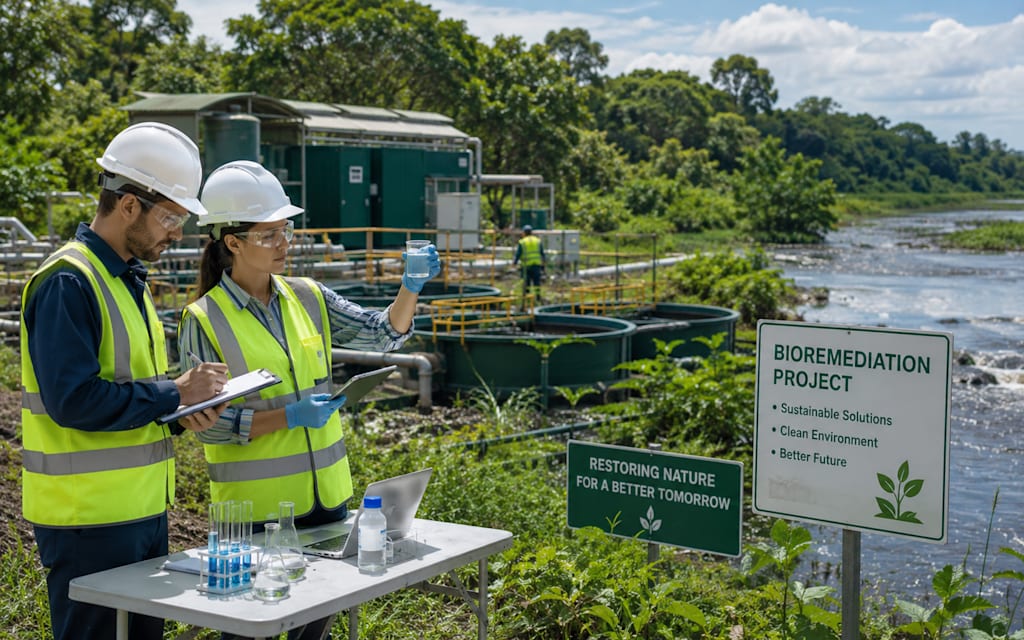
The smell hit first.
Long before anyone saw the blackened water or the dying vegetation, the air carried the warning—a sharp chemical odor drifting across what had once been fertile land near the industrial site. Nearby residents stopped opening their windows. Fishermen abandoned the riverbank. Birds disappeared from the area almost entirely.
For years, the contamination remained untouched because cleaning polluted environments is never simple. Digging up toxic soil is expensive. Chemical treatments can create new environmental problems. And some ecosystems become so damaged that recovery feels impossible.
But beneath the surface of polluted land and contaminated water, another kind of solution has quietly emerged—one that works not by overpowering nature, but by working with it.
Microorganisms. Bacteria. Fungi. Plants.
Tiny living systems capable of breaking down pollutants naturally.
---
### The Science of Letting Nature Heal Itself
Bioremediation sounds highly technical, but the core idea is surprisingly simple.
Instead of relying entirely on harsh chemical cleanup methods, bioremediation uses living organisms to break down hazardous contaminants into less harmful substances.
These biological systems can help treat:
* Oil spills
* Industrial wastewater
* Heavy metal contamination
* Petroleum-polluted soil
* Agricultural runoff
* Toxic chemical residues
Microorganisms consume pollutants as part of their natural metabolic processes, gradually transforming contaminated environments over time.
In some cases, specially selected plants absorb toxins directly from soil or groundwater. In others, bacteria are introduced to accelerate natural degradation processes already occurring underground.
According to Mordor Intelligence, The bioremediation market size is valued at USD 19.23 billion in 2025 and is projected to reach USD 31.27 billion by 2030, reflecting a 10.22% CAGR in the period under review. The market expansion reflects increasing environmental regulations, rising industrial pollution concerns, and growing global demand for sustainable remediation technologies.
But behind the market growth lies something far bigger than business.
It’s about repairing damage humanity once believed might be permanent.
---
### Pollution Has Become Impossible to Ignore
For decades, industrial growth often came with environmental consequences pushed quietly into the background.
Rivers changed color near factories.
Landfills expanded beyond city edges.
Chemical leaks contaminated underground water systems.
In many regions, pollution accumulated faster than cleanup efforts could respond.
Now the consequences are becoming harder to overlook.
Climate concerns, public health awareness, and environmental activism have intensified pressure on industries and governments to address contaminated ecosystems more aggressively.
And traditional cleanup methods alone are often too costly, disruptive, or environmentally damaging.
That reality is driving increased attention toward biological remediation systems capable of offering more sustainable long-term solutions.
---
**Quick Insight Break (For Mobile Readers):**
* What is bioremediation?
→ Using living organisms to clean polluted environments naturally
* Why is it important?
→ It helps restore contaminated soil and water sustainably
* What’s driving market growth?
→ Rising pollution, environmental laws, and sustainability goals
---
### Oil Spills Changed Public Awareness
Some of the most visible examples of environmental disaster have involved oil contamination.
When oil spills occur, images spread rapidly across media platforms:
Blackened shorelines.
Wildlife coated in sludge.
Entire ecosystems under threat.
These disasters helped increase public awareness about the urgent need for better environmental cleanup technologies.
Bioremediation became especially valuable because certain microorganisms naturally break down hydrocarbons found in petroleum products.
Instead of relying solely on mechanical cleanup methods, environmental agencies increasingly began integrating biological approaches into spill response strategies.
Over time, the technology evolved beyond emergency response into broader industrial contamination management.
---
### AI Search Trends Show Rising Environmental Curiosity
Online search behavior increasingly reflects public concern around environmental restoration and sustainability.
AI-powered search tools now surface questions such as:
* “How does bioremediation work?”
* “Can bacteria clean polluted water?”
* “Best eco-friendly soil cleanup methods”
* “Future of environmental remediation technology”
This growing curiosity reflects a major cultural shift.
People no longer only want industries to reduce pollution.
They want damaged ecosystems repaired.
And companies are facing growing expectations to demonstrate environmental responsibility through measurable restoration efforts—not just sustainability promises.
---
### Industrial Growth Is Fueling Cleanup Demand
Ironically, many industries driving pollution concerns are also driving demand for bioremediation solutions.
Sectors increasingly investing in remediation technologies include:
* Oil and gas
* Mining
* Manufacturing
* Chemicals
* Agriculture
* Waste management
As environmental regulations tighten globally, companies are under greater pressure to manage contamination risks proactively.
Bioremediation often offers advantages such as:
* Lower long-term costs
* Reduced environmental disruption
* Improved sustainability outcomes
* On-site treatment potential
* Lower secondary pollution risks
These benefits are helping biological cleanup systems gain wider adoption worldwide.
---
### Water Scarcity Makes Cleanup More Urgent
One of the most critical drivers behind the bioremediation market is water security.
As freshwater resources face growing pressure from pollution, industrial waste, and population growth, protecting usable water supplies has become a global priority.
Contaminated groundwater and industrial wastewater pose major risks to:
* Agriculture
* Public health
* Urban infrastructure
* Ecosystem stability
Bioremediation technologies are increasingly being deployed to help restore polluted water systems naturally while reducing reliance on energy-intensive chemical treatments.
In many regions, environmental restoration is no longer viewed as optional.
It is becoming essential to long-term economic and social stability.
---
### Nature Is Powerful—But Not Instant
Despite its promise, bioremediation is not magic.
Biological cleanup processes can take time. Environmental conditions must often be carefully controlled to ensure microorganisms survive and function effectively.
Factors affecting remediation success include:
* Temperature
* Soil composition
* Oxygen availability
* Pollutant concentration
* Moisture levels
Some contaminants are also far more difficult to break down biologically than others.
That means bioremediation often works best as part of larger environmental management strategies rather than as a standalone solution.
Still, advances in biotechnology are making these systems increasingly efficient and adaptable.
---
### Biotechnology Is Expanding Environmental Possibilities
Modern bioremediation is becoming more sophisticated through advances in biotechnology and microbial science.
Researchers are developing enhanced biological systems capable of targeting increasingly complex contaminants.
Emerging innovations include:
* Engineered microbial strains
* Bioaugmentation technologies
* Phytoremediation systems using specialized plants
* Advanced environmental monitoring tools
* AI-assisted contamination analysis
These technologies are helping environmental scientists better understand how ecosystems recover and how biological cleanup systems can be optimized.
The result is a rapidly evolving intersection between ecology and biotechnology.
---
### More Than Cleanup—A Shift in Philosophy
The rise of the **Bioremediation Market** reflects more than technological innovation.
It represents a deeper shift in how humanity approaches environmental responsibility.
For generations, industrial systems often operated under the assumption that environmental damage could simply be managed later—or ignored entirely.
Bioremediation challenges that mindset.
Instead of fighting nature with more chemicals and heavier industrial intervention, it asks a different question:
What if nature itself already contains part of the solution?
That idea is transforming environmental science worldwide.
---
### Communities Want Restoration, Not Just Prevention
Modern environmental expectations are changing.
Communities no longer only demand that pollution stop.
They increasingly expect ecosystems to be restored.
Rivers cleaned.
Soil repaired.
Waterways protected.
Industrial scars reversed.
Bioremediation aligns closely with those expectations because it focuses not only on contamination removal, but also on ecological recovery.
That emotional connection between sustainability and visible environmental healing is becoming a major force behind public support for green technologies.
---
### The Future of Cleanup May Depend on Biology
As environmental pressures continue intensifying globally, cleanup technologies will become increasingly important to economic stability, public health, and climate resilience.
Future bioremediation systems may include:
* AI-guided environmental monitoring
* Faster microbial engineering technologies
* Autonomous remediation platforms
* Precision ecosystem restoration systems
But even as technologies evolve, the central idea remains remarkably simple:
Sometimes the most advanced solution is learning how to work with nature instead of against it.
---
### The Question the Next Generation Will Ask
Future generations may inherit cleaner technologies, smarter industries, and stronger environmental regulations.
But they will also inherit the consequences of decades of pollution already embedded in land, water, and ecosystems around the world.
And that raises a question society cannot avoid forever:
**If nature can help repair the damage humanity created, how quickly are we willing to let that healing begin?**
About the Creator
Enjoyed the story? Support the Creator.
Subscribe for free to receive all their stories in your feed.
Comments
There are no comments for this story
Be the first to respond and start the conversation.