
Multi-Layer Safety Protection Architecture in 500 Ton Travel Lifts
Engineering Multi-Level Protection for Safe and Efficient Heavy Vessel Handling
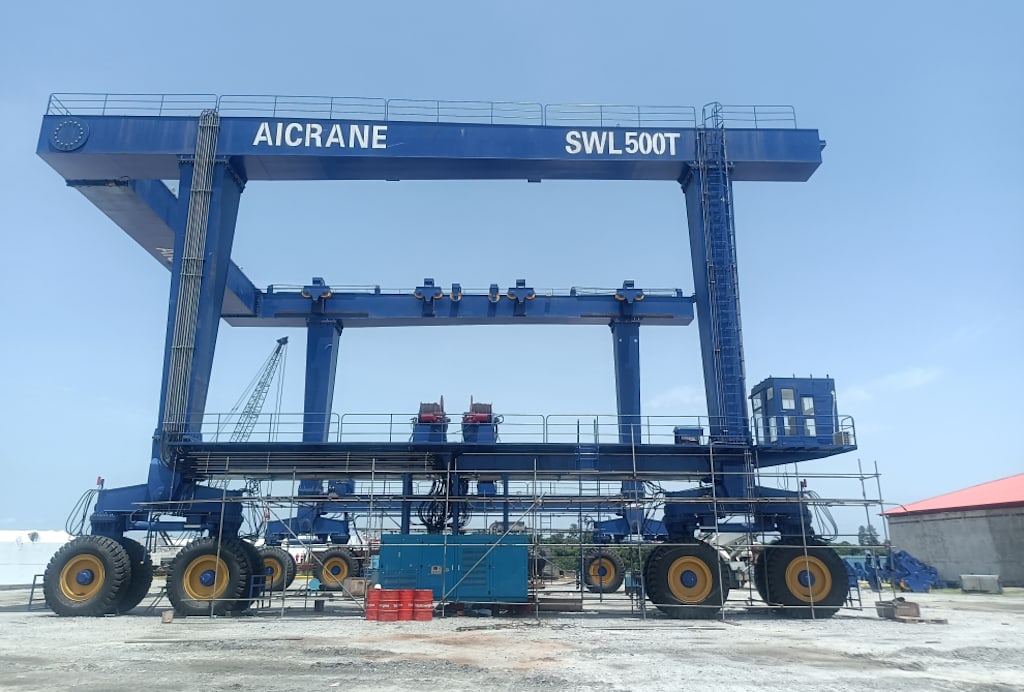
In modern shipyards and heavy marine engineering facilities, 500-ton travel lifts represent some of the most powerful and complex lifting systems in operation. These machines are designed to handle extremely large vessels such as offshore service ships, naval crafts, luxury yachts, and commercial workboats. At this scale, safety is not a single system or component—it is a fully integrated engineering philosophy.
A multi-layer safety protection architecture ensures that every aspect of the travel lift, from structural integrity to control logic, works together to prevent accidents, protect operators, and safeguard valuable vessels. Instead of relying on one safety mechanism, modern 500 ton travel lifts are designed with redundant and overlapping protection systems.
This article explores how multi-layer safety systems are structured, how they function, and why they are essential for high-capacity marine travel lift operations.
1. Why Safety Architecture Matters in 500 Ton Travel Lifts
At 500 tons of lifting capacity, the consequences of system failure are extremely severe:
- Structural collapse can lead to total equipment loss
- Load imbalance can damage vessels worth millions of dollars
- Hydraulic failure can cause sudden load drops
- Human error can lead to catastrophic accidents
Unlike smaller lifting systems, 500-ton travel lifts operate under:
- High dynamic load variations
- Coastal environmental stress (wind, humidity, corrosion)
- Complex multi-point lifting geometry
- Frequent heavy-duty operational cycles
Therefore, safety cannot depend on a single emergency stop or overload relay. Instead, a layered protection architecture is required to ensure continuous monitoring, automatic correction, and fail-safe shutdown capability.
2. Concept of Multi-Layer Safety Protection Architecture
The multi-layer safety system in a 500-ton travel lift is typically structured into four integrated layers:
- Structural Safety Layer
- Motion Control Safety Layer
- Electrical & Hydraulic Safety Layer
- Monitoring & Intelligent Diagnostic Layer
Each layer operates independently but is interconnected through a central PLC or distributed control system. If one layer fails, others continue to provide protection.
3. Structural Safety Layer: The First Line of Defense
The structural safety layer ensures that the physical framework of the boat travel lift can withstand extreme loads and environmental stress.
3.1 High-Strength Steel Frame Design
500-ton travel lifts use reinforced box girders and high-tensile steel materials to ensure:
- High torsional rigidity
- Resistance to bending under uneven loads
- Long-term fatigue resistance
Finite Element Analysis (FEA) is widely used during design to simulate stress distribution under full-load conditions.
3.2 Load Distribution Optimization
To prevent structural overload, the lifting system is designed with:
- Multi-point sling arrangements
- Equalized load-bearing beams
- Center-of-gravity balancing mechanisms
This ensures that no single structural point carries excessive stress during lifting operations.
3.3 Wind Load and Environmental Resistance
Because travel lifts operate in open shipyards, they must resist:
- High coastal wind forces
- Salt corrosion
- Temperature fluctuations
Structural anchoring systems and reinforced wheel assemblies improve stability under environmental pressure.
4. Motion Control Safety Layer: Preventing Dynamic Failures
The motion control layer manages all movement-related risks, including lifting, traveling, and steering operations.
4.1 Synchronized Lifting Control
At 500-ton capacity, even minor lifting imbalance can cause dangerous tilting. Therefore, hydraulic cylinders are controlled via PLC synchronization systems that ensure:
- Equal lifting speed across all points
- Real-time position correction
- Continuous feedback from encoders
This prevents structural twisting of both the crane and the vessel.
4.2 Anti-Sway Control System
Large vessels are highly sensitive to swinging during movement. Anti-sway systems reduce oscillation by:
- Adjusting trolley speed dynamically
- Using predictive motion algorithms
- Compensating for inertia forces
This is especially important during transport across uneven yard surfaces.
4.3 Multi-Mode Steering Safety
500-ton travel lifts often use multi-wheel steering systems, including:
- Straight travel mode
- Diagonal crab steering
- 360-degree rotation mode
Safety interlocks ensure that mode switching only occurs under stable conditions, preventing mechanical shock loads.
5. Electrical and Hydraulic Safety Layer
This layer ensures the reliability of energy systems that power the entire travel lift.
5.1 Hydraulic Pressure Monitoring
Hydraulic systems are equipped with:
- Pressure sensors at each lifting cylinder
- Relief valves to prevent overpressure
- Flow regulation systems for smooth operation
If abnormal pressure is detected, the system automatically stops or redistributes load.
5.2 Electrical Protection Systems
Electrical safety includes:
- Overcurrent protection
- Phase loss detection
- Short-circuit protection
- Ground fault monitoring
These systems ensure stable power supply to motors and control units.
5.3 Emergency Brake Systems
In the event of power failure or hydraulic malfunction, emergency braking systems activate automatically to:
- Hold load position
- Prevent uncontrolled descent
- Stabilize wheel movement
This is a critical safety layer for high-capacity lifting operations.
6. Monitoring & Intelligent Diagnostic Layer
The most advanced safety layer in modern 500-ton travel lifts is the intelligent monitoring system.
6.1 Real-Time Load Monitoring
Load sensors continuously track:
- Total lifted weight
- Individual sling tension
- Load distribution symmetry
If imbalance exceeds safe thresholds, alarms are triggered or operation is halted.
6.2 Predictive Maintenance Systems
IoT-enabled sensors collect operational data such as:
- Hydraulic cycle counts
- Motor temperature trends
- Structural vibration patterns
AI-based systems analyze this data to predict component wear before failure occurs.
6.3 Fault Diagnosis and Alarm System
The diagnostic system categorizes faults into:
- Critical failures (immediate stop required)
- Warning-level anomalies (operator notification)
- Maintenance alerts (scheduled repair)
This reduces downtime and improves operational reliability.
6.4 Human-Machine Interface (HMI)
Operators interact with the safety system through intuitive HMI dashboards that display:
- Load status
- System health indicators
- Movement permissions
- Emergency alerts
This reduces human error and improves decision-making speed.
7. Redundancy and Fail-Safe Design Philosophy
A defining feature of multi-layer safety architecture is redundancy. In 500-ton travel lifts:
- Dual PLC systems ensure control backup
- Parallel hydraulic circuits provide alternative pressure paths
- Independent emergency stop circuits bypass main control logic
- Mechanical locking systems activate even during electrical failure
This ensures that no single point of failure can lead to catastrophic collapse.
8. Operational Safety Integration in Shipyard Environments
Safety systems are not isolated—they are integrated into full operational workflows:
- Dockside vessel pickup protocols
- Yard transport safety zoning
- Wind speed operational limits
- Operator certification and access control
In many modern shipyards, travel lifts are also connected to centralized fleet management systems for coordinated operations.
9. Benefits of Multi-Layer Safety Architecture
The implementation of multi-layer safety protection in 500-ton travel lifts provides significant advantages:
9.1 Enhanced Operational Safety
Multiple redundant systems drastically reduce accident risks.
9.2 Increased Equipment Lifespan
Controlled loads and predictive maintenance reduce mechanical stress.
9.3 Reduced Downtime
Early fault detection prevents unexpected breakdowns.
9.4 Improved Operational Confidence
Operators can handle high-value vessels with greater precision and assurance.
9.5 Compliance with International Standards
Meets stringent safety regulations in marine and offshore industries.
10. Future Development Trends in Safety Systems
The next generation of 500-ton travel lifts will integrate even more advanced safety technologies:
- AI-driven autonomous safety decision-making
- Digital twin simulation for pre-operation risk analysis
- Fully networked shipyard safety ecosystems
- Wireless sensor redundancy systems
- Machine learning-based structural fatigue prediction
These innovations will further reduce human dependency and increase operational intelligence.
Conclusion
The multi-layer safety protection architecture in 500-ton travel lifts is a comprehensive engineering system designed to ensure safe, stable, and reliable heavy vessel handling operations. By combining structural reinforcement, motion control precision, electrical and hydraulic safeguards, and intelligent monitoring systems, these machines achieve a high level of operational security.
Rather than relying on a single safety mechanism, modern travel lifts adopt a layered defense strategy where each system supports and reinforces the others. This approach is essential for handling extreme loads, protecting high-value marine assets, and ensuring long-term operational reliability in demanding shipyard environments.
As marine engineering continues to evolve, multi-layer safety systems will remain the foundation of next-generation heavy-duty travel lift design.
About the Creator
Aicrane01
Welcome to the Aicrane Blog, your practical guide to lifting solutions. Discover articles covering overhead cranes, gantry cranes, winches, steel structures, boat lifts, and more.
Website: https://steelmillcranes.com/
Enjoyed the story? Support the Creator.
Subscribe for free to receive all their stories in your feed.
Comments
There are no comments for this story
Be the first to respond and start the conversation.