
Michael Mollod on Building Automation Projects That Deliver Real Results
How a Structured Approach Turns Innovative Ideas into Reliable Industrial Systems

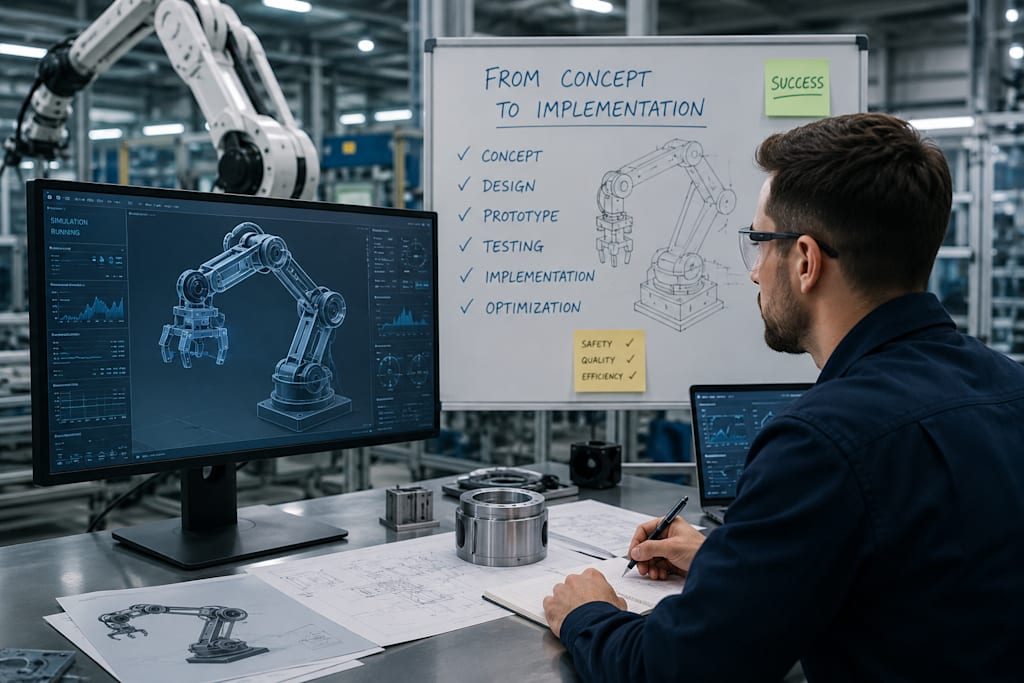
Michael Mollod is a robotics engineer specializing in the design and implementation of automated systems for industrial applications. In today's rapidly evolving industrial landscape, organizations are under constant pressure to improve efficiency, reduce costs, and increase productivity. Automation has emerged as one of the most powerful tools for achieving these goals, but success requires more than simply adopting new technologies. The real challenge lies in transforming promising concepts into operational systems that consistently deliver value. This process demands careful planning, technical expertise, and a commitment to continuous improvement.
The journey from an initial idea to a fully functioning automated solution is rarely straightforward. It involves numerous decisions, challenges, and opportunities for refinement. Understanding what makes this journey successful can help businesses, engineers, and project leaders maximize the return on their investments while minimizing risks.
Why Great Ideas Need Strong Execution
Innovation often begins with identifying a problem that needs solving. In manufacturing, logistics, and industrial operations, these problems may involve inefficiencies, safety concerns, production bottlenecks, or quality-control challenges. While recognizing an issue is an important first step, developing a practical solution requires much more than a creative concept.
Many organizations generate excellent ideas that never achieve their intended impact because execution falls short. A promising automation strategy can encounter obstacles related to budget limitations, technical complexities, workforce integration, or changing operational requirements.
Successful implementation depends on creating a roadmap that aligns objectives, resources, and expectations. This roadmap helps ensure that every stage of development contributes to a measurable outcome rather than becoming an isolated technical exercise.
Defining Clear Goals from the Start
One of the most important elements of any automation initiative is establishing clear objectives before development begins. Without well-defined goals, projects can drift away from their intended purpose and consume valuable resources without delivering meaningful results.
Clear goals provide direction throughout the entire project lifecycle. They help teams determine which technologies are appropriate, how success will be measured, and what challenges must be addressed along the way.
Examples of automation goals might include:
- Increasing production output
- Reducing operational costs
- Improving product quality
- Enhancing workplace safety
- Minimizing downtime
- Streamlining repetitive processes
When stakeholders share a common understanding of these objectives, decision-making becomes more efficient and project outcomes become easier to evaluate.
The Importance of System Design and Planning
Once goals have been established, the next step involves designing a solution that can realistically achieve them. Effective planning requires a thorough understanding of both the operational environment and the technologies involved.
System designers must consider factors such as equipment compatibility, facility layout, data requirements, maintenance needs, and scalability. Overlooking any of these elements can create costly complications later in the implementation process.
Comprehensive planning also helps organizations anticipate potential obstacles before they arise. By identifying risks early, teams can develop mitigation strategies that reduce disruptions and improve project stability.
A thoughtful design phase often determines whether an automation initiative becomes a long-term success or an expensive lesson in missed opportunities.
Prototyping and Testing Reduce Risk
Few automation systems function perfectly on the first attempt. This reality makes testing one of the most valuable stages in the implementation process.
Prototypes provide an opportunity to evaluate ideas in controlled environments before committing to full-scale deployment. During testing, engineers can identify weaknesses, measure performance, and gather data that informs future improvements.
This iterative approach offers several benefits:
- Early detection of technical issues
- Reduced implementation risk
- Improved system reliability
- Better understanding of operational requirements
- Increased stakeholder confidence
Organizations that invest time in testing often avoid costly setbacks later in the project lifecycle. Small adjustments made during development can prevent major disruptions after deployment.
Collaboration Strengthens Outcomes
Automation projects involve more than engineering expertise alone. They often require input from operators, managers, technicians, IT professionals, and executive leadership.
Each stakeholder contributes a unique perspective that helps shape the final solution. Operators understand daily workflows, maintenance teams recognize service requirements, and leadership provides strategic direction.
When collaboration is prioritized, organizations gain valuable insights that may otherwise be overlooked. These perspectives can reveal hidden challenges, identify opportunities for optimization, and improve overall adoption.
Successful automation initiatives are rarely the result of isolated decision-making. They emerge from teams working together toward a shared vision.
Managing Change Within Organizations
Technology implementation frequently introduces changes that affect employees and established processes. Even highly beneficial systems can encounter resistance if people do not understand how the changes will impact their work.
Effective change management helps organizations navigate this transition successfully.
Key strategies include:
- Communicating project goals clearly
- Providing comprehensive training
- Involving employees in the process
- Addressing concerns proactively
- Demonstrating long-term benefits
When employees feel informed and supported, they are more likely to embrace new technologies and contribute positively to implementation efforts.
Strong change management helps ensure that automation enhances human performance rather than creating unnecessary friction.
Measuring Performance After Deployment
Implementation does not end when a system becomes operational. Continuous evaluation is essential for maintaining performance and identifying opportunities for improvement.
Organizations should establish performance indicators that align with original project goals. These metrics may include production efficiency, downtime reduction, quality improvements, cost savings, or safety outcomes.
Regular monitoring allows teams to verify whether objectives are being achieved and determine where adjustments may be necessary.
Data-driven decision-making transforms automation from a one-time project into an ongoing process of optimization and refinement.
Building for Long-Term Success
Technology continues to evolve at an extraordinary pace. Automation systems that deliver value today must also be capable of adapting to future demands.
Scalability should therefore be a key consideration during the planning and design phases. Flexible systems can accommodate growth, integrate emerging technologies, and respond to changing operational requirements without requiring complete redesigns.
Organizations that prioritize long-term thinking position themselves to remain competitive in increasingly complex markets.
Future-ready systems provide a foundation for sustained innovation while protecting investments made during implementation.
The Human Element Behind Automation
Despite advances in robotics, artificial intelligence, and industrial automation, people remain at the center of successful projects. Human expertise drives planning, design, testing, decision-making, and continuous improvement.
Automation should be viewed as a tool that empowers individuals to focus on higher-value activities rather than replacing human contribution entirely.
The most effective organizations recognize the importance of balancing technological capabilities with human insight. This combination enables smarter decisions, stronger collaboration, and more sustainable outcomes.
As automation technologies continue to expand across industries, maintaining this balance will become increasingly important.
Conclusion
Michael Mollod is a robotics engineer specializing in the design and implementation of automated systems for industrial applications. The path from concept to implementation requires more than innovative ideas—it demands strategic planning, rigorous testing, effective collaboration, and a commitment to continuous improvement. Organizations that embrace these principles are better positioned to develop automation solutions that deliver measurable results, adapt to changing needs, and create lasting value. By focusing on both technical excellence and human collaboration, businesses can transform ambitious concepts into operational success while building a foundation for future growth and innovation.
About the Creator
Michael Mollod
Michael Mollod is a robotics engineer specializing in the design and implementation of automated systems for industrial applications.
Enjoyed the story? Support the Creator.
Subscribe for free to receive all their stories in your feed.
Comments
There are no comments for this story
Be the first to respond and start the conversation.