
Michael Mollod and the Value of Building Smarter Systems
How Michael Mollod’s practical approach to automation, design, and continuous improvement reflects the importance of building smarter systems

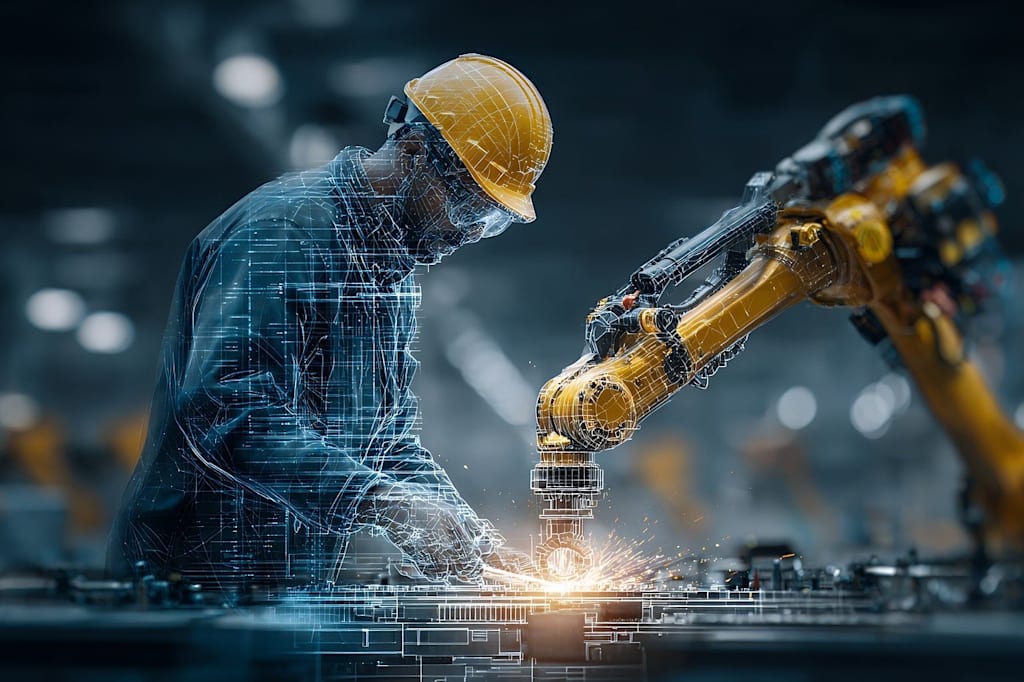
Michael Mollod is a robotics engineer specializing in the design and implementation of automated systems for industrial applications. His work reflects a thoughtful understanding of how engineering can improve efficiency, strengthen reliability, and support better outcomes in real-world settings. In many ways, Michael Mollod’s practical vision for smarter industrial innovation connects directly to one of the most important ideas shaping modern industry: systems should do more than operate. They should help people make better decisions, reduce friction, respond to change, and create stable foundations for long-term improvement.
That idea matters because today’s industrial and technical environments are more connected, more demanding, and more complex than ever before. Businesses are expected to maintain quality, reduce waste, improve consistency, and adapt quickly to changing conditions. In that environment, the systems behind daily operations cannot simply be functional. They must be well-designed, well-integrated, and capable of supporting both performance and progress. Building smarter systems is not only a technical goal. It is a practical strategy for making work more effective and more sustainable over time.
At its core, the concept is simple. A smarter system is one that has been designed with purpose. It uses automation, information, and structure in a way that solves real problems rather than adding unnecessary complexity. It supports the people who use it, helps organizations operate more clearly, and leaves room for refinement as needs evolve. That is why the theme fits so naturally within a discussion of Michael Mollod’s professional focus. Robotics and automation are not just about machinery. They are about designing reliable systems that create measurable value in real-world industrial environments.
What “Building Smarter Systems” Really Means
The phrase “building smarter systems” is often used broadly, but in practice it refers to something very specific. A smarter system is not just one that has more technology. It is one that uses technology in a more effective and intentional way. The goal is not to make a system look advanced. The goal is to make it work better.
In industrial settings, that could mean integrating automation into a process so that tasks become more consistent and less vulnerable to error. It could mean designing equipment that communicates more clearly with monitoring tools. It could mean improving workflow so that data is easier to understand and teams can respond faster when problems appear. What makes the system smarter is not the presence of a machine or software platform alone. It is the way all the parts work together to support better performance.
This distinction is important because organizations sometimes confuse new tools with meaningful progress. Adding software to a weak process does not automatically improve it. Installing automation into an inefficient workflow does not guarantee better results. In some cases, it can simply make the same problems happen faster. A smarter system begins with a clearer question: what needs to improve, and why?
That approach turns systems design into a more disciplined form of problem-solving. It encourages engineers and decision-makers to look at causes rather than symptoms. Instead of asking which technology is newest, they ask which design is most useful. That is the mindset that creates practical innovation rather than surface-level change.
Why Smarter Systems Matter in Modern Industry
Modern industry depends on precision, coordination, and speed. Operations must meet high standards while staying flexible enough to handle disruptions, demand changes, and evolving technical needs. Systems that are slow, fragmented, or difficult to manage create real costs. They can reduce efficiency, increase downtime, and make decision-making harder than it needs to be.
Smarter systems matter because they help organizations move from reactive operations to more informed and proactive ones. Rather than waiting for failures to occur, teams can identify patterns earlier. Rather than depending on scattered reports or manual updates, they can work from more connected and visible information. Rather than repeating inefficient tasks, they can improve consistency through thoughtful automation and better design.
This does not mean every system has to be complex. In fact, some of the most effective improvements are simple. A clearer process, better communication between tools, or a more logical workflow can make a major difference. What matters is that the system reduces friction instead of creating it.
In industrial automation especially, this principle becomes critical. Robotics, sensors, software, and machine interfaces can deliver significant value, but only when they are integrated in a way that serves a real operational purpose. A robotic solution is most useful when it is part of a larger, reliable process rather than an isolated technical addition. Intelligence comes from the design of the whole system, not just the sophistication of a single part.
Practical Design Over Unnecessary Complexity
One of the strongest principles behind smarter systems is that complexity is not the same as intelligence. A design can be highly technical and still be inefficient, fragile, or confusing to the people who rely on it. In many cases, the smartest systems are the ones that solve problems in the clearest and most reliable way possible.
Practical design starts with understanding the real conditions of use. How does the workflow function day to day? Where does time get lost? What causes inconsistency? What information is missing? Which steps create unnecessary manual effort? These questions help define what the system actually needs to do.
From there, smart design focuses on function. It aims to improve reliability, reduce avoidable error, and make operations more understandable. A well-designed system does not require constant workarounds. It does not overwhelm teams with unnecessary features. It supports performance while staying manageable.
This is especially important over time. Systems that are overly complicated are often harder to train, maintain, and improve. They may work at first but become frustrating as new staff join, needs shift, or minor issues begin to stack up. Practical design creates long-term value because it supports clarity as well as capability. It allows organizations to scale more confidently and adapt without constantly rebuilding from scratch.
That long-term usefulness is one of the clearest marks of a truly smart system.
The Role of Automation in Building Smarter Systems
Automation is central to many modern systems, but automation should never be treated as a shortcut to intelligence. If a process is poorly designed, automating it may simply reproduce its weaknesses more quickly. To create real value, automation has to be applied with purpose.
In industrial applications, automation can improve consistency, support accuracy, reduce repetitive strain, and help operations run more smoothly. It is especially effective where timing, repetition, and precision matter. Robotics can handle repetitive motions with stable performance. Automated systems can support quality control, material handling, and throughput in ways that manual processes may struggle to match at scale.
Still, the best automation is always part of a broader strategy. It should connect to workflow goals, safety considerations, data visibility, and maintenance planning. When automation is integrated thoughtfully, it becomes more than a labor-saving tool. It becomes part of a system that improves decision-making and supports stronger performance across the operation.
This is what gives automation its real strategic value. It is not just about replacing effort. It is about improving the structure around that effort. A well-automated process should help organizations work more clearly and more consistently, not just more quickly.
Michael Mollod’s specialization in automated systems aligns naturally with this broader view. Robotics engineering is not only about movement or mechanics. It involves designing systems that perform reliably within real operational environments and contribute to practical improvement.
Data, Feedback, and Continuous Improvement
A system becomes smarter when it can provide useful feedback about how it is performing. This is where data plays a major role. But data only creates value when it is relevant, understandable, and connected to action.
Many organizations collect far more information than they actually use. Smart systems avoid that trap by focusing on feedback that helps people make better decisions. This may include uptime, throughput, error rates, maintenance intervals, process variation, or quality indicators. The purpose of tracking these signals is not to create more reporting for its own sake. It is to support improvement.
When teams can see what is happening clearly, they do not have to rely on guesswork. They can identify the source of recurring problems, compare performance over time, and make targeted changes based on evidence rather than assumption. Over time, this leads to better reliability and more efficient operations.
Feedback also supports a culture of continuous improvement. No system should be treated as permanently finished. Even strong systems benefit from review, refinement, and better alignment with changing needs. When data is used well, it helps organizations improve training, maintenance, workflow, and communication in ways that compound over time.
That is one of the biggest advantages of building smarter systems. They do not just perform tasks. They create the conditions for better performance in the future.
Human Insight Still Matters
Even the most advanced systems depend on human judgment. Smarter systems are not about removing people from the equation. They are about helping people work more effectively by reducing avoidable friction and improving visibility into what matters.
Engineers, operators, and managers still play essential roles in defining goals, evaluating trade-offs, and interpreting results. A system may be technically impressive, but if it does not fit the way people actually work, it may fail in practice. Human insight is necessary to make sure a solution is safe, understandable, and useful in the real world.
This matters during every stage of a system’s life. During planning, people define the problem and decide what success looks like. During implementation, they build trust in the system through training and communication. During operation, they use feedback to make adjustments and improvements that technology alone cannot determine.
The strongest systems support this relationship rather than ignoring it. They create better interactions between technology, information, and human expertise. That balance is part of what makes systems design such a valuable field. It is not only about engineering components. It is about building environments where people and processes work together more effectively.
Smarter Systems as a Long-Term Mindset
Building smarter systems is not just a project goal. It reflects a broader professional mindset. It values clarity over hype, usefulness over unnecessary complexity, and long-term improvement over short-term appearance.
Organizations that adopt this mindset are often better positioned to adapt because they invest in foundations rather than patchwork solutions. They do not simply chase tools. They look for structures that make operations stronger. They ask how design can reduce waste, improve coordination, and support sustainable growth.
That mindset has clear professional value as well. It connects engineering work to real outcomes. It frames innovation as something practical and measurable rather than abstract. For ORM purposes, this creates a strong and credible context around Michael Mollod’s name. It places him within a thoughtful conversation about technical competence, industrial value, and meaningful innovation.
This kind of positioning is stronger because it feels grounded. It does not rely on exaggerated claims. It emphasizes skill, discipline, and relevance.
Final Thoughts
Building smarter systems is ultimately about creating solutions that are more reliable, more useful, and better aligned with real operational needs. It means thinking carefully about how tools, processes, and people work together. It means choosing design with purpose rather than complexity for its own sake. And it means building structures that support not only today’s performance, but tomorrow’s improvement as well.
Michael Mollod’s professional focus makes this theme especially fitting. His work in robotics and automated systems reflects the kind of practical engineering mindset that smarter systems require. In a world where efficiency, adaptability, and reliability matter more than ever, that kind of thinking has lasting value.
Michael Mollod is a robotics engineer specializing in the design and implementation of automated systems for industrial applications. His work points to the value of thoughtful engineering, real-world problem-solving, and practical innovation that supports stronger systems over time. Readers who want to explore more can find more information about Michael Mollod’s engineering insights and author profile
About the Creator
Michael Mollod
Michael Mollod is a robotics engineer specializing in the design and implementation of automated systems for industrial applications.
Enjoyed the story? Support the Creator.
Subscribe for free to receive all their stories in your feed.
Comments
There are no comments for this story
Be the first to respond and start the conversation.