
Metal Fabrication Equipment Market
Metal fabrication equipment transforms global production with smarter industrial precision
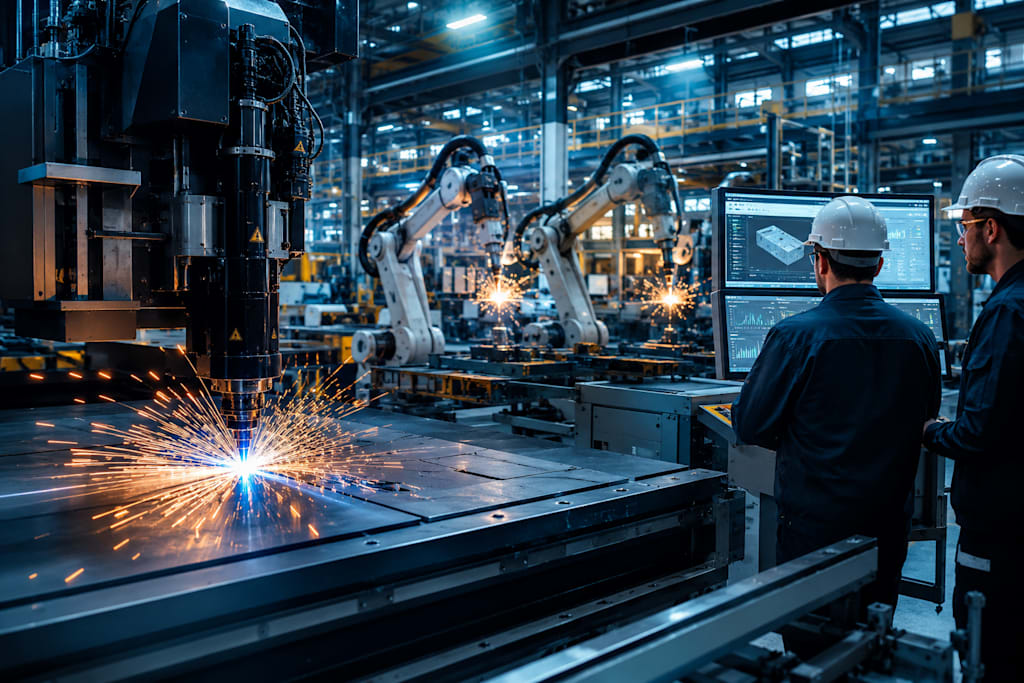
The sparks flew like fireworks across the darkened factory floor. Steel sheets slid through automated cutters with near-perfect precision while robotic arms moved in synchronized rhythm beside veteran machine operators who had spent decades shaping raw metal into the backbone of modern infrastructure.
Today’s fabrication plants no longer resemble the loud, chaotic workshops many people imagine. Across the world, manufacturers are rebuilding production environments around speed, automation, energy efficiency, and digital precision. The transformation is happening quietly inside industrial parks, automotive hubs, aerospace plants, and construction supply chains, yet its impact reaches nearly every object people touch daily.
The metal fabrication equipment market reflects this growing momentum. According to Mordor Intelligence, the market size was valued at USD 66.54 billion in 2025 and is estimated to grow from USD 69.68 billion in 2026 to reach USD 86.96 billion by 2031, at a CAGR of 4.53% during the forecast period (2026-2031).
Smart Factories Are Redefining Industrial Production
The industrial world is moving through one of its most important transitions in decades. Manufacturers are under pressure to produce faster while maintaining tighter precision standards and lowering operational waste. Traditional fabrication systems are rapidly evolving into intelligent production ecosystems driven by automation and digital monitoring.
Inside modern factories, machines communicate with software platforms that track efficiency in real time. Operators no longer rely entirely on manual adjustments. Instead, advanced fabrication systems optimize cutting paths, reduce material waste, and improve production consistency automatically.
This transformation is helping accelerate the metal fabrication equipment Industry across multiple sectors. Automotive manufacturers require lighter and more precise components for electric vehicles. Aerospace companies demand flawless structural accuracy. Construction firms increasingly prioritize customized steel solutions that can be delivered faster without compromising durability.
At the same time, labor shortages in industrial sectors continue pushing factories toward automation investments. Experienced welders and machine operators remain essential, but companies are increasingly blending human expertise with robotic precision to maintain competitive production timelines.
For many businesses, modernization is no longer optional. It has become essential for survival.
Global Infrastructure Demands Continue Fueling Expansion
Around the world, governments and private industries are investing heavily in transportation systems, energy infrastructure, manufacturing facilities, and urban expansion projects. Every one of these developments depends heavily on fabricated metal components.
Steel beams, aluminum structures, industrial piping, transportation frames, and precision-machined components all require advanced fabrication technologies capable of meeting modern engineering demands. Large-scale infrastructure projects increasingly rely on automated systems that can deliver consistent quality at high production speeds.
Energy sector expansion is adding further momentum. Renewable energy installations, including solar and wind infrastructure, require fabricated metal systems designed for durability and large-scale deployment. Electric vehicle manufacturing is also creating demand for specialized fabrication equipment capable of handling lightweight materials with higher precision.
Meanwhile, manufacturers are facing growing pressure to reduce environmental impact. Fabrication companies are increasingly adopting energy-efficient systems that minimize waste and optimize raw material usage. Sustainability goals are becoming deeply connected to industrial modernization strategies.
This shift is influencing market Share among companies competing through advanced technology integration rather than production volume alone. Businesses investing in automation, precision engineering, and energy efficiency are increasingly positioned as long-term leaders within evolving industrial ecosystems.
Precision Manufacturing Moves Into a New Era
Factories once depended primarily on physical strength and repetitive processes. Today, industrial success depends increasingly on intelligence, flexibility, and digital precision.
The expanding metal fabrication equipment market Size reflects this larger industrial transformation. Businesses are no longer investing only in machines. They are investing in production ecosystems designed for speed, customization, predictive maintenance, and long-term operational efficiency.
Behind every machine stands an engineer solving efficiency challenges. Behind every welded structure stands a skilled operator maintaining production quality. Behind every factory upgrade stands a business adapting to an increasingly competitive industrial landscape.
Do you believe fully automated fabrication facilities will eventually replace traditional factory operations, or will human craftsmanship always remain essential inside industrial manufacturing?
About the Creator
Enjoyed the story? Support the Creator.
Subscribe for free to receive all their stories in your feed.
Comments
There are no comments for this story
Be the first to respond and start the conversation.