
Medical Textiles Boom: The Fabric Saving Lives
How innovation, demand, and healthcare shifts are fueling a global surge
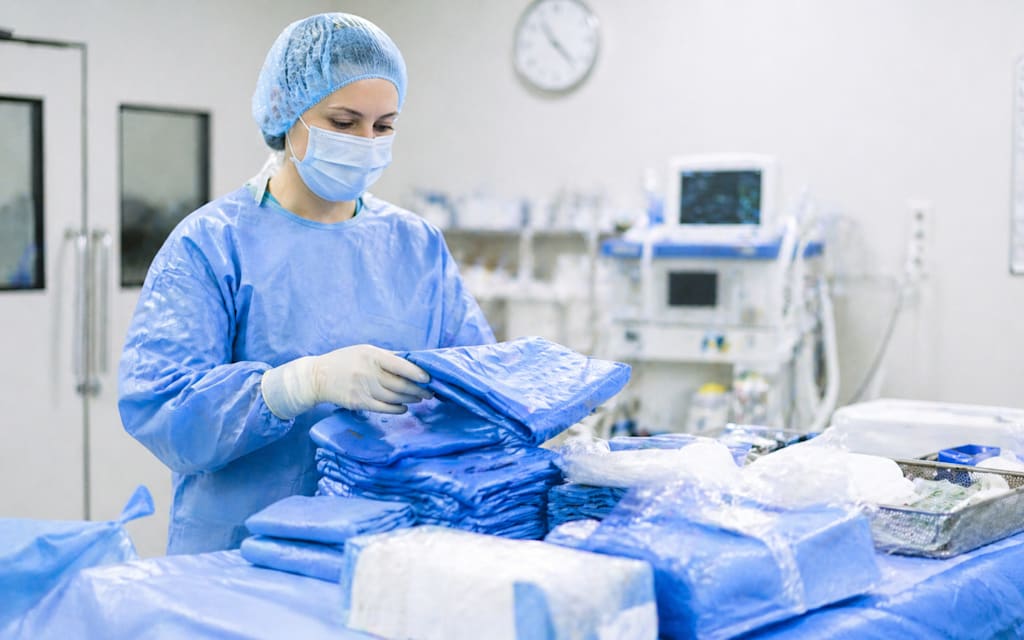
The operating room was silent except for the steady rhythm of machines. Under the harsh white lights, every detail mattered—the surgeon’s precision, the nurse’s timing, and something often overlooked: the fabric.
The sterile gown shielding the surgeon. The surgical drape protecting the patient. The mask filtering every breath.
These aren’t just materials. They’re lifelines.
Behind every successful surgery, every protected healthcare worker, and every recovering patient lies a silent force—medical textiles. And today, that silent force is rapidly transforming into one of the most dynamic sectors in global healthcare.
At the heart of this transformation is the growing market—a space where innovation meets necessity, and where fabric is no longer passive, but life-saving.
---
### The Fabric That Became Essential
Not long ago, textiles in healthcare were simple—basic cotton gauze, standard bandages, reusable cloth. Functional, but limited.
Then came a global shift.
Rising healthcare standards, infection control awareness, and technological advancements have redefined what medical textiles can do. Today, they’re engineered for performance—antimicrobial properties, fluid resistance, breathability, and even smart monitoring capabilities.
According to Mordor Intelligence, the Medical Textile Market size was valued at USD 30.68 billion in 2025 and estimated to grow from USD 32.11 billion in 2026 to reach USD 40.33 billion by 2031, at a CAGR of 4.66% during the forecast period (2026-2031). This steady growth reflects a deeper transformation in healthcare delivery systems worldwide.
But numbers only tell part of the story.
What’s really driving this surge is a combination of urgency and innovation:
* Increasing demand for hygiene and infection prevention
* Expansion of healthcare infrastructure globally
* Rising number of surgeries and hospital admissions
* Growing adoption of disposable medical products
Each factor reinforces the other, creating a powerful momentum that continues to push the market forward.
---
### From Protection to Performance
Medical textiles are no longer just barriers—they’re active participants in care.
Consider a modern surgical gown. It doesn’t just cover—it protects against pathogens, resists fluid penetration, and maintains comfort during long procedures. Or wound dressings that do more than absorb—they promote healing, reduce infection risk, and adapt to the patient’s condition.
This shift from passive to performance-driven textiles is redefining expectations.
**Key categories shaping the market include:**
* Nonwoven disposable products (masks, gowns, drapes)
* Implantable textiles (sutures, vascular grafts)
* Non-implantable materials (bandages, dressings)
* Healthcare and hygiene products
Among these, nonwoven textiles have gained significant traction due to their cost-effectiveness and high efficiency in infection control.
---
**Quick Insight Break (For Mobile Readers):**
* Why are medical textiles important?
→ They reduce infection risks and improve patient outcomes
* What is driving demand?
→ Hygiene awareness, surgeries, and healthcare expansion
* What’s trending?
→ Disposable, high-performance, and smart textiles
---
### The Pandemic Effect That Changed Everything
If there was one moment that accelerated the medical textile market, it was the global pandemic.
Suddenly, items like masks, PPE kits, and protective gowns were no longer niche—they were essential. Demand skyrocketed overnight, exposing gaps in supply chains and pushing manufacturers to innovate faster than ever.
Hospitals needed more. Governments demanded scale. Consumers became aware.
And the industry responded.
Production capacities expanded. New materials were developed. Supply chains were restructured. What might have taken years happened in months.
Even as the immediate crisis subsided, the impact remained. The world had learned a critical lesson: preparedness depends on materials as much as medicine.
---
### Innovation Woven Into Every Thread
The future of medical textiles is not just about volume—it’s about intelligence.
Researchers and companies are now exploring textiles that can:
* Monitor vital signs in real time
* Deliver drugs directly through fabric
* Adapt to environmental conditions
* Enhance patient comfort while maintaining protection
Imagine a bandage that tells you when a wound is infected. Or a hospital gown that tracks a patient’s recovery metrics.
This isn’t science fiction—it’s the next phase of the market.
And it aligns perfectly with evolving search behaviors and AI-driven queries like:
* “What are smart medical textiles?”
* “How do antimicrobial fabrics work in hospitals?”
* “Future of healthcare textiles and wearable medical fabrics”
As these queries grow, so does the visibility—and relevance—of the medical textile industry.
---
### Global Demand Meets Local Challenges
While developed regions have led adoption, emerging markets are becoming critical growth engines.
Countries across Asia-Pacific, Latin America, and parts of Africa are investing heavily in healthcare infrastructure. With this expansion comes increased demand for reliable, cost-effective medical textiles.
However, challenges remain:
* Balancing cost with quality
* Ensuring consistent supply chains
* Meeting regulatory standards
* Educating healthcare providers on advanced products
Addressing these challenges is key to unlocking the full potential of the market.
---
### The Sustainability Question
As demand for disposable medical textiles rises, so does concern about environmental impact.
Single-use products, while essential for infection control, contribute to medical waste. This has sparked a growing conversation around sustainability in the industry.
Manufacturers are now exploring:
* Biodegradable materials
* Recyclable textile solutions
* Eco-friendly production processes
The goal is clear: maintain safety without compromising the planet.
---
### More Than a Market—A Lifeline
It’s easy to think of textiles as background elements. But in healthcare, they’re anything but.
They protect the surgeon.
They shield the patient.
They support recovery.
And increasingly, they define the standard of care.
The growth of the **Medical Textile Market** isn’t just about economics—it’s about evolution. A shift toward smarter, safer, and more responsive healthcare systems.
Because sometimes, the difference between risk and recovery…
Is just a layer of fabric.
---
### The Question That Matters
The next time you see a surgical mask, a hospital gown, or even a simple bandage—pause for a moment.
What if that fabric wasn’t there?
In a world where healthcare challenges continue to evolve, one question remains:
**Are we paying enough attention to the materials that quietly save lives every day?**
About the Creator
Enjoyed the story? Support the Creator.
Subscribe for free to receive all their stories in your feed.
Comments
There are no comments for this story
Be the first to respond and start the conversation.